Improving Home Care Safety Among Informal Caregivers Through Immersive Digital Simulation: Secondary Analysis of 3 Coordinated Intervention Studies - Summary - MDSpire
Advertisement
Improving Home Care Safety Among Informal Caregivers Through Immersive Digital Simulation: Secondary Analysis of 3 Coordinated Intervention Studies
To explore the effectiveness of immersive digital simulation in training informal caregivers for home care, addressing the challenges they face due to the complexity of care tasks and the lack of structured training.
Approach:
Simulation in Health Education: Clinical simulation is recognized for improving technical skills and competencies in health professions education, with documented benefits in clinical performance, learner confidence, and decision-making.
Key Findings:
Informal caregivers often lack structured training, which can lead to increased burden and compromised patient safety.
Simulation-based training can significantly improve caregivers' self-efficacy and sense of security in performing care tasks.
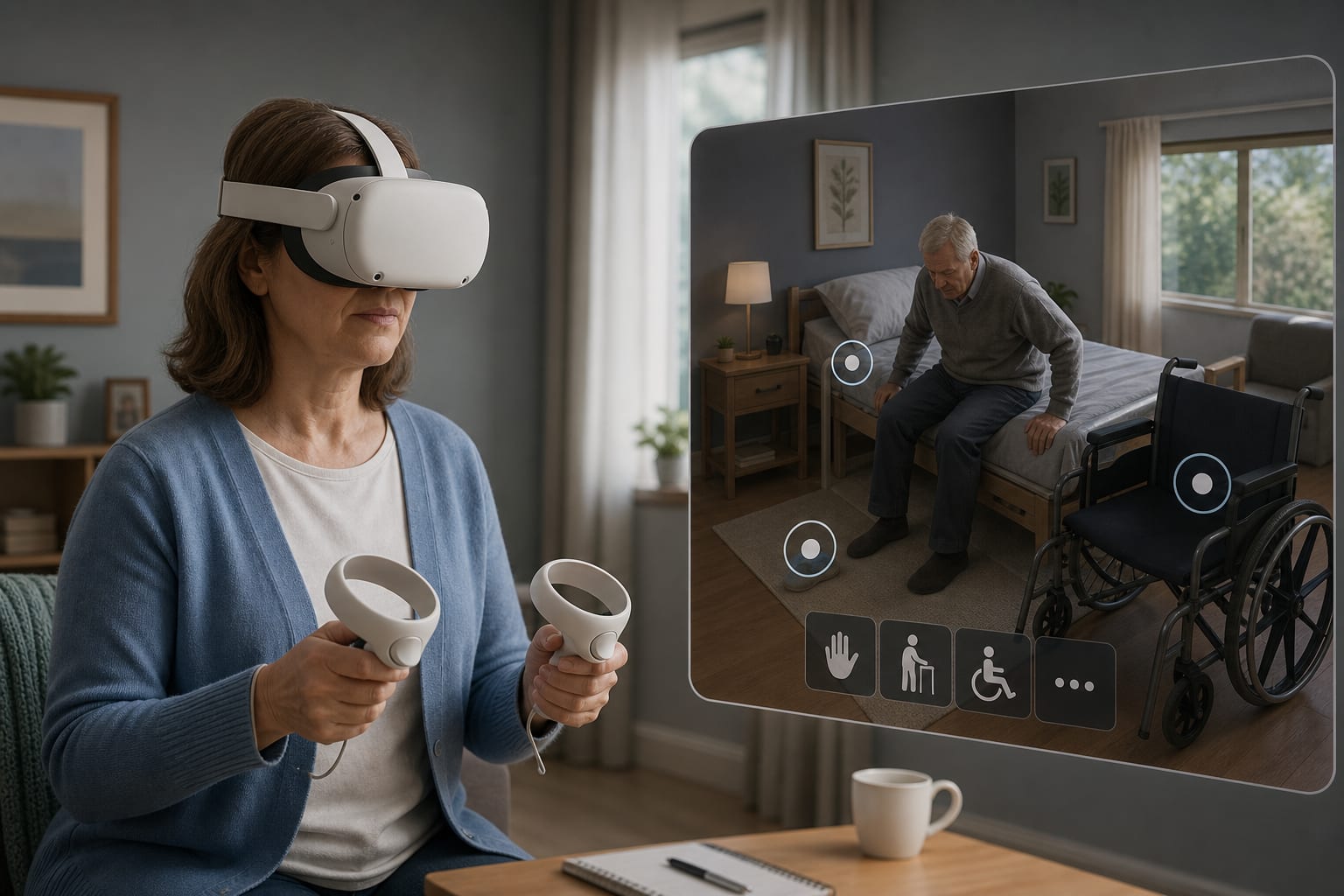
Immersive 360° video is a practical training tool that enhances contextual realism and learner engagement, suitable for home-care settings.
Interpretation:
While immersive technologies show promise in enhancing caregiver training, there is a need for more robust studies to comprehensively address the diverse needs of informal caregivers throughout the care trajectory.
Limitations:
Gaps remain in programs focusing on emotional and psychological support for caregivers.
Current evidence primarily stems from pilot studies and quasi-experimental trials, necessitating further research, particularly robust, transnational studies.
Conclusion:
Immersive digital simulation presents a potential approach to enhance the training of informal caregivers, addressing both technical and emotional needs.
by José Joaquín Mira, Clara Pérez-Esteve, Eva Gil-Hernández, Almudena Arroyo-Rodríguez, Jesús María Aranaz-Andrés, Purificación Ballester, Irene Carrillo