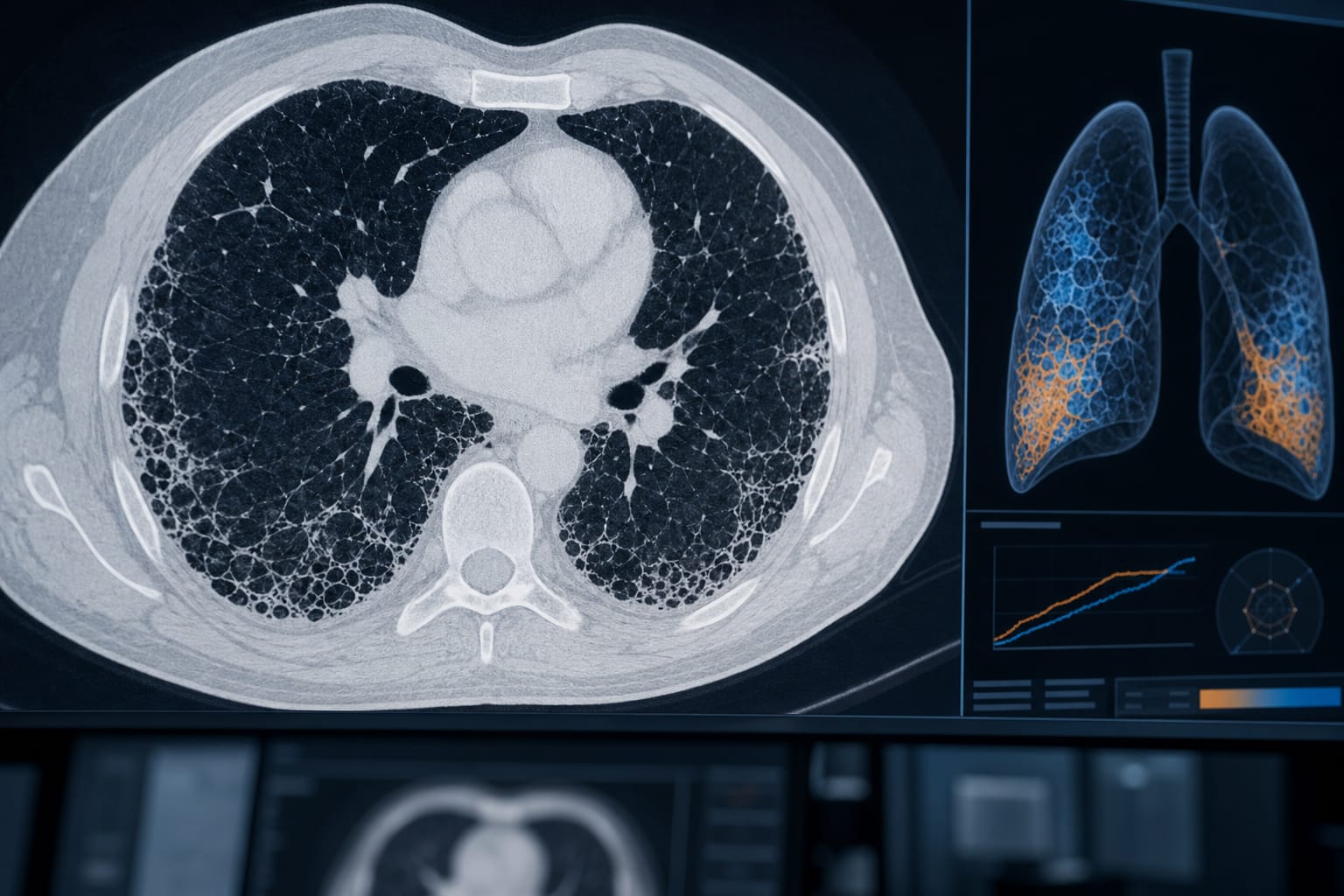
To summarize the status, limitations, and emerging approaches in the diagnosis of lung fibrosis, focusing on imaging modalities, histopathological techniques, molecular diagnostics, and artificial intelligence applications.
Approach:
Key Findings:
High-resolution computed tomography (HRCT) is the gold standard for non-invasive diagnosis, with pattern classification guided by the 2022 ATS/ERS/JRS/ALAT guidelines.
MRI, lung ultrasound, and functional imaging offer valuable adjuncts.
Surgical lung biopsy provides histopathological confirmation but carries risks; transbronchial lung cryobiopsy (TBLC) is a less invasive alternative with high diagnostic yields.
Emerging techniques like gene expression profiling and AI-enhanced imaging show promise but are adjuncts to multidisciplinary discussion.
Home-based monitoring technologies and molecular imaging have improved longitudinal disease monitoring capabilities.
Challenges include diagnostic variability, limited access to advanced modalities, and lack of standardized diagnostic algorithms.
Interpretation:
Limitations:
Diagnostic variability persists.
Access to advanced diagnostic modalities is limited.