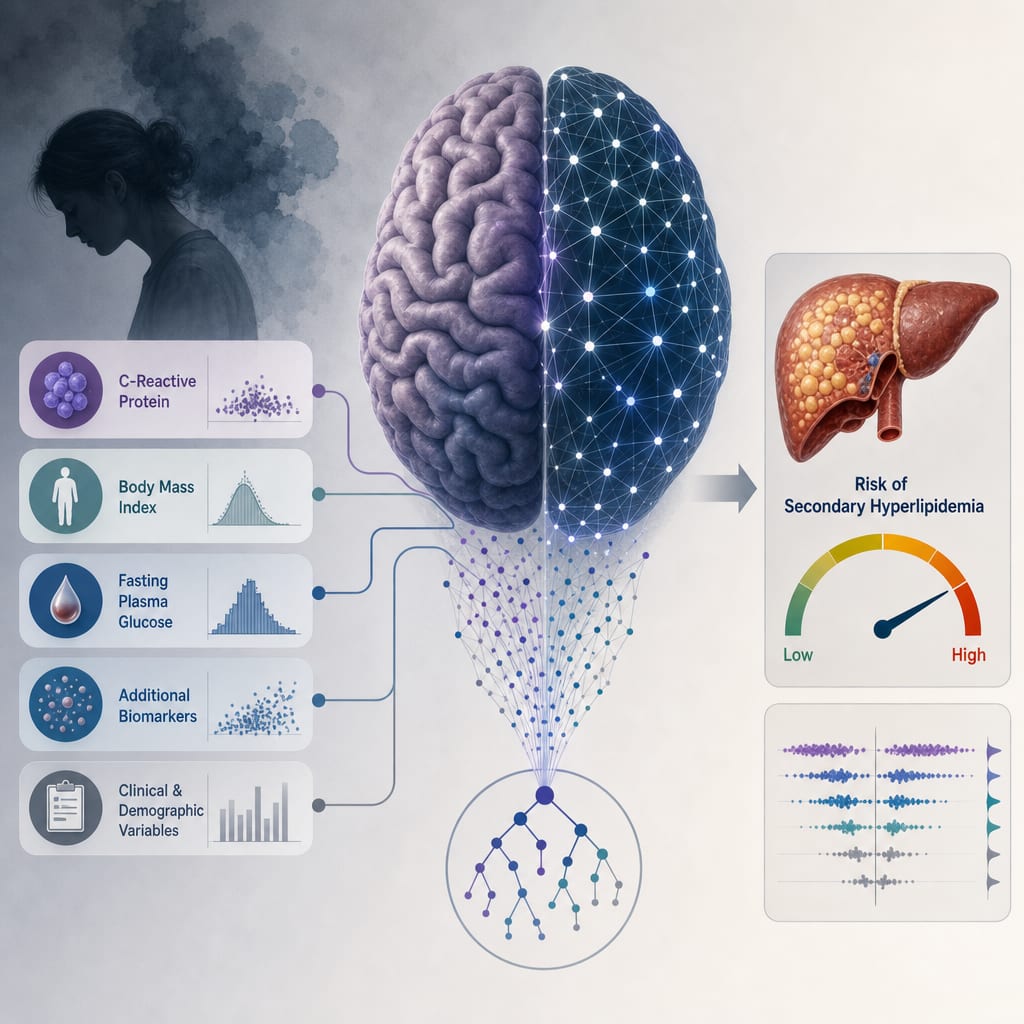
To develop and validate a machine learning-based model to predict the risk of secondary hyperlipidemia in patients with clinically diagnosed depressive disorders, addressing the lack of early screening tools.
Key Findings:
Six core predictors identified: BMI, weekly physical activity, long-term medication, emotion regulation disorder, CRP, and FPG.
Decision Tree model showed the best performance with an AUC of 0.87 (95% CI: 0.82–0.92) in external validation.
Interpretation:
Machine learning integration with clinical data offers a highly accurate tool for early identification of secondary hyperlipidemia in depressed patients, potentially improving preventive interventions and metabolic health outcomes in clinical practice.
Limitations:
Retrospective design may limit causal inference and the ability to establish temporal relationships.
Study conducted in a specific geographical area may affect generalizability to other populations.
Conclusion:
The study presents a robust machine learning model for predicting secondary hyperlipidemia risk in depression, emphasizing the need for personalized preventive strategies in clinical practice.
Swedish study finds two-way associations between premenstrual disorders and psychiatric conditions, with strongest links involving depression, anxiety, attention-deficit/hyperactivity disorder, bipolar disorder, and personality disorders.