Evaluation of Radiation Therapy Protocols Before and After Biodegradable Hydrogel (SpaceOAR) Administration to Mitigate Rectal Toxicity in Prostate Cancer Patients Receiving Carbon Ion Radiotherapy - Summary - MDSpire
Advertisement
Evaluation of Radiation Therapy Protocols Before and After Biodegradable Hydrogel (SpaceOAR) Administration to Mitigate Rectal Toxicity in Prostate Cancer Patients Receiving Carbon Ion Radiotherapy
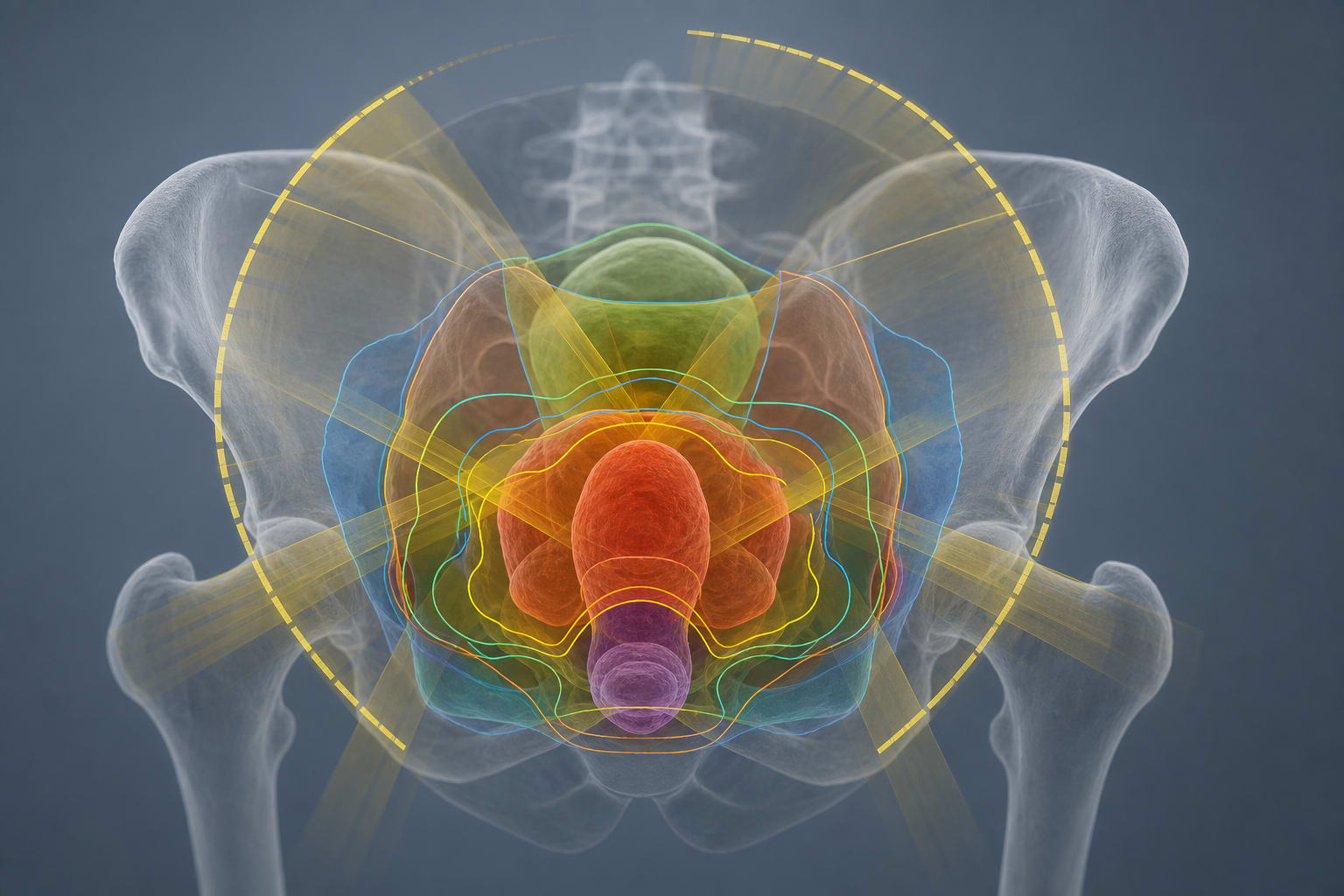
To assess the impact of SpaceOAR on dose distribution and plan robustness in prostate cancer patients receiving carbon ion radiotherapy (CIRT), particularly in comparison to conventional methods.
Key Findings:
SpaceOAR insertion resulted in a significant reduction in rectal radiation dose (p < 0.001), indicating a clinically meaningful improvement.
Overall plan quality improved with SpaceOAR, as indicated by DVH metrics and ProKnow scores (p < 0.001), suggesting enhanced treatment efficacy.
Robustness evaluation confirmed enhanced safety and reliability of treatment plans with SpaceOAR, supporting its use in clinical settings.
Interpretation:
Integrating SpaceOAR into CIRT for prostate cancer reduces rectal radiation exposure and improves plan robustness, allowing for potential dose escalation to the target volume without compromising safety, which may enhance patient outcomes.
Limitations:
The study was retrospective and involved a small sample size of 25 patients, which may limit the statistical power and generalizability of the findings.
Exclusion criteria may limit generalizability to a broader patient population, necessitating further studies to validate these results.
Conclusion:
SpaceOAR integration in CIRT for prostate cancer enhances treatment safety and efficacy by minimizing rectal toxicity, highlighting the need for further research to confirm these findings in larger cohorts.
This twice-monthly newsletter highlights recently published research where Dana-Farber faculty are listed as first or senior authors. The information is pulled from PubMed and this issue notes papers published from February 16 - 28.
Cancer care today is more advanced, more personalized, and more effective than ever before, and Radiation Oncology plays a central role in that progress.