Modified electroconvulsive therapy for treatment-resistant self-injurious behavior in autism spectrum disorder with severe intellectual disability: a case report - Summary - MDSpire
Conexiant’s news site is now MDSpire News. Learn more
Advertisement
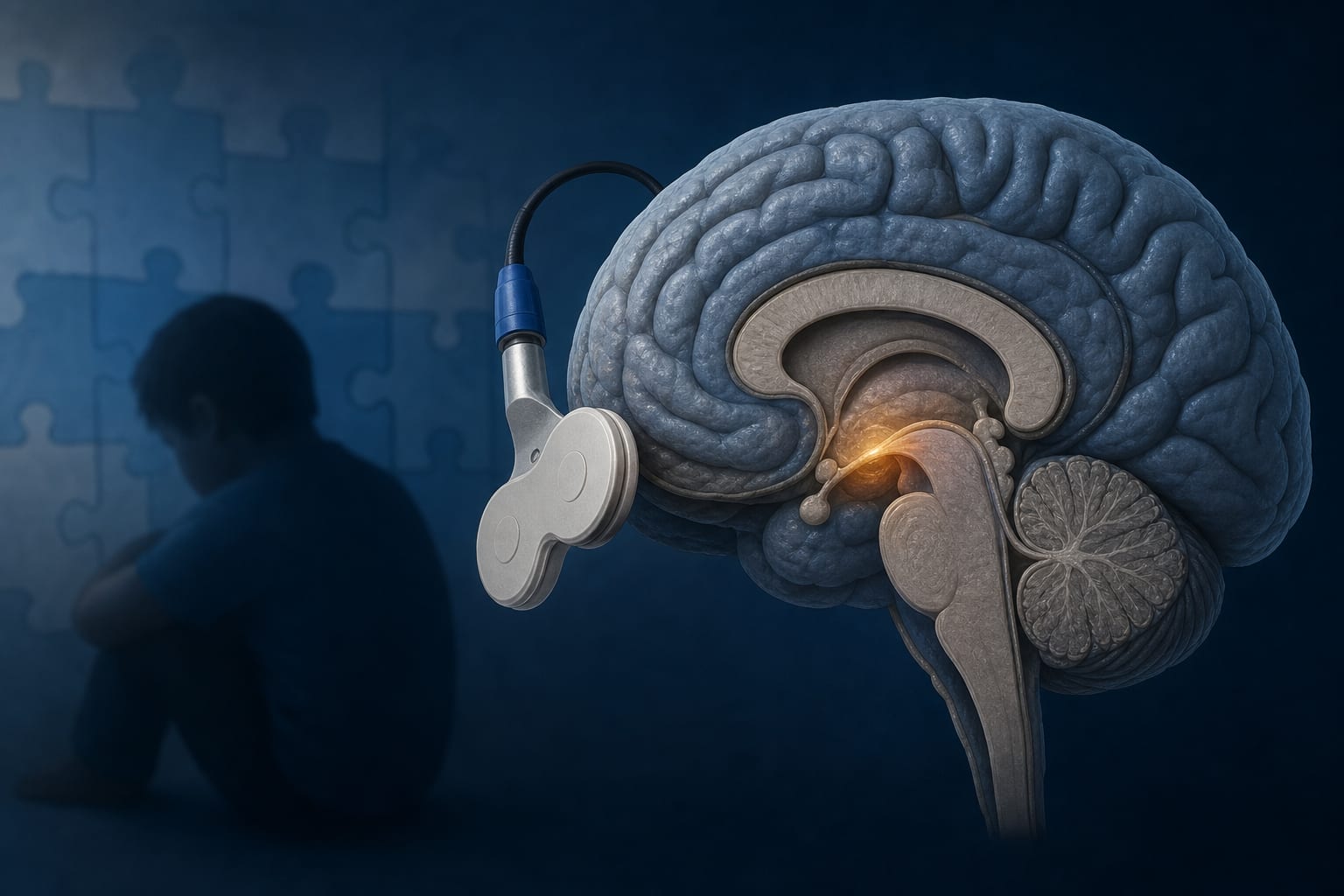
Application of Modified Electroconvulsive Therapy for Persistent Self-Injurious Behavior in Autism Spectrum Disorder with Severe Intellectual Disability: A Case Study
To evaluate the efficacy and safety of modified electroconvulsive therapy (MECT) in reducing treatment-refractory self-injurious behavior (SIB) in a patient with autism spectrum disorder (ASD) and severe intellectual disability (ID), particularly in the context of limited treatment options.
Key Findings:
Complete resolution of SIB was observed after MECT, with no hand-biting episodes reported.
Significant reductions in VRAS score (from 18 to 7), BPRS score (from 74 to 35), and improvement in ADL score (from 46 to 30) were noted.
Therapeutic gains were sustained and further enhanced at 30 days post-MECT.
Interpretation:
The case provides preliminary observational evidence that MECT may effectively reduce treatment-refractory SIB in patients with ASD and severe ID, highlighting the need for further research in this area.
Limitations:
The study is based on a single-case design, limiting generalizability and the ability to draw definitive conclusions.
Lack of validated SIB-specific instruments for standardized outcome measures may affect the reliability of the findings.
Conclusion:
Further controlled studies using standardized SIB outcome measures are warranted to validate these findings and explore the long-term effects of MECT on SIB in this population.