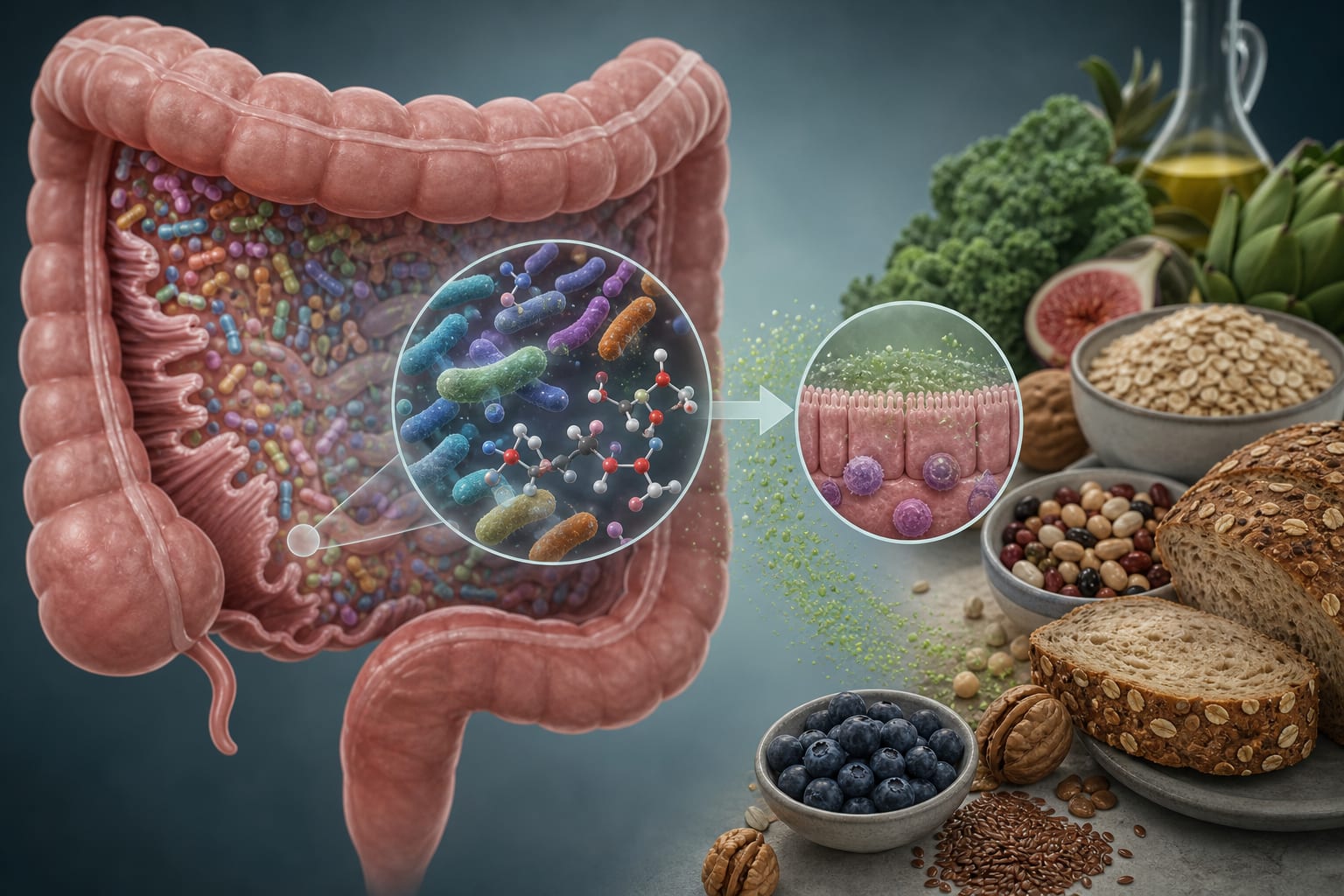
To elucidate the mediating role of the gut microbiota in linking dietary intake with clinical and phenotypic characteristics of patients with inflammatory bowel disease (IBD), emphasizing its significance for management strategies.
Key Findings:
IBD patients exhibited lower diet quality and microbiome diversity, with CD showing the lowest diversity. Specific metrics or statistical significance should be included.
Coffee and whole wheat bread were associated with reduced inflammation in CD via SCFA-producing taxa.
In UC, Mediterranean-like, fibre-rich diets lowered inflammatory markers through enhanced microbial richness and reduced dysbiosis.
Interpretation:
The study highlights the distinct microbial and metabolic pathways linking diet to inflammation in CD and UC, suggesting tailored dietary interventions could improve patient outcomes and warrant further research.
Limitations:
The study's recruitment period may limit generalizability to broader populations.
Potential biases in self-reported dietary intake and lifestyle factors, including recall bias and social desirability bias.
Conclusion:
Personalized, microbiome-informed dietary interventions could complement medical therapy in IBD, targeting specific bacterial taxa and SCFA pathways, thereby enhancing patient management.
by Luis Mayorga, Arnau Noguera Segura, Laura Campderros, Marc Pons-Tarin, Zaida Soler, Sara Vega-Abellaneda, Gerard Serrano-Gomez, Claudia Herrera-deGuise, Virginia Robles-Alonso, Natalia Borruel, Chaysavanh Manichanh