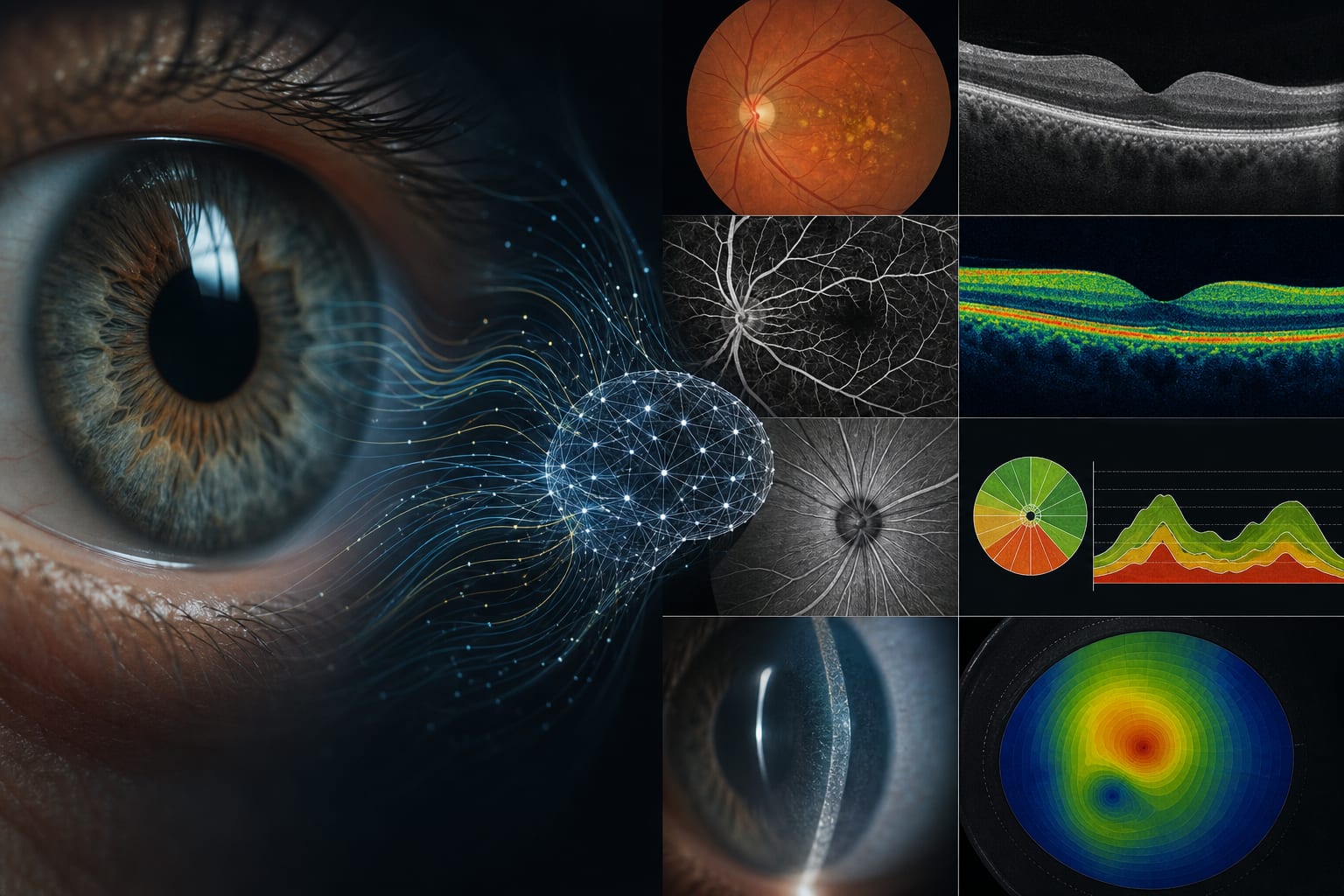
To review the evolution and application of imaging techniques in the diagnosis and treatment of ophthalmic diseases, emphasizing their significance in clinical practice.
Approach:
Key Findings:
Ophthalmic imaging has evolved from structural depiction to functional integration.
Multimodal imaging strategies enhance diagnostic accuracy for complex ocular conditions.
Ocular imaging parameters are associated with systemic diseases, expanding their diagnostic utility.
Imaging plays a critical role in perioperative management across various stages.
Interpretation:
The editorial emphasizes the transformative impact of imaging technologies in ophthalmology, highlighting their role in both local and systemic disease assessment, and linking to key findings.
Limitations:
Standardization of imaging parameters across devices and populations remains a challenge, impacting comparability.
Interpretability of imaging data needs improvement to enhance clinical decision-making.
Real-world clinical integration of advanced imaging technologies is still developing, affecting widespread adoption.
Conclusion:
The review aims to provide a comprehensive overview of the advancements in ophthalmic imaging and its implications for clinical practice and research, stressing the need for ongoing innovation.