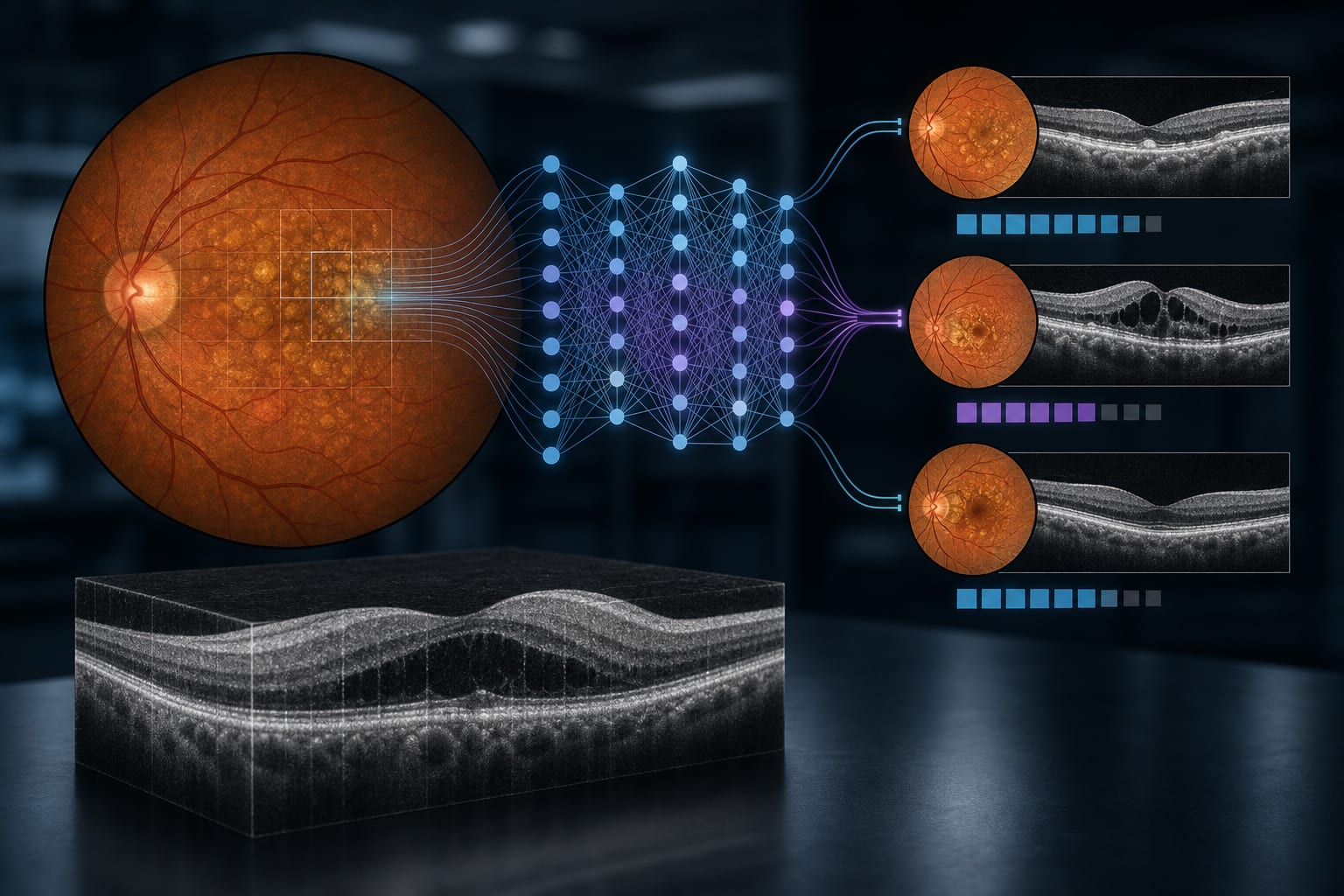
To evaluate the diagnostic performance of deep learning (DL) algorithms compared with ophthalmologists of varying experience levels for detecting age-related macular degeneration (AMD) and differentiating its subtypes (wet AMD vs dry AMD), and to assess potential factors influencing DL diagnostic performance, including imaging modality and validation strategies.
Approach:
Key Findings:
Previous meta-analyses reported high sensitivity and specificity for DL algorithms but lacked comprehensive comparisons with varying clinician experience.
The review addresses gaps in literature regarding the differentiation of wAMD from dAMD and the influence of various factors on DL performance, including imaging modality and validation strategies.
Interpretation:
The systematic review aims to provide a synthesis of the clinical value and limitations of DL for AMD image classification, focusing on practical deployment in clinical settings.
Limitations:
The review may be limited by the quality and heterogeneity of included studies, which could affect the reliability of the findings.
Potential biases in the studies reviewed may affect the generalizability of findings.
Conclusion:
This systematic review and meta-analysis aims to provide updated evidence on the performance of DL algorithms in AMD diagnosis and their comparison with ophthalmologists.
Authors describe both potential retinal benefits and possible rare optic nerve risks, while emphasizing that long-term ocular safety data remain limited as use expands.