The NLRP3 inflammasome in gynecological cancers: a double-edged sword shaping the immune microenvironment and immunotherapy response - Summary - MDSpire
To systematically evaluate the paradoxical functions of NLRP3 in ovarian, endometrial, and cervical cancers, emphasizing its dual impact on the tumor immune microenvironment and responses to immunotherapy.
Approach:
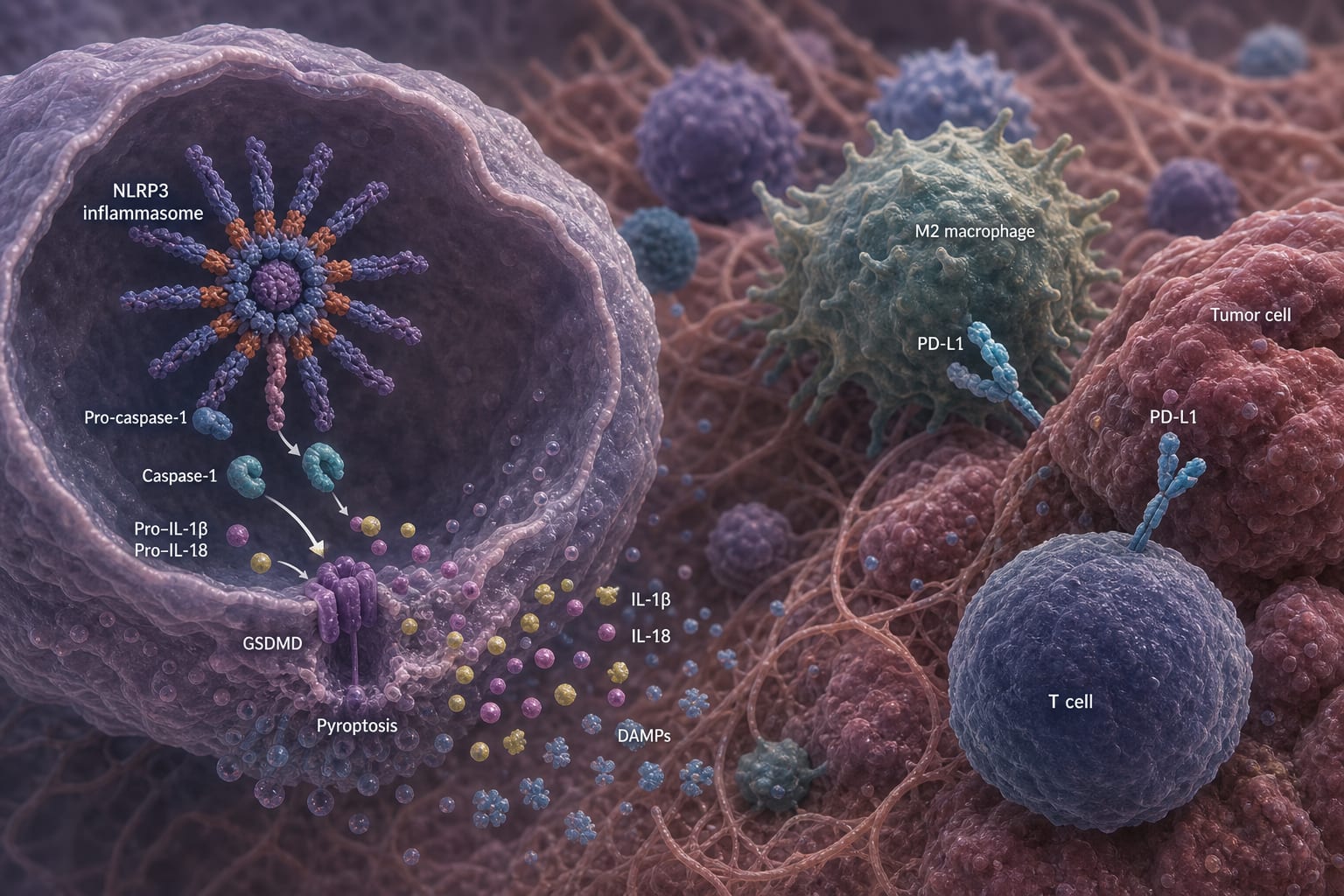
Ovarian Cancer: NLRP3 drives immune suppression through PD-L1 upregulation and M2 macrophage polarization via the USP19-STAT6 axis, while enhancing cisplatin sensitivity through FTO-mediated pyroptotic signaling.
Endometrial Cancer: The ERRα-NLRP3-GSDMD pathway regulates pyroptosis in a molecular subtype-dependent manner, with pro-immune effects in MSI-H tumors and potentially pro-tumorigenic effects in microsatellite-stable subtypes.
Cervical Cancer: HPV oncoproteins silence NLRP3 through multiple mechanisms, including Foxm1-mediated transcriptional suppression, KIF23-dependent GSDMD blockade, and non-coding RNA regulation, to evade immune surveillance.
Immunotherapy Resistance: The tumor-intrinsic PD-L1/NLRP3 axis is a key driver of resistance to anti-PD-1 immunotherapy across cancers.
Therapeutic Strategies: NLRP3-activating nanovaccines and small-molecule agonists are proposed to convert immunologically cold tumors into immunoresponsive ones.
Combination Approaches: Integration of NLRP3 modulators with immune checkpoint inhibitors and PARP inhibitors via the cGAS-STING-NLRP3 axis is discussed.
Key Findings:
NLRP3 has dual roles in gynecological cancers, promoting both immune suppression and anti-tumor immunity.
In ovarian cancer, NLRP3 contributes to immune suppression and enhances sensitivity to chemotherapy.
In endometrial cancer, NLRP3's effects vary by molecular subtype, influencing tumor behavior.
In cervical cancer, HPV manipulates NLRP3 to evade immune detection.
The PD-L1/NLRP3 axis is implicated in resistance to immunotherapy.
Interpretation:
Understanding the context-dependent functions of NLRP3 is essential for developing tailored immunotherapeutic strategies in gynecological malignancies.
Limitations:
The complexity of the immune microenvironment in gynecological cancers complicates the interpretation of NLRP3's role.
The review does not provide clinical trial data or specific patient outcomes related to NLRP3 modulation.
Conclusion:
A nuanced understanding of NLRP3's role in gynecological cancers is essential for advancing precision immunotherapy.