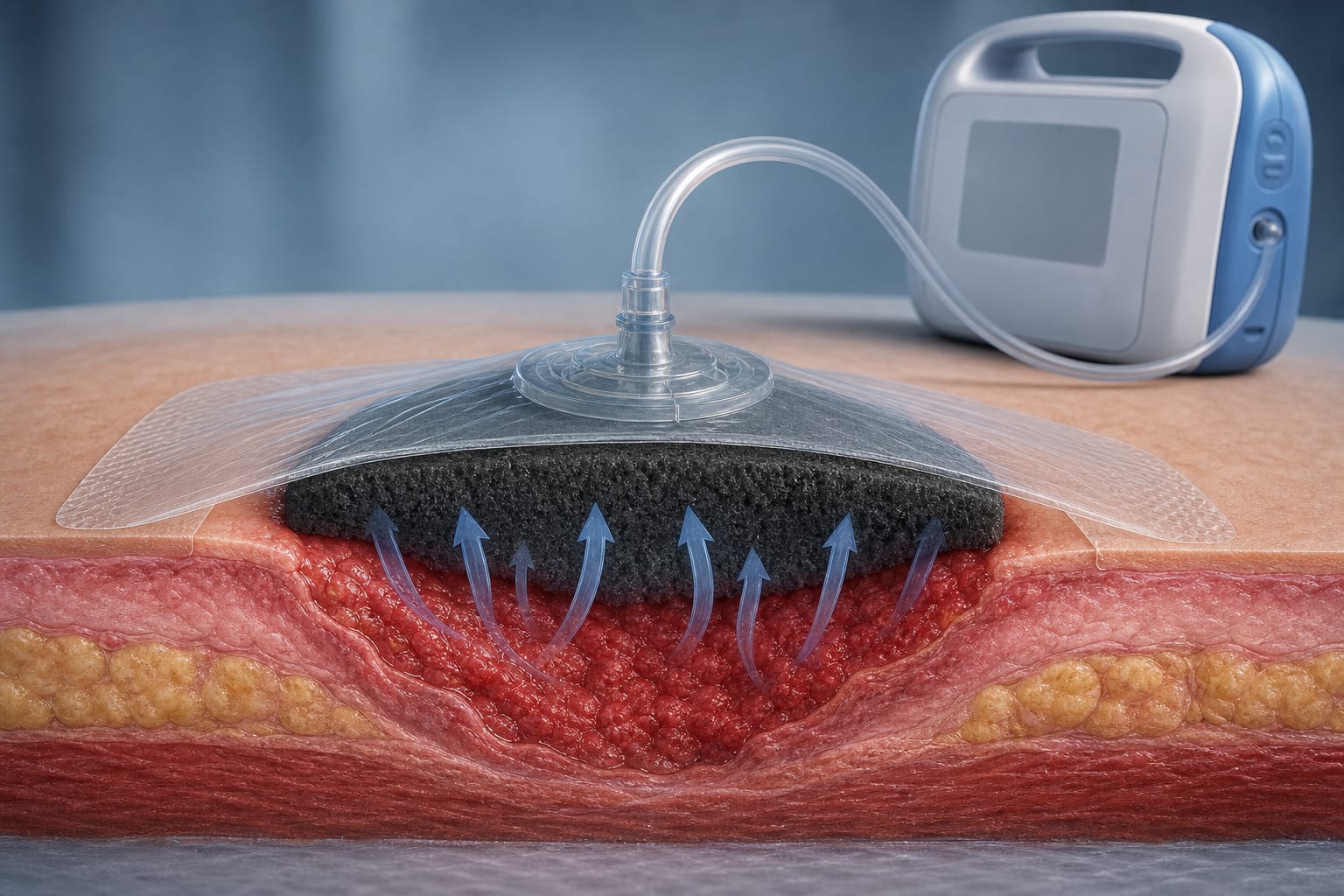
To compare the effects of different NPWT modes on wound-healing-related outcomes and provide evidence for mode selection in clinical practice.
Approach:
Literature Search: A systematic search was conducted across 11 databases from 1997 to 2024, following PRISMA guidelines.
Study Inclusion: Included studies compared at least two NPWT modes (C-NPWT, I-NPWT, D-NPWT) focusing on wound healing outcomes.
Key Findings:
Ten clinical studies and 15 animal studies were included in the review.
Continuous, intermittent, and dynamic NPWT may influence wound healing differently.
Intermittent NPWT and dynamic NPWT showed potential advantages over continuous NPWT in specific outcomes like healing speed and tissue perfusion.
Interpretation:
Current evidence is insufficient to establish a definitive ranking among NPWT modes or optimal treatment parameters due to substantial heterogeneity in studies.
Limitations:
Heterogeneity in wound types, parameter settings, outcome measures, and study designs.
Insufficient evidence to determine optimal NPWT mode for different wound types.
Conclusion:
Future research should focus on large-scale, high-quality, multicenter studies with refined wound-type stratification and standardized parameters.