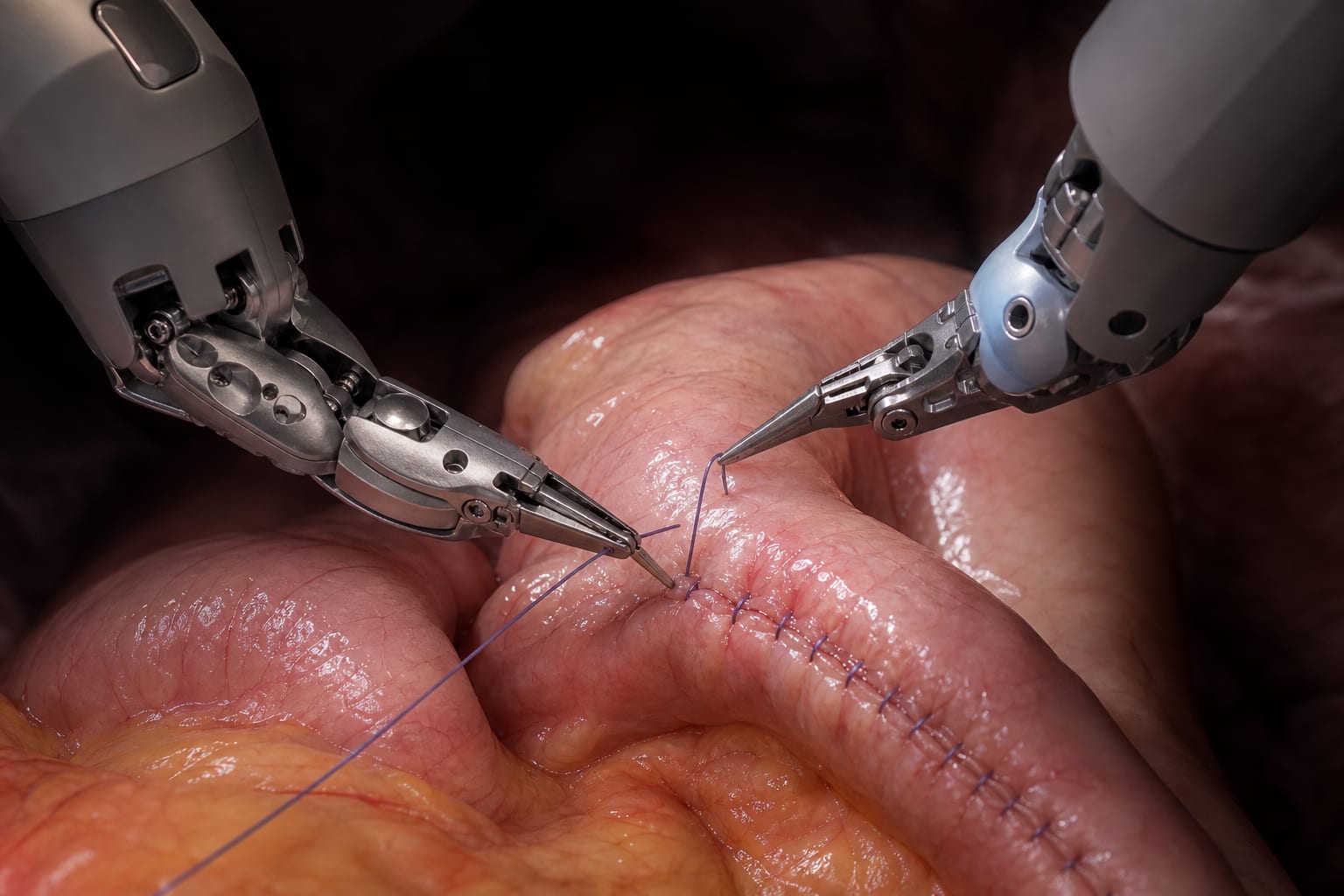
To objectively determine if a robotically performed gastrojejunal (GJ) anastomosis offers superior technical precision and lower cognitive workload (CWL) compared to the laparoscopic approach among experienced bariatric surgeons.
Approach:
Assessment Methods: Intraoperative technical performance was evaluated using a validated procedure-specific tool, a global assessment scale, and granular technical execution metrics.
Key Findings:
Robotic surgical platforms may enhance surgical dexterity and precision during complex procedures.
Cognitive workload associated with robotic surgery may be lower compared to traditional laparoscopic techniques.
Interpretation:
Robotic assistance in bariatric surgery could potentially improve technical proficiency and reduce cognitive demands on surgeons, although further systematic measurement is needed.
Limitations:
The study may be influenced by the varying complexities of cases and the experience level of surgeons.
Conclusion:
The study aims to rigorously evaluate the technical proficiency of robotic-assisted GJ anastomosis compared to laparoscopic methods.
by Yit J. Leang, Kaleb R. Lourensz, Maria K. Vanguardia, Chrys S. Hensman, Damien Loh, Richard Chen, Andrew J. Packiyanathan, Joseph C. H. Kong, Wendy A. Brown, Paul R. Burton