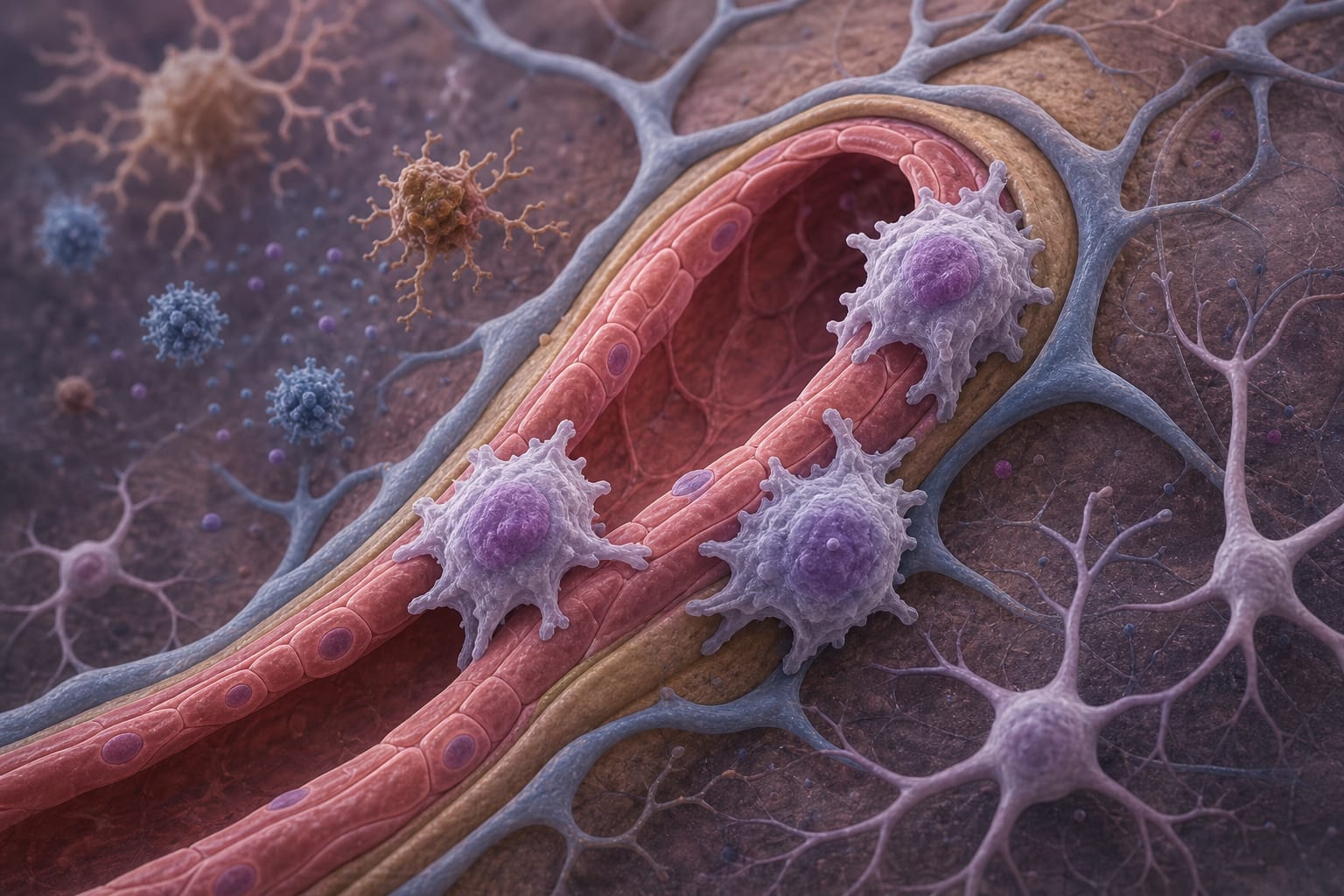
To outline a structured research framework for investigating the role of CD163+ perivascular macrophages in schizophrenia and their potential responses to various signals.
Approach:
Research Framework: Proposes sequential methodological aims to define CD163+ cell localization and phenotypes, assess molecular signals, and compare macrophage activation states across schizophrenia and control groups.
Methodological Techniques: Utilizes spatial transcriptomic and cell-specific methods, along with single-cell and single-nucleus sequencing.
Key Findings:
Increased densities of CD163+ perivascular macrophages have been observed in schizophrenia post-mortem brain tissue.
The biological significance and developmental lineage of CD163+ macrophages in schizophrenia remain unclear.
Macrophage activation states cannot be inferred from a single marker, highlighting the necessity for a comprehensive evaluation of multiple markers.
Interpretation:
The proposed framework aims to systematically investigate macrophage-related mechanisms in schizophrenia without presuming a specific infectious aetiology.
Limitations:
Epidemiological associations between viral infections and schizophrenia are inconsistent.
Direct localization of viruses within specific brain cell types in schizophrenia has not been demonstrated.
Conclusion:
The framework provides a roadmap for distinguishing established findings from untested assumptions in the study of macrophage involvement in schizophrenia.
by Hans C. Klein, Paul C. Guest, Michael E. Benros, Chavit Tunvirachaisakul, Christian Scheiber, Michael Maes, Robert Yolken, Karl Bechter, Johann Steiner