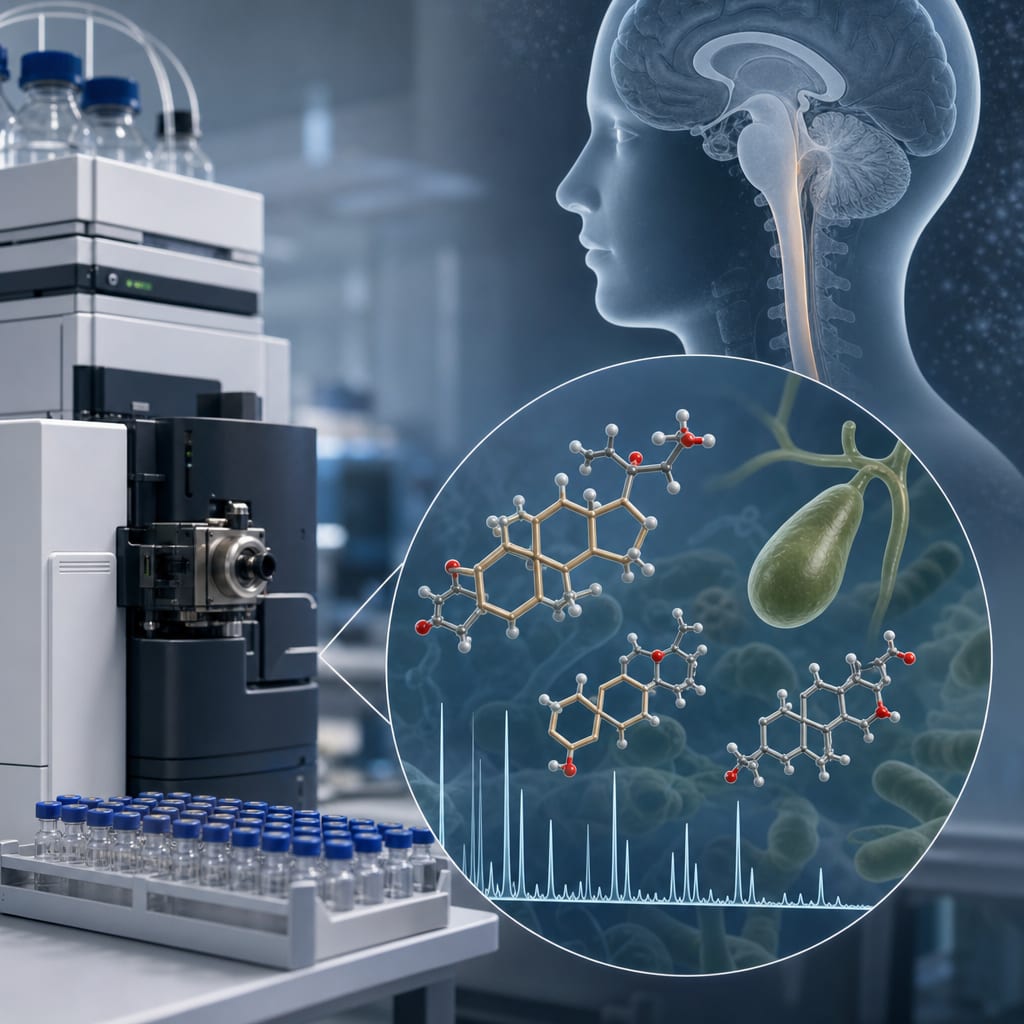
To analyze bile acid metabolism in NMOSD and MS to evaluate its diagnostic potential, particularly for AQP4-IgG seronegative NMOSD, highlighting the clinical challenges in distinguishing these conditions.
Key Findings:
Serum bile acid profiles significantly differed between NMOSD and MS.
NMOSD showed elevated primary conjugated bile acids, while MS had increased secondary bile acid metabolism.
AQP4-IgG seronegative NMOSD had lower secondary bile acid levels compared to other cohorts.
A bile acid-centric diagnostic framework achieved an AUC of 0.874 for distinguishing NMOSD from MS.
Deoxycholic acid (DCA) demonstrated an AUC of 0.965 for differentiating AQP4-IgG–seronegative NMOSD from MS.
Interpretation:
Bile acid metabolomics reveals distinct metabolic profiles that may enhance diagnostic accuracy for NMOSD and MS, particularly in AQP4-IgG–seronegative cases, suggesting a need for clinical integration.
Limitations:
The study's cross-sectional design limits causal inferences, which may affect the interpretation of the metabolic profiles.
Clinical applicability of DCA requires validation in independent cohorts to confirm its diagnostic utility.
Conclusion:
Bile acid metabolomic analysis provides insights into disease-specific profiles that could improve differential diagnosis of NMOSD and MS.