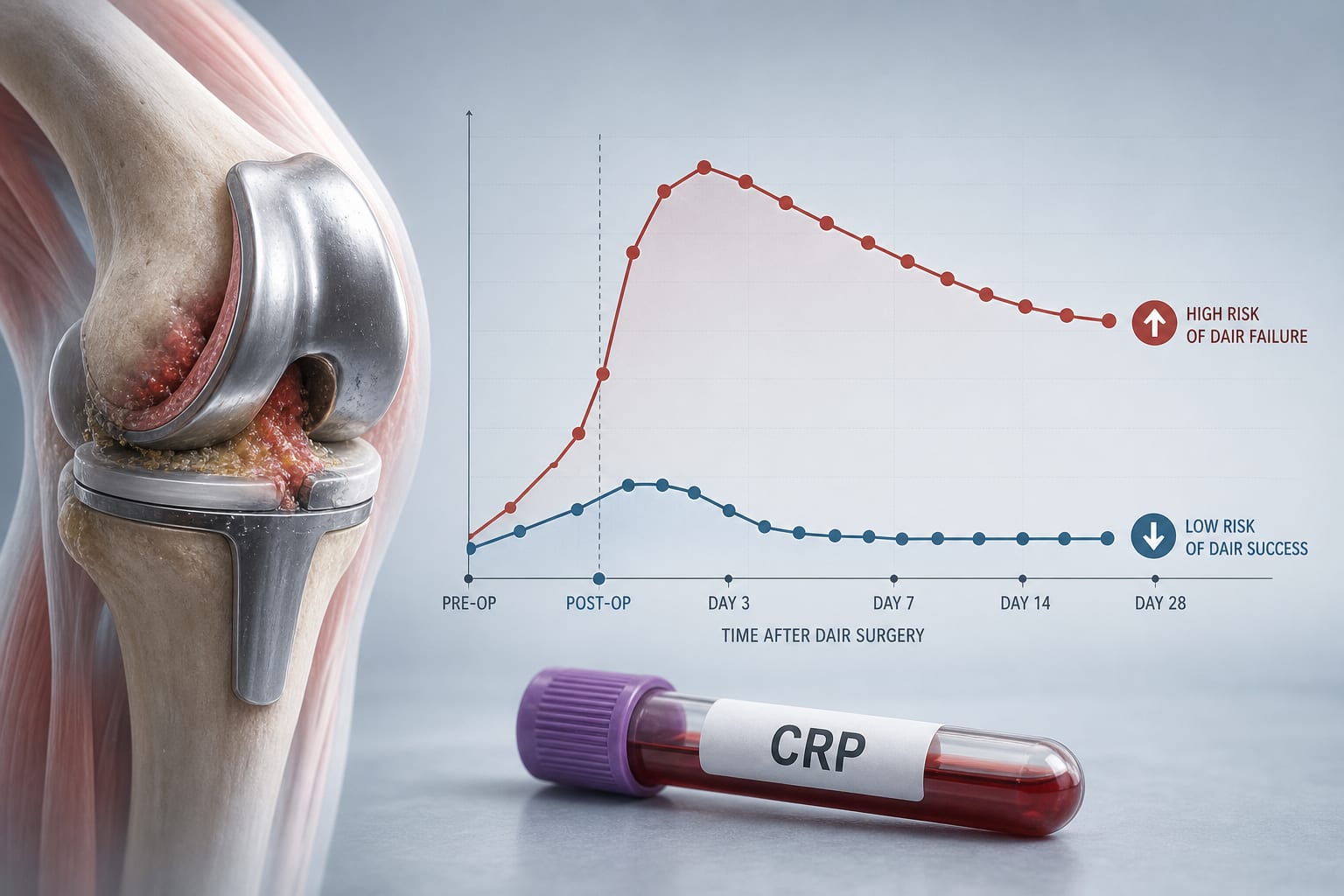
To determine the accuracy of post-operative serum CRP as a predictor of DAIR failure in total knee PJI.
Approach:
Study Design: Multicentre retrospective cohort study involving patients treated at three tertiary hospitals in Auckland, New Zealand, from January 2000 to December 2015.
Patient Selection: Included patients who underwent DAIR surgery for first episode total knee PJI; excluded those under 18 or with negative tissue cultures.
Data Collection: Collected baseline characteristics, CRP levels at multiple time points, and tissue culture results.
Outcome Definition: Defined DAIR failure based on criteria from the International Consensus Meeting.
Statistical Analysis: Used univariate and multivariate analyses to identify factors associated with DAIR failure and compared post-operative CRP levels.
Key Findings:
189 patients included: 97 (51%) S-DAIR and 92 (49%) F-DAIR.
Mean time from primary joint replacement to DAIR surgery was significantly lower in the S-DAIR group (1.3 vs. 2.9 years, P < 0.01).
CRP at admission was significantly lower for patients in the S-DAIR group (mean 118 vs. 162, P < 0.01).
Interpretation:
Limitations:
Retrospective design may introduce selection bias.