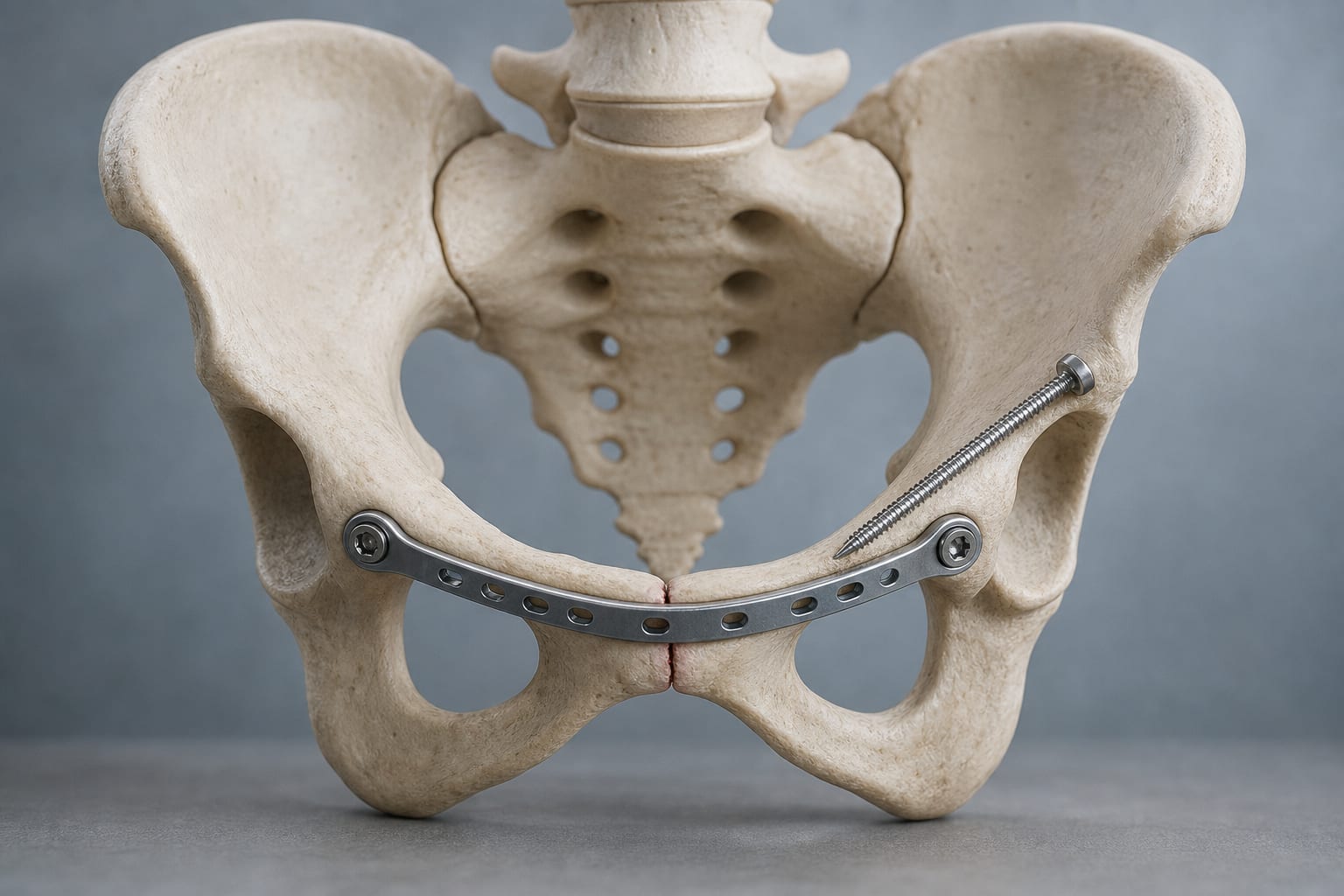
Minimally invasive stabilisation of anterior pelvic ring injuries through anterior infix versus percutaneous anterior retrograde pubic screw: a prospective comparative cohort study - Summary - MDSpire
Conexiant’s news site is now MDSpire News. Learn more
Advertisement
Comparative Analysis of Anterior Infix and Percutaneous Anterior Retrograde Pubic Screw for Minimally Invasive Stabilization of Anterior Pelvic Ring Injuries: A Prospective Cohort Study
To compare the outcomes of infix versus percutaneous anterior retrograde pubic ramus screw fixation in the management of unilateral zone II and III pubic ramus fractures in unstable pelvic injuries.
Approach:
Study Design: A prospective randomized cohort study conducted from August 2023 to August 2025 at a university hospital.
Participants: Fifty patients with anterior ring injuries were enrolled and randomly allocated into two groups: group 1 underwent anterior infix fixation, while group 2 received percutaneous retrograde pubic ramus screw fixation.
Assessment Methods: Primary evaluation was based on the Pelvic Outcome Score, with secondary assessments including intra-operative parameters, radiological outcomes using the Matta score, and functional outcomes using the Majeed score.
Key Findings:
Anterior pelvic ring fractures account for approximately 3% of adult fractures and can lead to significant morbidity and mortality.
The Infix technique is minimally invasive and effective for managing complex anterior pelvic ring injuries, providing satisfactory reduction, favorable radiological and functional outcomes, and reliable fracture healing.
Percutaneous retrograde pubic ramus screw fixation offers minimal blood loss and lower rates of complications but is technically demanding.
Interpretation:
Both fixation techniques are viable options for stabilizing anterior pelvic ring injuries, with specific advantages and challenges associated with each method.
Limitations:
The study was conducted at a single center, which may limit generalizability.
Sample size was calculated based on previous data, which may not reflect current clinical outcomes.
Conclusion:
The study aims to provide comparative insights into the effectiveness of two minimally invasive techniques for anterior pelvic ring injuries.
Investigators compared intra-articular microbial profiles and predicted metabolic pathways in patients with hip osteoarthritis and nonarthritic controls.