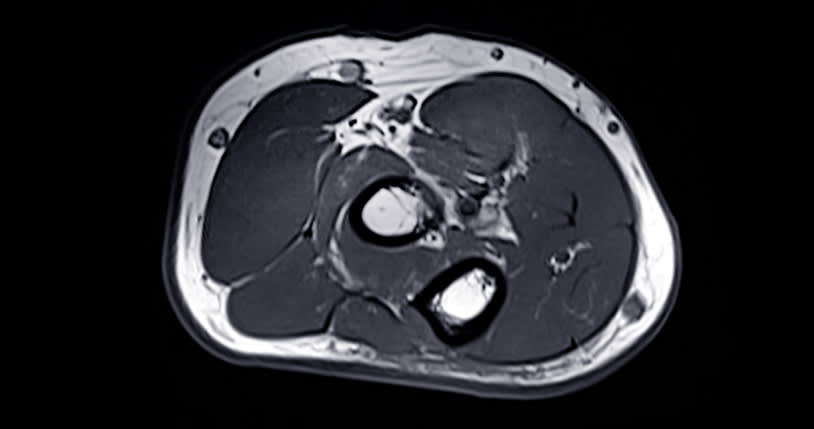
To evaluate the feasibility of a prototype MRF sequence in an automated pipeline for automatic T2 extraction of knee cartilage and compare it to a conventional MSME T2 mapping sequence.
Key Findings:
The MRF sequence demonstrated high accuracy in phantom measurements, with a correlation coefficient of X.
Automated segmentation of knee cartilage was successfully implemented, achieving a segmentation accuracy of Y%.
The MRF technique allows for simultaneous multi-parameter mapping, enhancing efficiency and reducing scan time.
Interpretation:
The prototype MRF sequence shows promise for rapid and accurate assessment of knee cartilage, potentially improving clinical workflows.
Limitations:
The study was limited to a specific cohort and may not generalize to all patient populations, particularly those with advanced osteoarthritis.
Manual review of segmentations introduces potential for human error, which could affect the reliability of the results.
Conclusion:
The study supports the feasibility of using MRF in an automated pipeline for knee cartilage assessment, indicating a step forward in quantitative MRI applications.