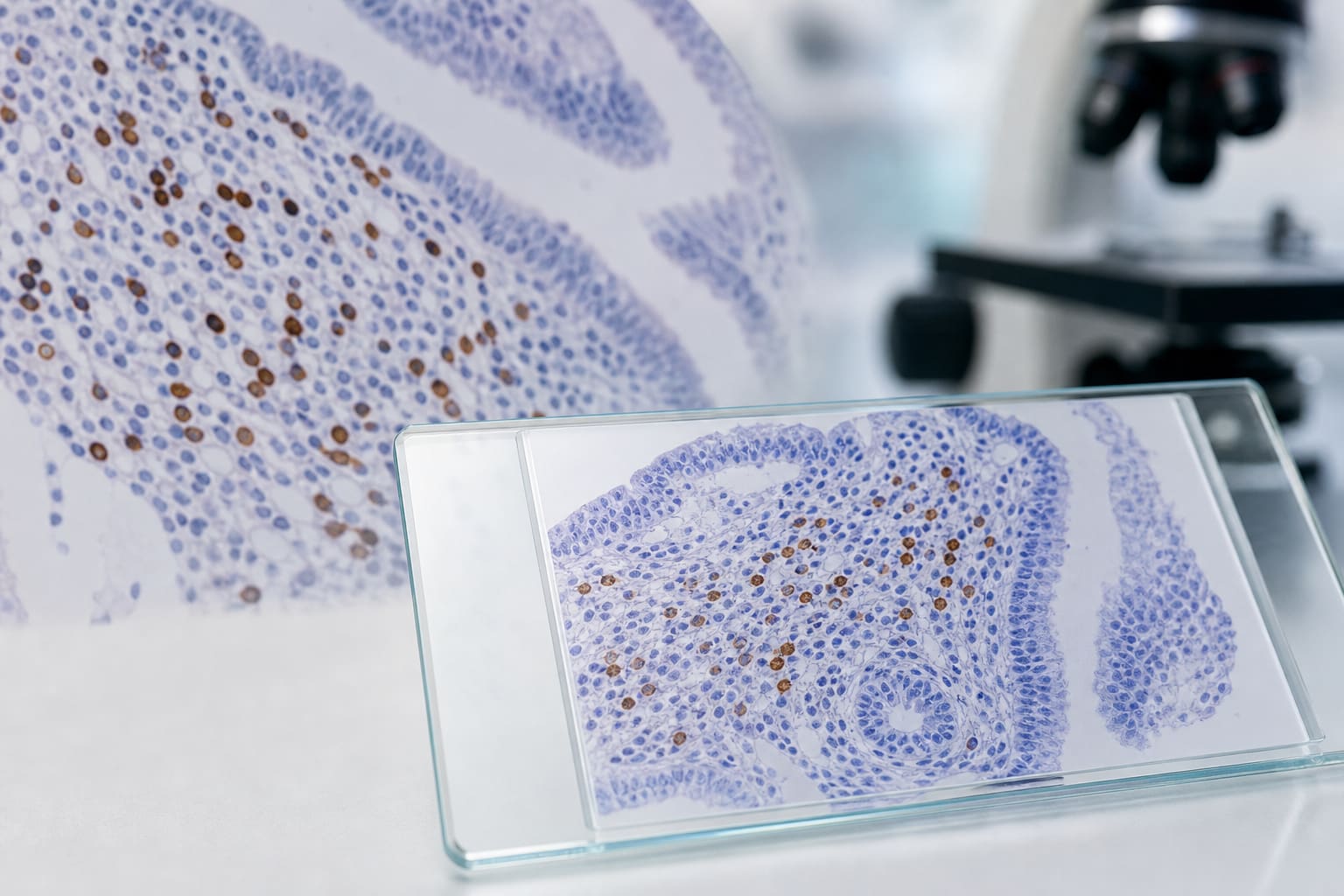
Early screening and post-treatment chronic endometritis in subsequent frozen embryo transfer cycles among women with first implantation failure: a retrospective cohort study - Summary - MDSpire
Advertisement
Early screening and post-treatment chronic endometritis in subsequent frozen embryo transfer cycles among women with first implantation failure: a retrospective cohort study
To assess the impact of chronic endometritis (CE) detection and management on pregnancy outcomes in women experiencing first implantation failure (FIF) during frozen-thawed embryo transfer (FET) cycles.
Approach:
Study Design: Retrospective cohort analysis of 4,528 women who experienced FIF after IVF/ICSI, with 2,885 included for analysis.
Treatment Protocol: Women diagnosed with CE received standardized empirical antibiotic treatment followed by post-treatment CD138 reassessment.
Outcome Measures: Primary outcome was live birth rate (LBR); secondary outcomes included clinical pregnancy rate (CPR) and early miscarriage rate (EMR).
Key Findings:
CE was identified in 16.8% of participants, with a cure rate of 89.1% after two courses of antibiotics.
No significant difference in pregnancy outcomes between women with CD138-positive counts of 0/HPF and 1-4/HPF.
Women with persistent chronic endometritis (PCE) had lower LBR (28.3% vs. 41.8%) and CPR (39.6% vs. 56.6%) compared to those with CD138-positive/HPF ≤4.
In IPTW-weighted analysis, PCE was significantly associated with lower CPR (weighted OR 0.65) and showed a trend towards lower LBR (weighted OR 0.73).
Interpretation:
An endometrial CD138-positive plasma cell count of ≤4/HPF is not associated with impaired pregnancy outcomes. PCE is linked to poorer reproductive outcomes.
Limitations:
Observational design limits causal inference.
Potential confounding factors may not have been fully accounted for.
Conclusion:
CE management can improve pregnancy outcomes in women with FIF, but persistent CE is associated with lower reproductive success.
Researchers linked several pregnancy urinary biomarkers—especially plasticizer and combustion-related chemical metabolites—to small shifts in gestational age and fetal growth measures in the ECHO Cohort.