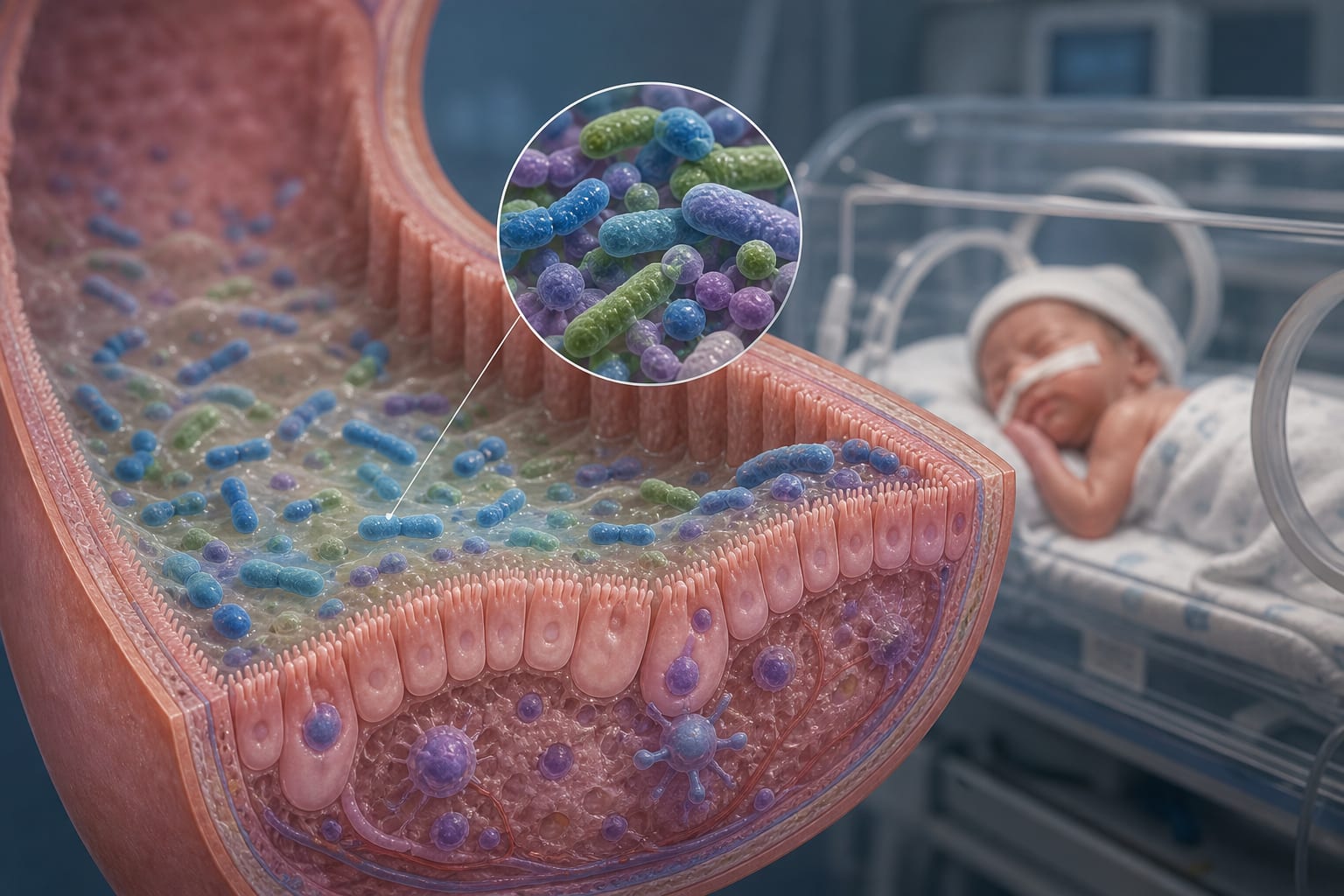
To assess the associations of probiotic supplementation with death, necrotizing enterocolitis (NEC), and sepsis in extremely preterm infants.
Approach:
Study Design: Cohort study using data from the Swedish Neonatal Quality Register (SNQ) for infants born at gestational ages 28 weeks 0 days to 31 weeks 6 days.
Data Collection: Information was prospectively documented at discharge or continuously throughout hospitalization, with ethical approval obtained.
Probiotic Administration: Probiotics were administered to very preterm infants starting in 2020, following national guidelines, using a specific freeze-dried mixture.
Outcome Measures: Primary outcomes included death and/or NEC and death and/or culture-proven late-onset sepsis, with independent evaluations of each component.
Key Findings:
Probiotic supplementation became standard care for very preterm infants in Sweden in 2020, following national guidelines.
The study aimed to evaluate the impact of probiotics on mortality, NEC, and sepsis in a population-based setting where data was prospectively documented.
Limitations:
The study excluded infants who died within the first 3 days of life or those with congenital abnormalities.
Data on race or ethnicity were not collected.
Conclusion:
The findings contribute to understanding the role of probiotics in extremely preterm infants regarding NEC and mortality.