Enhancing Postoperative Outcomes After Metabolic Bariatric Surgery: a Pilot Study of Inhibitory Control Training, Transcranial Direct Current Stimulation and Psychosocial Aftercare - Summary - MDSpire
Advertisement
Enhancing Postoperative Outcomes After Metabolic Bariatric Surgery: a Pilot Study of Inhibitory Control Training, Transcranial Direct Current Stimulation and Psychosocial Aftercare
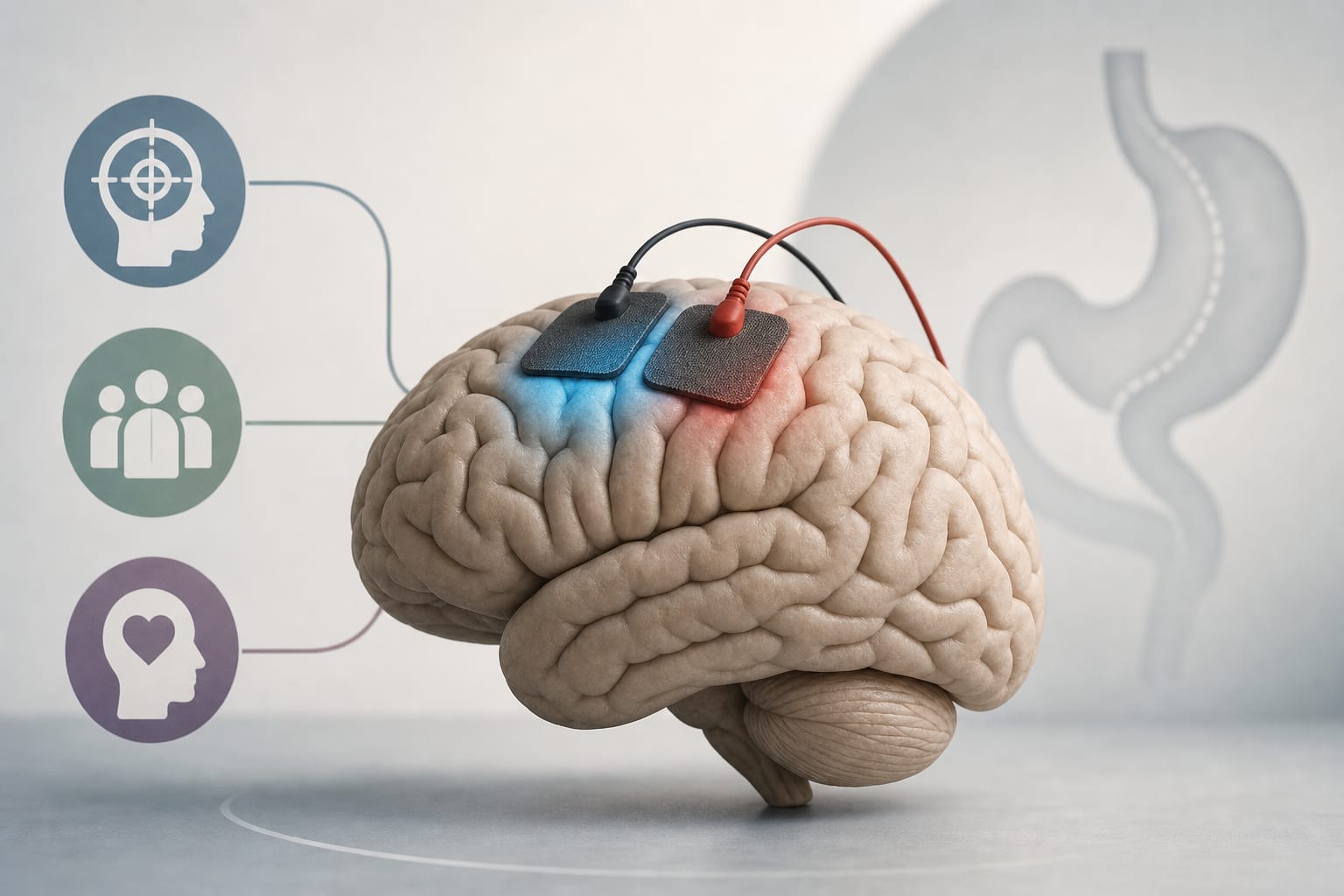
To examine the feasibility and acceptability of transcranial direct current stimulation (tDCS) combined with inhibitory control training and psychosocial support in improving postoperative outcomes after metabolic bariatric surgery.
Approach:
Patient Recruitment: Patients aged 18 years and older who underwent sleeve gastrectomy within the past 18 months were recruited from a university clinic, with informed consent obtained prior to participation.
Study Design: A double-blind, sham-controlled design was implemented, including one baseline assessment and two follow-up assessments at 4 weeks and 3 months post-intervention.
Intervention: Participants received six sessions of either active or sham tDCS, combined with inhibitory control training and monthly psychosocial group sessions led by a psychotherapist and a qualified dietician.
Key Findings:
Postoperative follow-up programs for metabolic bariatric surgery often lack adequate coverage by public health insurance.
Current clinical practice primarily focuses on weight loss and nutritional deficiencies, with insufficient attention to psychosocial outcomes.
Impulsivity and deficits in inhibitory control are associated with poorer postoperative outcomes after metabolic bariatric surgery.
Interpretation:
The study explores interventions targeting both neurobehavioral and psychosocial factors in the early postoperative phase to improve outcomes.
Limitations:
The study is preliminary and may not yield definitive conclusions due to its exploratory nature.
The sample size may limit the generalizability of the findings, as it is drawn from a specific patient population.
Conclusion:
This study investigates a novel approach to enhance postoperative outcomes through combined interventions that address impulsivity and provide psychosocial support.
by Sarah Alica Rösch, Carsten Thiele, Therese Reinstaller, Tino Zähle, Kathrin Schag, Katrin Giel, Christian Plewnia, Johann Steiner, Florian Junne, Susanne Vogt