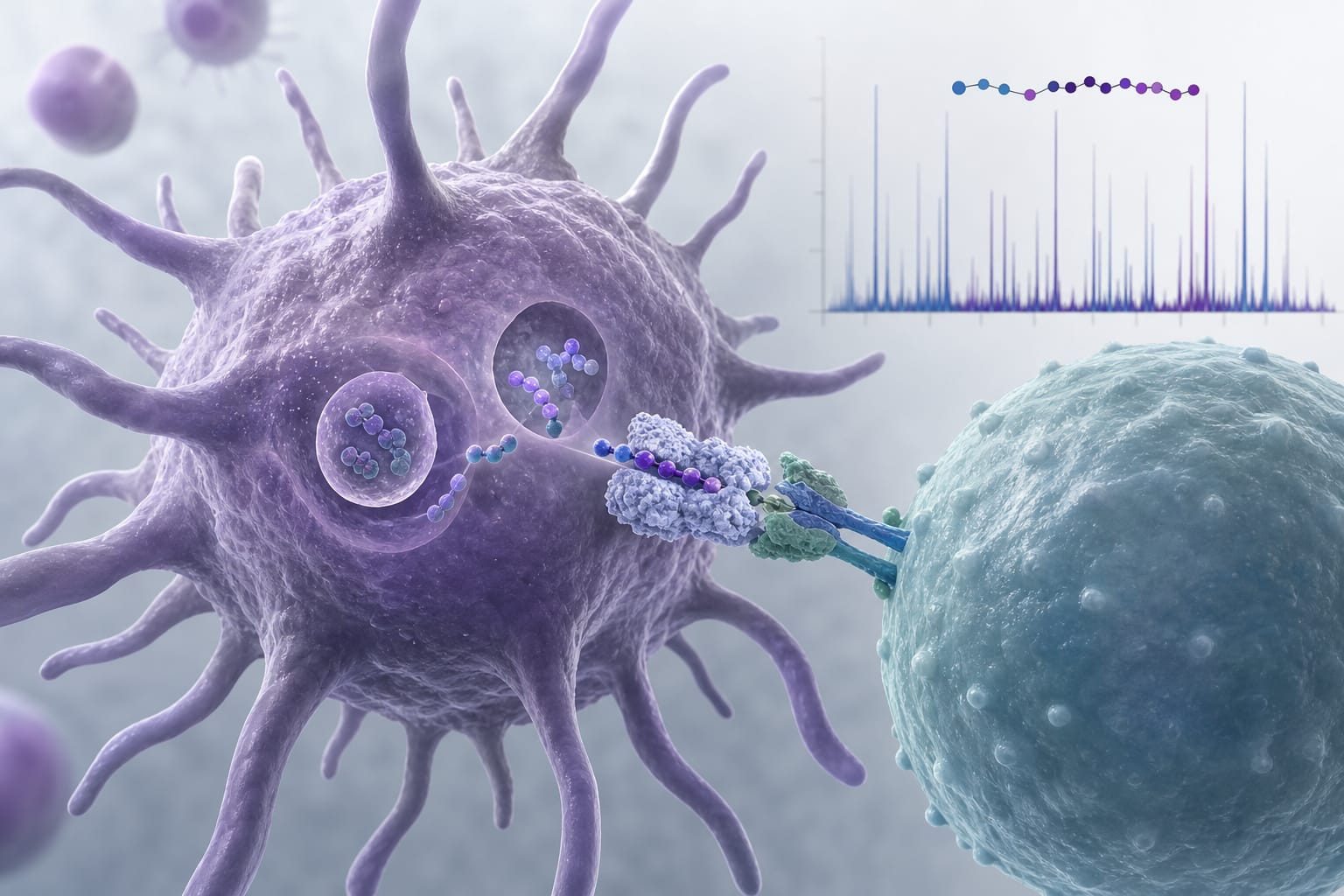
To introduce 'clinical MAPPs', an optimized assay for identifying MHC-II receptor-associated antibody-derived peptides in patients, aimed at enhancing personalized healthcare and assessing immunogenicity risks associated with therapeutic monoclonal antibodies.
Approach:
Assay Development: Clinical MAPPs is a miniaturized version of the MAPPs assay designed for clinical use, utilizing cryopreserved peripheral blood mononuclear cells from low blood volumes (10 mL).
Proof-of-Concept: The feasibility of clinical MAPPs was demonstrated by comparing peptide presentation and activation profiles in healthy individuals and patients in clinical trials, showing comparable results.
Key Findings:
Clinical MAPPs enables personalized characterization of MHC-II receptor-associated antibody-derived peptides before monoclonal antibody treatment, allowing for tailored immunogenicity assessments.
The assay maintains functionality with lower cell numbers and frozen samples, addressing limitations of traditional MAPPs.
Interpretation:
Clinical MAPPs represents a significant advancement in assessing immunogenicity risks associated with therapeutic monoclonal antibodies.
Limitations:
The study primarily focuses on a proof-of-concept without extensive clinical validation, limiting the generalizability of the findings.
The assay's effectiveness in diverse patient populations and various therapeutic monoclonal antibodies remains to be fully established.
Conclusion:
Clinical MAPPs may facilitate monitoring and management of anti-drug antibody onset in patients, contributing to the development of tailored treatment plans.
by Katharina Hartman, Guido Steiner, Cary M. Looney, Michel Siegel, Katharine Bray-French, Klaudia Brix, Sebastian Springer, Timothy P. Hickling, Niels Janssen, Axel Ducret, Céline Marban-Doran