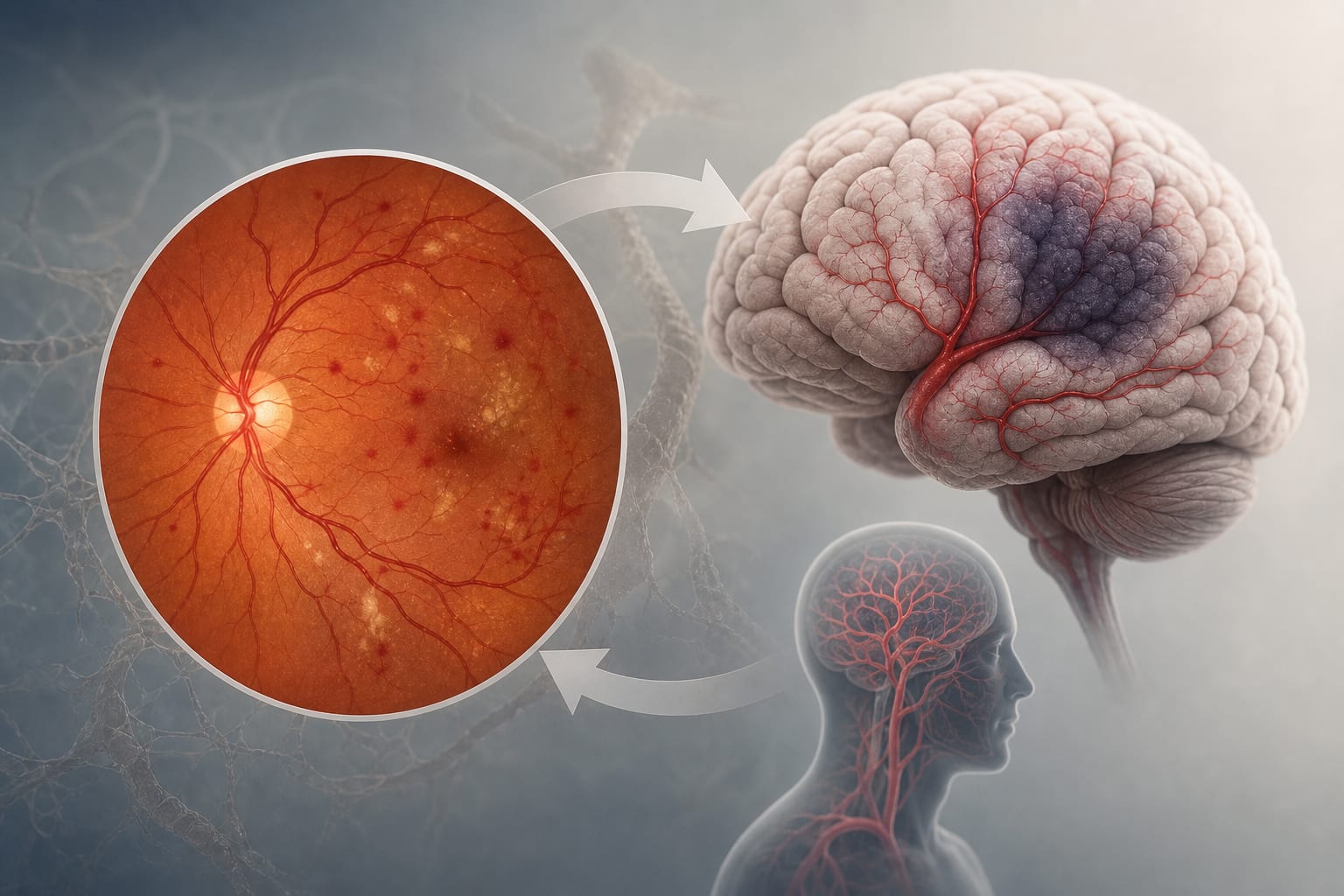
To develop a deep-learning model that estimates retinal age from fundus photographs and assess its association with specific cardiometabolic conditions, including diabetes and cardiovascular diseases.
Approach:
Key Findings:
The model achieved a mean absolute error of 2.78 years in internal validation and 3.39 years in the primary external cohort, suggesting strong predictive capability.
Larger retinal age gaps were associated with diabetes medication use and a history of stroke or cardiac disease, indicating potential clinical implications.
The model outperformed comparator models in the primary external cohort, demonstrating its effectiveness.
Interpretation:
The retinal age model shows promise as a biomarker for biological aging and potential clinical utility in risk stratification, though its clinical significance remains uncertain and requires further investigation.
Limitations:
The model was trained on a relatively healthy population, limiting generalizability to patients with chronic conditions, and self-reported data for disease status may introduce bias.
The study was observational and cross-sectional, relying on self-reported data for disease status, which may affect the accuracy of findings.
Performance declined in a more heterogeneous external cohort, indicating the need for validation in diverse populations to ensure applicability.
Conclusion:
Further prospective studies are needed to validate the clinical utility of retinal age estimates, establish thresholds for clinical use, and explore the integration of retinal age gap in clinical decision-making.