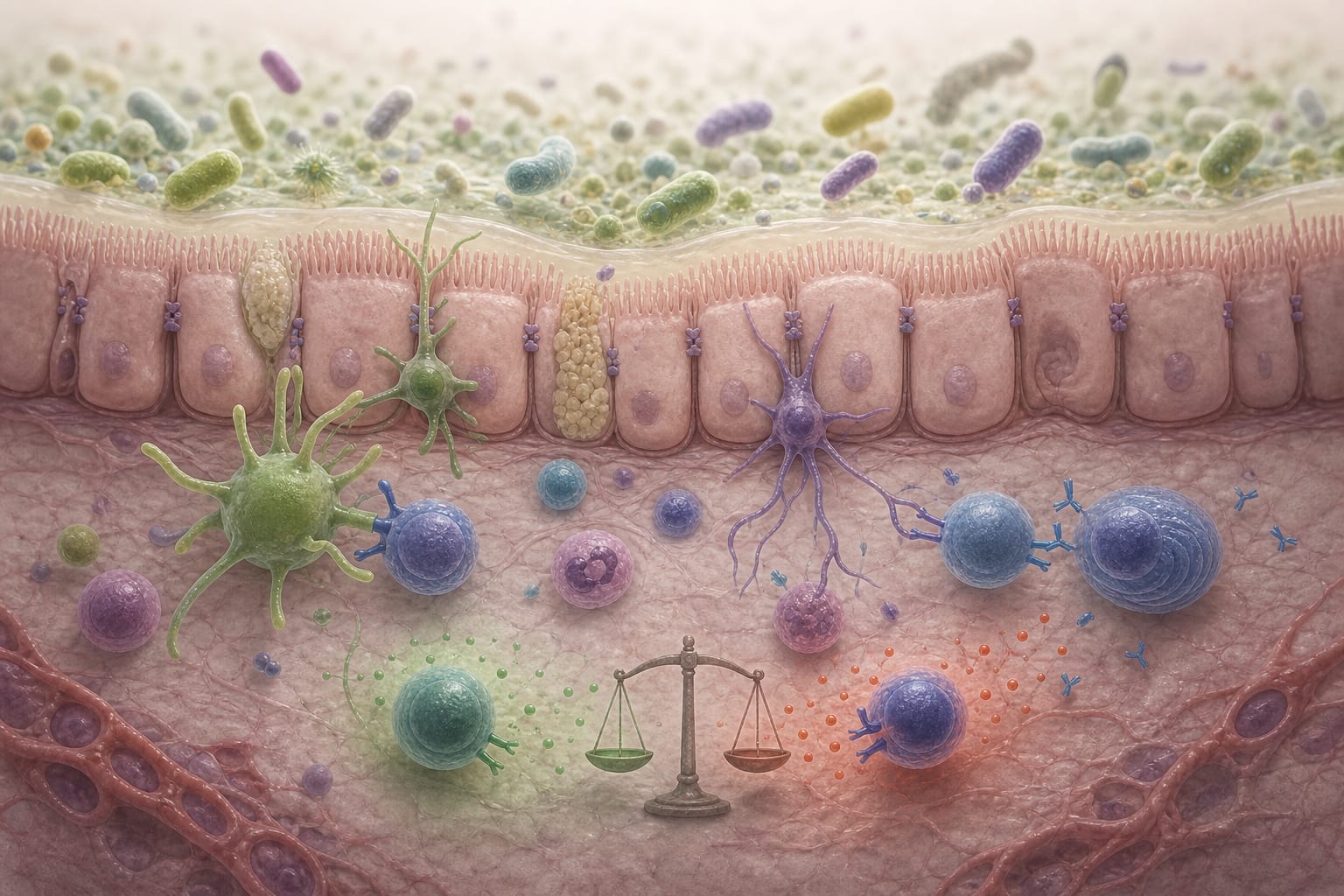
To explore the understanding of the immune system's role in managing foreign and self-antigens and its implications for disease.
Approach:
Conceptual Evolution: The article discusses the transition from the Self-Nonself Discrimination model to broader frameworks like the Damage Response Framework and the Discontinuity Model.
Immune Tolerance: It examines how the immune system tolerates foreign antigens, particularly those from the microbiome, and the implications for autoimmune disease.
Mechanisms of Immune Response: The article reviews mechanisms of immune response, including receptor-mediated activation and the role of innate and adaptive immunity.
Key Findings:
The immune system manages foreign and self-antigens through processes like waste disposal and tissue repair.
Disease incidence is low in healthy individuals despite exposure to pathogens.
Self-antigens can induce immune responses under certain conditions.
Interpretation:
The immune system's function extends beyond pathogen defense to maintaining physiological homeostasis, with tolerance to many antigens being the norm.
Limitations:
The article does not provide specific experimental data to support the claims made.
The implications of the evolving models on clinical practice are not discussed.
Conclusion:
The immune system's role involves both tolerance and response to a variety of antigens.