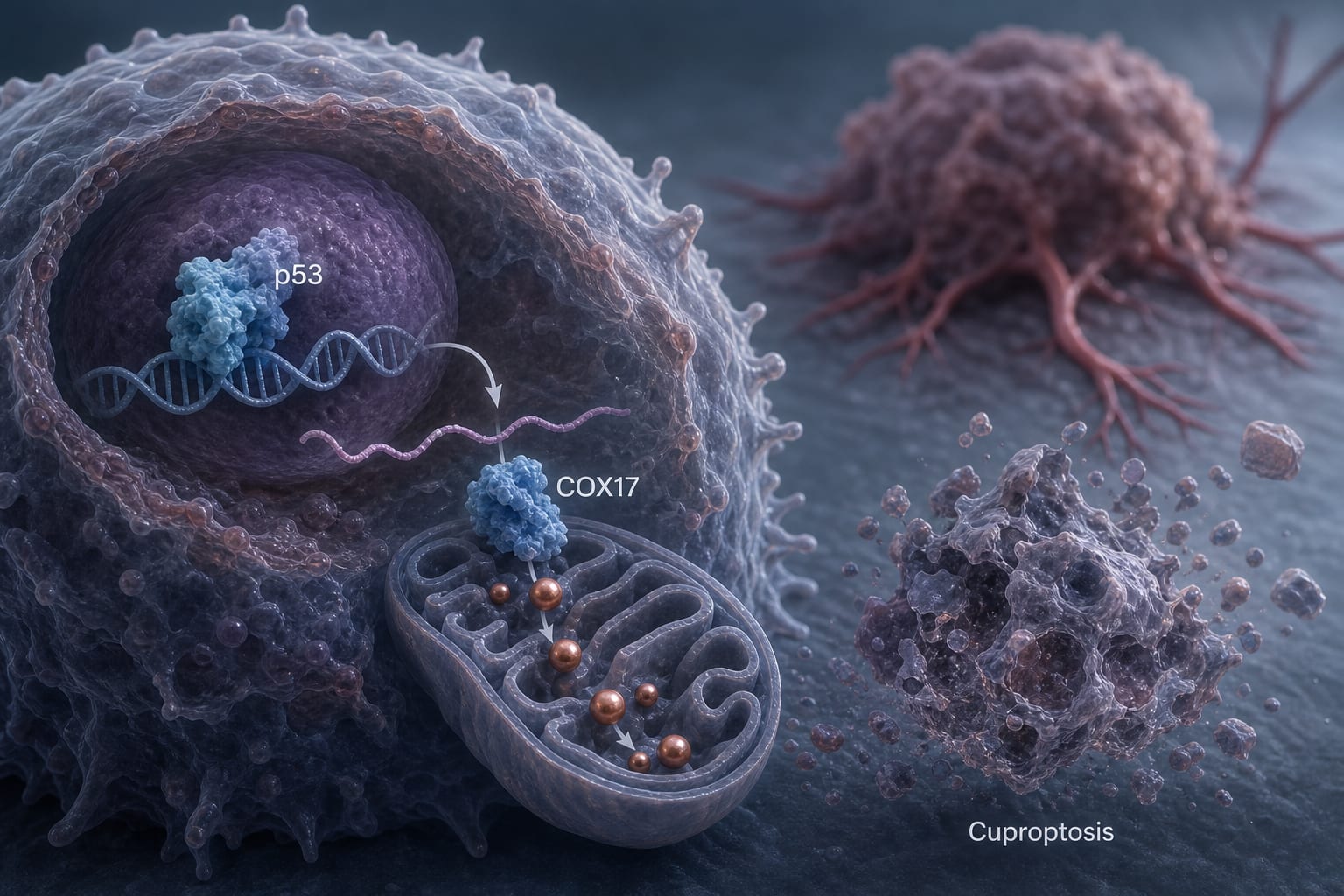
To investigate the role of p53–COX17 signaling in regulating the response of gastric cancer cells to elesclomol-induced copper stress, focusing on the mechanisms of copper accumulation and cytotoxicity.
Approach:
Key Findings:
COX17 increased sensitivity of AGS cells to elesclomol-induced copper-associated cytotoxicity.
p53 overexpression suppressed malignant phenotypes and increased COX17 expression.
ChIP-qPCR indicated p53's enrichment at the COX17 promoter region.
Elesclomol treatment with COX17 modulation altered SLC31A1 and ATP7A expression.
Conditioned media from COX17-overexpressing tumor cells inhibited HUVEC tube formation and increased oxidative stress.
Interpretation:
The p53–COX17 axis links copper metabolism to elesclomol-associated antitumor activity in gastric cancer.
Limitations:
Further studies using canonical cuproptosis markers are required to validate findings.
Copper chelator rescue experiments and additional gastric cancer cell lines with different p53 backgrounds need to be conducted to assess the generalizability of results.
Clinical validation is necessary to confirm the translational significance of this pathway and its potential as a therapeutic target.
Conclusion:
The study suggests that COX17 may enhance copper accumulation and oxidative stress, contributing to tumor-cell-death-associated changes and inhibition of angiogenesis-related phenotypes, highlighting its potential as a therapeutic target in gastric cancer.