Delayed hepatic artery pseudoaneurysm with arterioportal fistula after penetrating liver trauma successfully treated with coil embolization: a case report and focused literature review - Summary - MDSpire
Advertisement
Delayed hepatic artery pseudoaneurysm with arterioportal fistula after penetrating liver trauma successfully treated with coil embolization: a case report and focused literature review
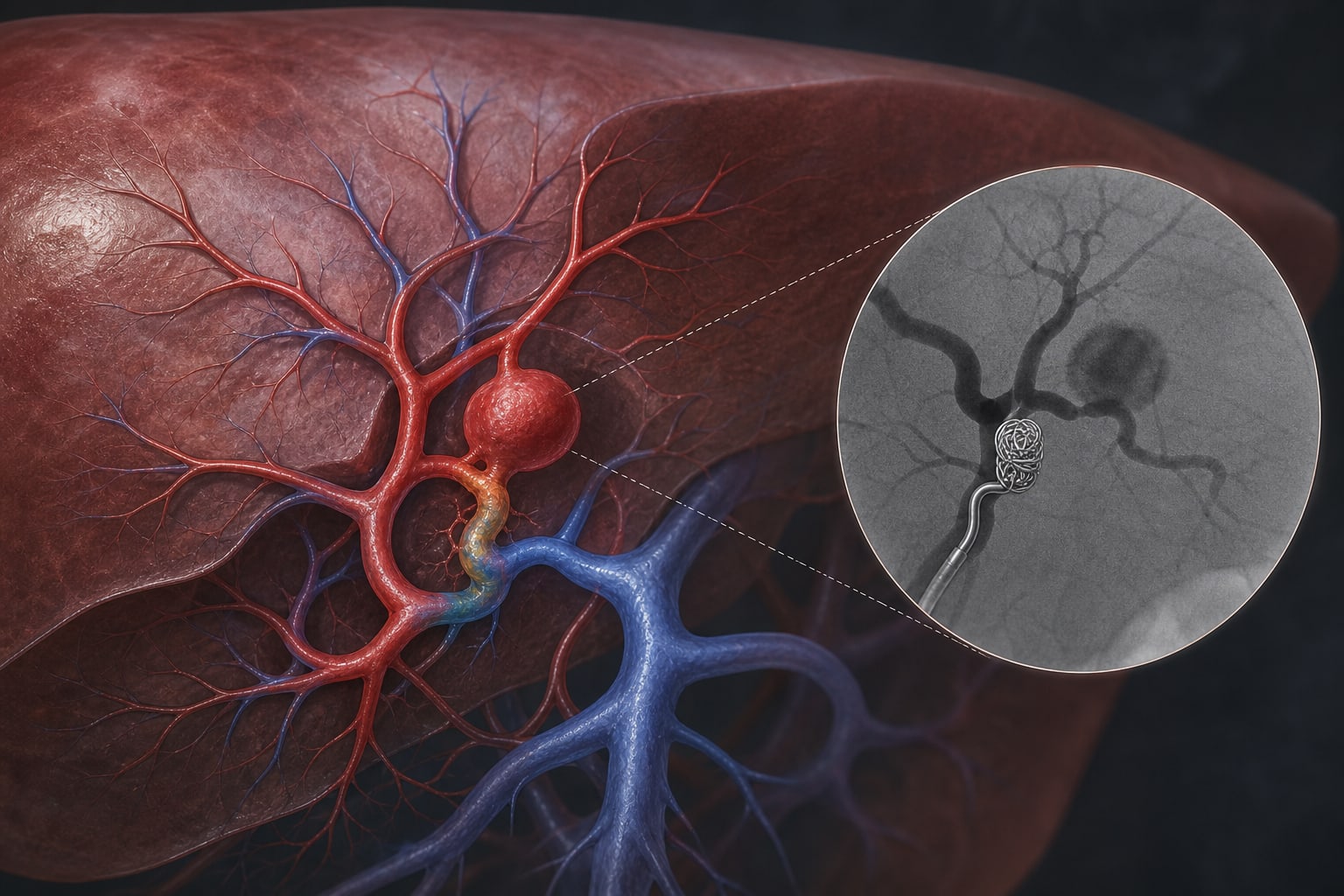
To report a case of hepatic artery pseudoaneurysm with arterioportal fistula following penetrating liver trauma and to review relevant literature.
Approach:
Case Presentation: A 25-year-old male with a stab wound underwent exploratory laparotomy for a grade III left hepatic lobe laceration. Postoperative complications included persistent blood-tinged drain output and epigastric pain.
Diagnostic Imaging: Contrast-enhanced CT and angiography confirmed a left hepatic artery pseudoaneurysm with an associated arterioportal fistula.
Treatment: Initial Gelfoam embolization failed; however, definitive coil embolization via the femoral artery successfully excluded the lesion and resolved the fistulous communication.
Key Findings:
Hepatic artery pseudoaneurysm with arterioportal fistula is a rare complication of penetrating liver trauma.
Early identification and prompt endovascular management are essential to prevent severe outcomes.
Endovascular coil embolization is a safe and effective treatment for this condition.
Interpretation:
This case emphasizes the need for awareness of delayed vascular complications following penetrating liver trauma.
Limitations:
The rarity of the condition limits the generalizability of findings.
The case report format may not capture all potential complications or outcomes.
Conclusion:
Structured postoperative follow-up is crucial for monitoring patients with hepatic artery pseudoaneurysm.