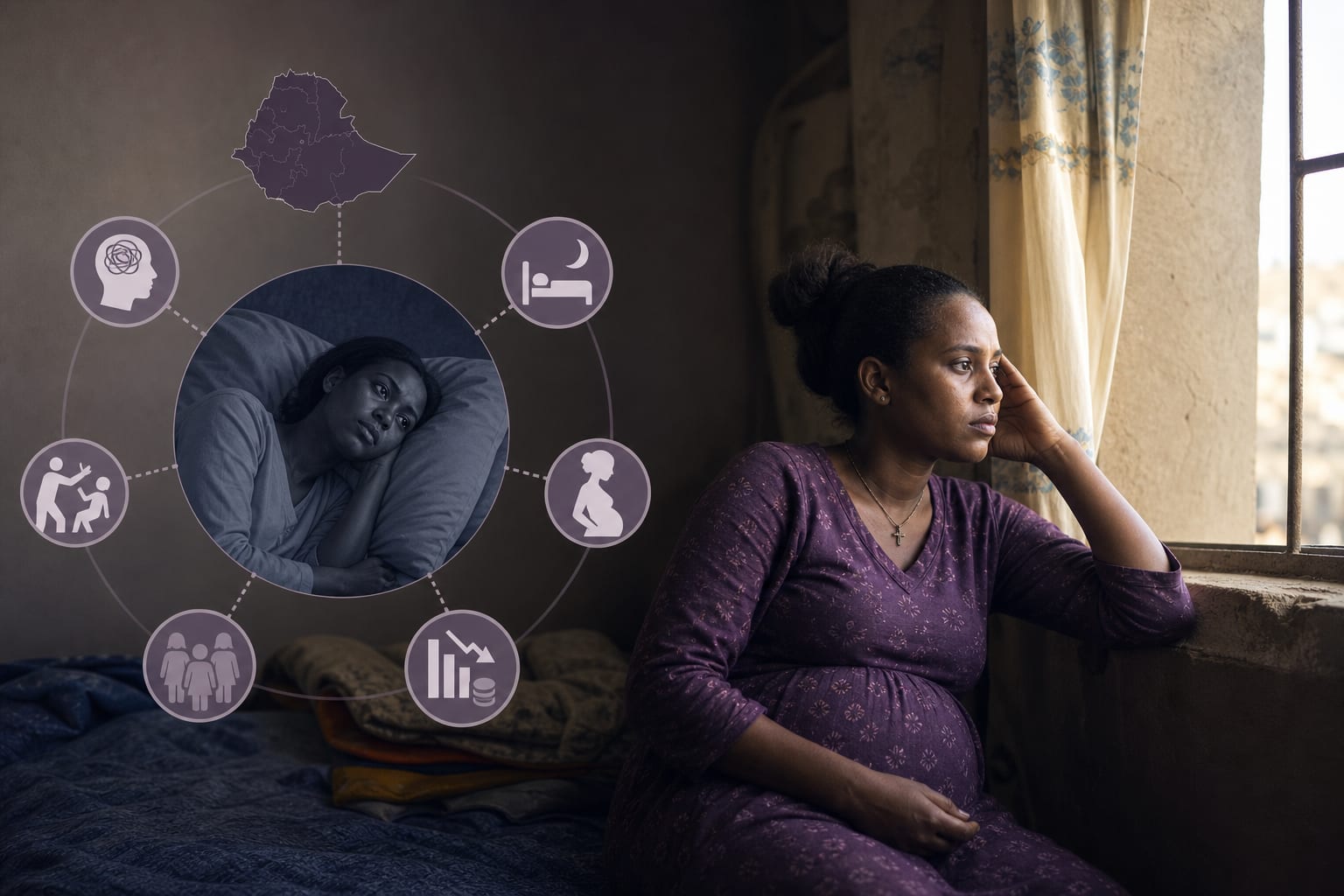
To assess the prevalence of poor sleep quality among Ethiopian women of reproductive age and identify specific socio-demographic and psychological factors contributing to it.
Key Findings:
The pooled prevalence of poor sleep quality was found to be 49.17% (95% CI: 35.29, 63.08), with significant predictors including intimate partner violence, depression, unplanned pregnancy, multigravidity, and substance use.
Interpretation:
Nearly half of Ethiopian women of reproductive age experience poor sleep quality, influenced by various socio-demographic and psychological factors such as intimate partner violence and depression.
Limitations:
The limited number of studies included in the review may affect the generalizability of the findings, and potential publication bias and variability in study methodologies should be considered.
Conclusion:
Urgent attention is needed for factors affecting sleep quality in Ethiopian women, emphasizing the need for effective interventions and policy development to address these public health concerns.
Patients with preoperative vitamin D deficiency had higher postoperative pain scores and opioid use after mastectomy, including more than triple the odds of moderate to severe pain within 24 hours of surgery.