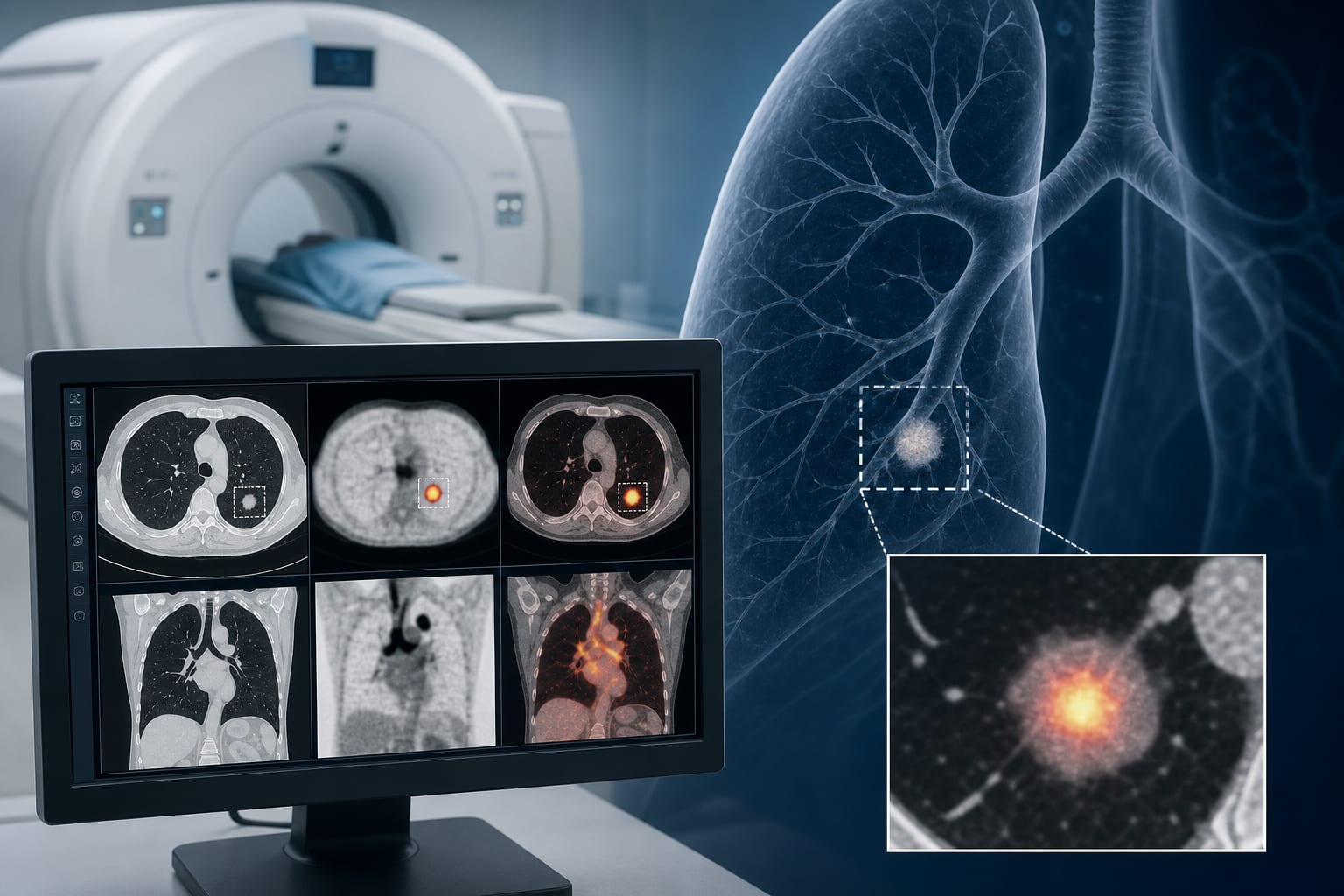
To develop an 18F-FDG PET/CT-based predictive model for preoperative discrimination between high-risk (MPA/SPA) and low-risk LUAD.
Approach:
Study Design: Retrospective analysis of 188 patients with surgically confirmed GGN-type LUAD, divided into training (n = 132) and test (n = 56) cohorts.
Statistical Methods: Logistic regression for independent predictor screening, variance inflation factor (VIF) for multicollinearity assessment, and Delong test with bootstrap for model performance comparison.
Key Findings:
SUVmax, nodule diameter, and lesion location identified as independent risk predictors.
Original model AUCs: 0.921 (training), 0.855 (test); optimized model AUCs: 0.934 (training), 0.873 (test) with the incorporation of CT attenuation and vacuole sign.
No statistical intergroup difference in AUCs (all P > 0.05).
Interpretation:
PET/CT-derived parameters enable preoperative stratification of high-risk LUAD in GGNs.
Limitations:
Study limited to patients with solitary GGNs; findings may not generalize to multiple nodules.
Potential technical limitations of PET/CT in assessing small or subsolid lesions.
Conclusion:
The study supports the use of PET/CT for preoperative risk assessment in invasive LUAD associated with GGNs.