To analyze the role of tryptophan metabolism in inducing immune tolerance after liver transplantation, focusing on the functions of IDO and TDO2.
Approach:
Systematic Comparison: The review systematically compares the immunosuppressive roles of IDO and TDO2 in liver transplant immunity.
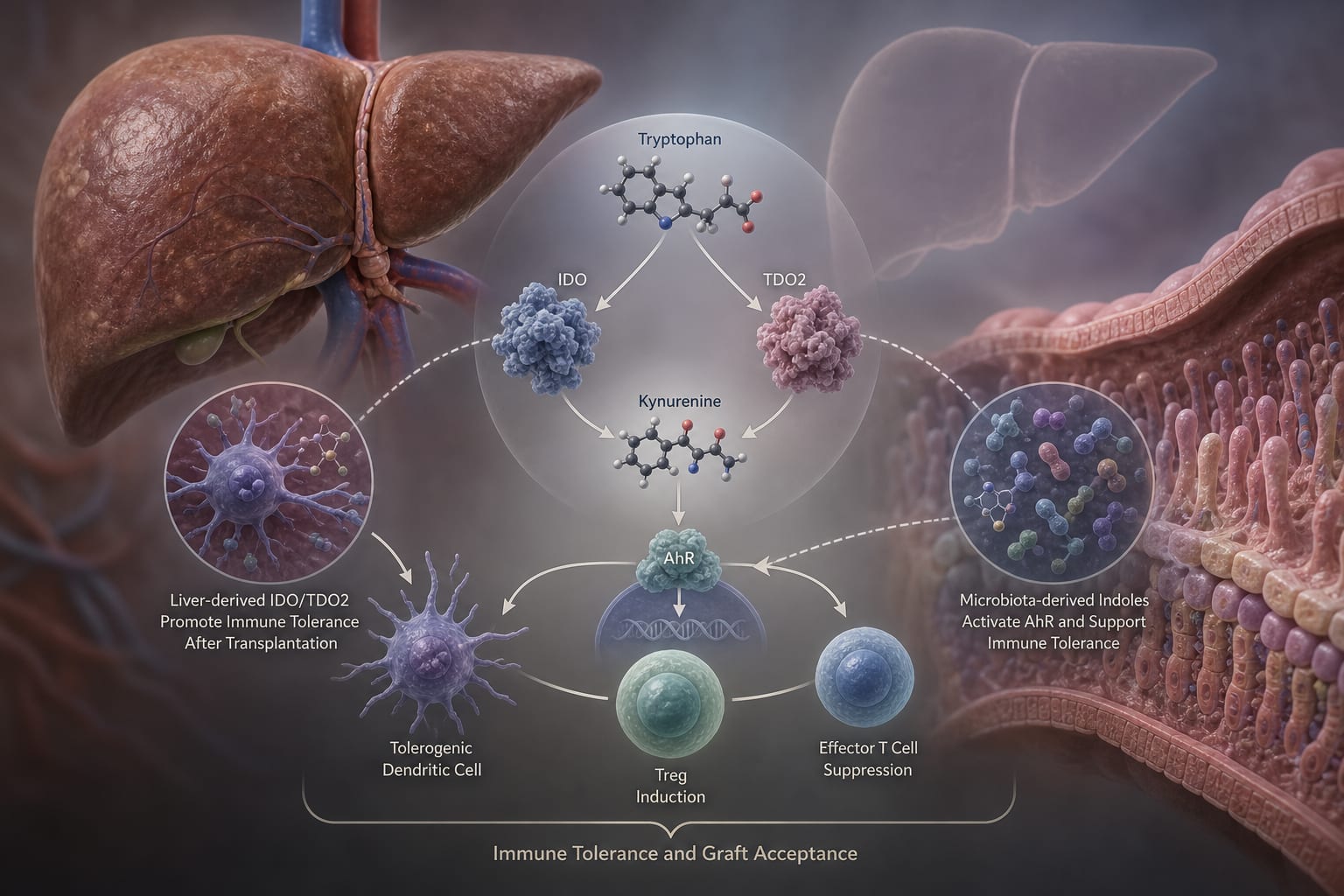
Molecular Mechanism Analysis: It dissects the mechanisms of tryptophan depletion, kynurenine accumulation, and AhR activation in immune cell function reprogramming.
Gut-Liver Axis Exploration: The role of microbiota-mediated indole metabolism as a regulatory node in the gut-liver axis is analyzed.
Clinical Evidence Stratification: Clinical evidence is stratified by level, discussing translational barriers and potential metabolite panels.
Key Findings:
IDO and TDO2 have complementary, non-redundant roles in liver transplantation immunity.
IDO is more relevant in antigen-presenting cells and can be induced by inflammation.
TDO2 metabolizes tryptophan in hepatocytes and contributes to baseline immune regulation.
Kynurenine activates AhR, promoting Treg differentiation and suppressing Th17 polarization.
Interpretation:
Current data suggest that combined metabolite panels may be more effective than single markers, but therapeutic targeting of tryptophan metabolism is still in preclinical stages.
Limitations:
Safety risks and delivery challenges in clinical applications.
Lack of validated biomarkers for monitoring tryptophan metabolism.
Conclusion:
Therapeutic targeting of tryptophan metabolism remains a preclinical research direction.