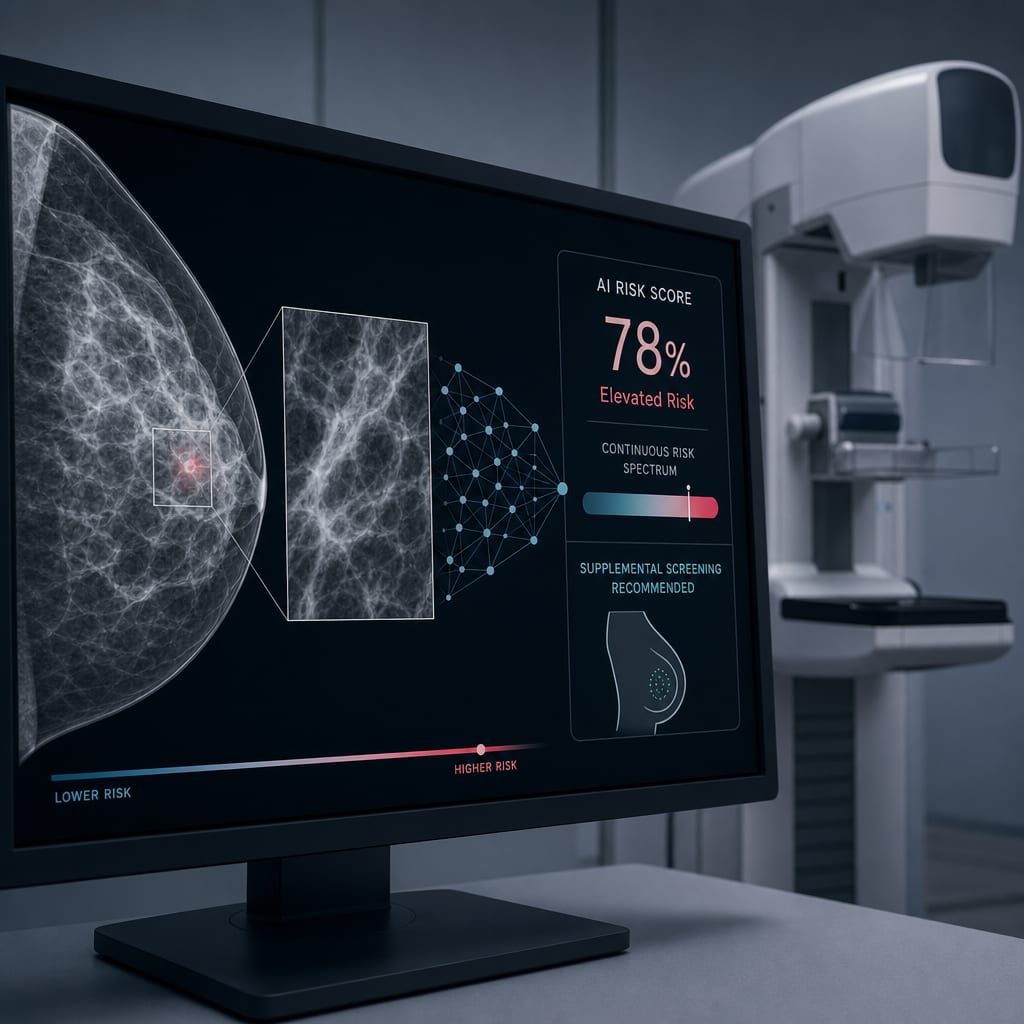
To integrate clinical data with structural information from mammograms using advanced machine learning techniques to build risk prediction models for breast cancer.
Key Findings:
Breast density and clinical factors are significant predictors of breast cancer risk, with AI-based models showing potential for short-term risk prediction, thereby enhancing targeted assessments for high-risk individuals.
The hybrid model integrating clinical and mammographic data improved risk prediction accuracy.
Interpretation:
Combining traditional risk factors with AI-enhanced mammographic data can lead to more personalized and effective breast cancer screening strategies, ultimately improving patient outcomes.
Limitations:
The study was conducted at a single center, which may limit generalizability of the findings to broader populations.
Informed consent was not obtained due to the use of anonymized retrospective data.
Conclusion:
The integration of AI with clinical data holds promise for improving breast cancer risk assessment and screening efficiency.