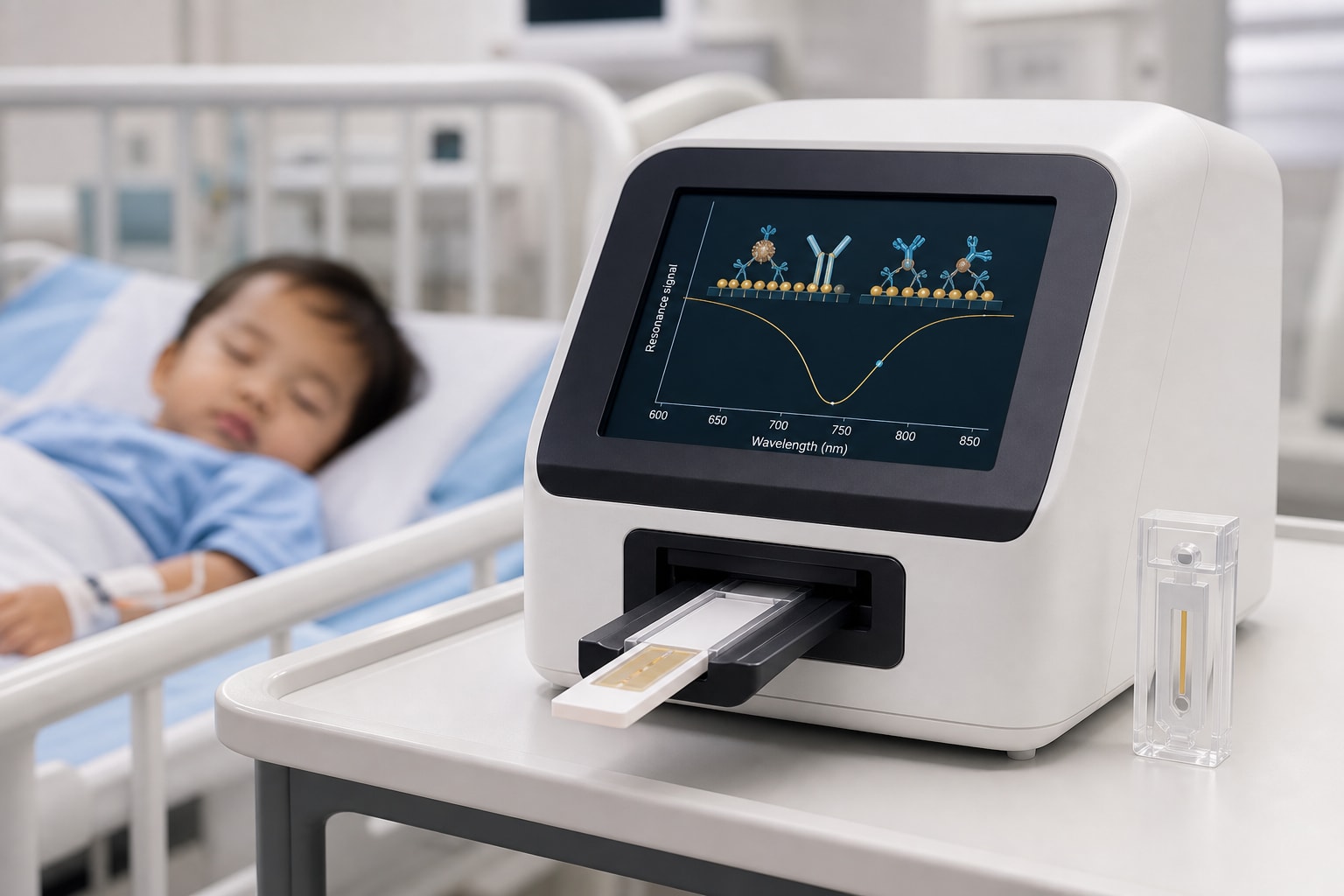
To examine the role of localized surface plasmon resonance (LSPR) technology in developing point-of-care testing (POCT) platforms for pediatric sepsis.
Approach:
Clinical Need: Outlines the necessity for rapid, accurate diagnostics in pediatric sepsis.
LSPR Technology Explanation: Explains the physical principles of LSPR that enable sensitive detection of biomolecular interactions.
Critical Analysis: Analyzes LSPR-based POCT systems, including design, target biomarkers, and performance metrics.
Clinical Impact Evaluation: Evaluates potential clinical impact in both high-resource and limited-resource settings.
Future Directions: Discusses technological innovations, regulatory barriers, and research gaps.
Key Findings:
Sepsis is a leading cause of child mortality, with outcomes dependent on timely diagnosis.
Conventional diagnostic methods are slow and often inadequate for pediatric populations.
LSPR-based POCT offers rapid, label-free, and sensitive biomarker detection suitable for bedside use.
Interpretation:
LSPR-POCT offers a potential solution to the diagnostic challenges of pediatric sepsis.
Limitations:
Current diagnostic methods are slow and lack sufficient sensitivity.
No single biomarker has proven sufficiently sensitive and specific for definitive diagnosis.
Conclusion:
LSPR technology has the potential to enhance diagnostic capabilities for pediatric sepsis.