The global clinical trial landscape of PD-1-containing bispecific antibodies for gastric cancer: current status and future directions of targeting immune tolerance - Summary - MDSpire
Advertisement
The global clinical trial landscape of PD-1-containing bispecific antibodies for gastric cancer: current status and future directions of targeting immune tolerance
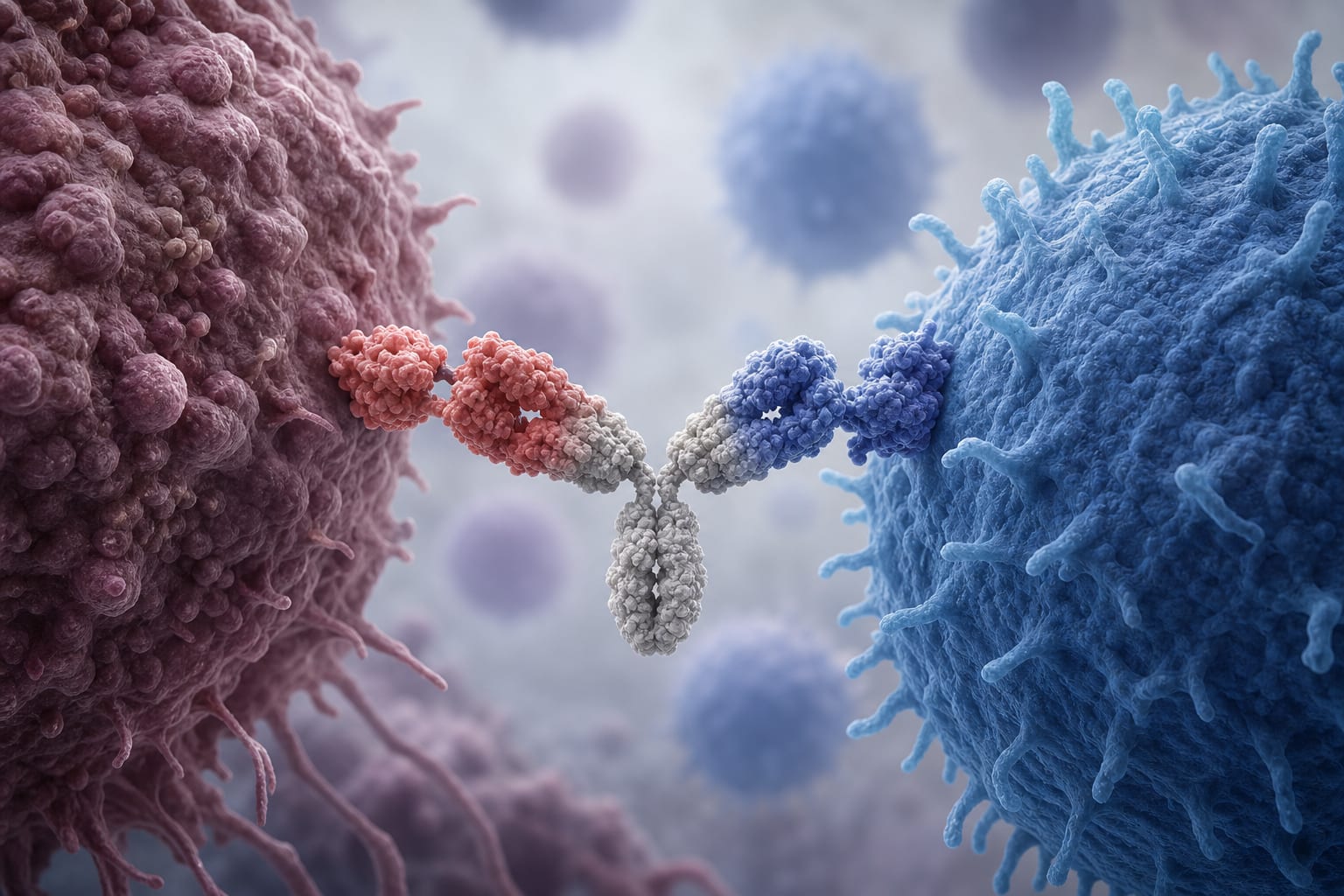
To characterize the global development of PD-1-based bispecific antibodies (BsAbs) for gastric cancer (GC) and analyze trends in clinical trials.
Approach:
Key Findings:
121 interventional clinical trials were identified, with phase II trials making up the largest segment (51.24%).
CTLA-4 was the most common non-PD-1 co-target (61.98%), followed by VEGF (11.57%) and TIGIT (7.44%).
Combination therapy was predominant, particularly with chemotherapy, and most trials focused on stage III/IV GC.
The majority of trials were sponsored by academic institutions, with 84.30% conducted in China.
Interpretation:
The analysis reveals a rapidly expanding pipeline for PD-1 BsAbs in GC, highlighting the need for rational design and combination strategies to address immune tolerance.
Limitations:
The study is limited to trials registered up to April 17, 2026, and may not capture ongoing or future developments.
The focus on interventional trials may overlook other important research avenues.
Conclusion:
The findings support the development of PD-1 BsAbs and emphasize the importance of balancing efficacy and safety, patient stratification, and international collaboration.