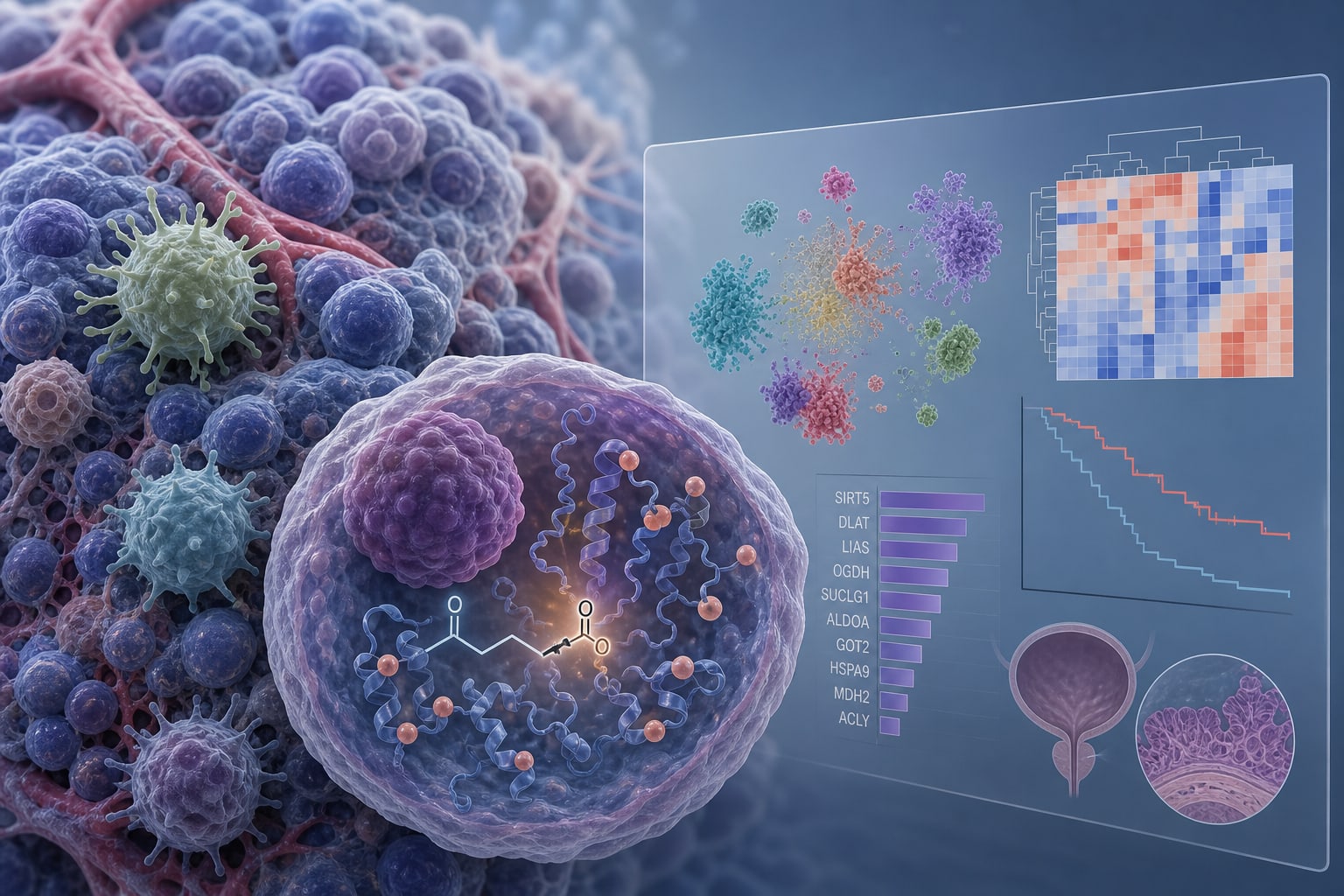
To identify and validate prognostic succinylation-related genes (SRGs) in bladder cancer (BLCA) and elucidate their impact on the tumor microenvironment (TME), highlighting the significance of succinylation in tumor progression.
Key Findings:
KCTD16, CD3D, and GSDMB were identified as prognostic genes, with implications for immune evasion.
The risk model exhibited robust predictive accuracy (AUC > 0.7).
High-risk groups showed enhanced immune evasion and an 'inflamed yet dysfunctional' TME.
Single-cell analysis indicated key roles of epithelial cells, T cells, and fibroblasts.
Knockdown of GSDMB and KCTD16 promoted T24 cell proliferation.
Interpretation:
The succinylation-related prognostic model accurately predicts outcomes in BLCA, links to immune escape and TME, and highlights the pivotal role of epithelial cells, suggesting potential targets for individualized therapy and future research directions.
Limitations:
The study primarily focused on transcriptomic data and may not encompass all biological mechanisms involved in BLCA, including potential biases in data sources.
Further validation in larger cohorts is needed to confirm the findings.
Conclusion:
The study provides novel insights into the role of succinylation in BLCA, emphasizing the importance of SRGs in prognosis and therapy, and the need for further research in this area.