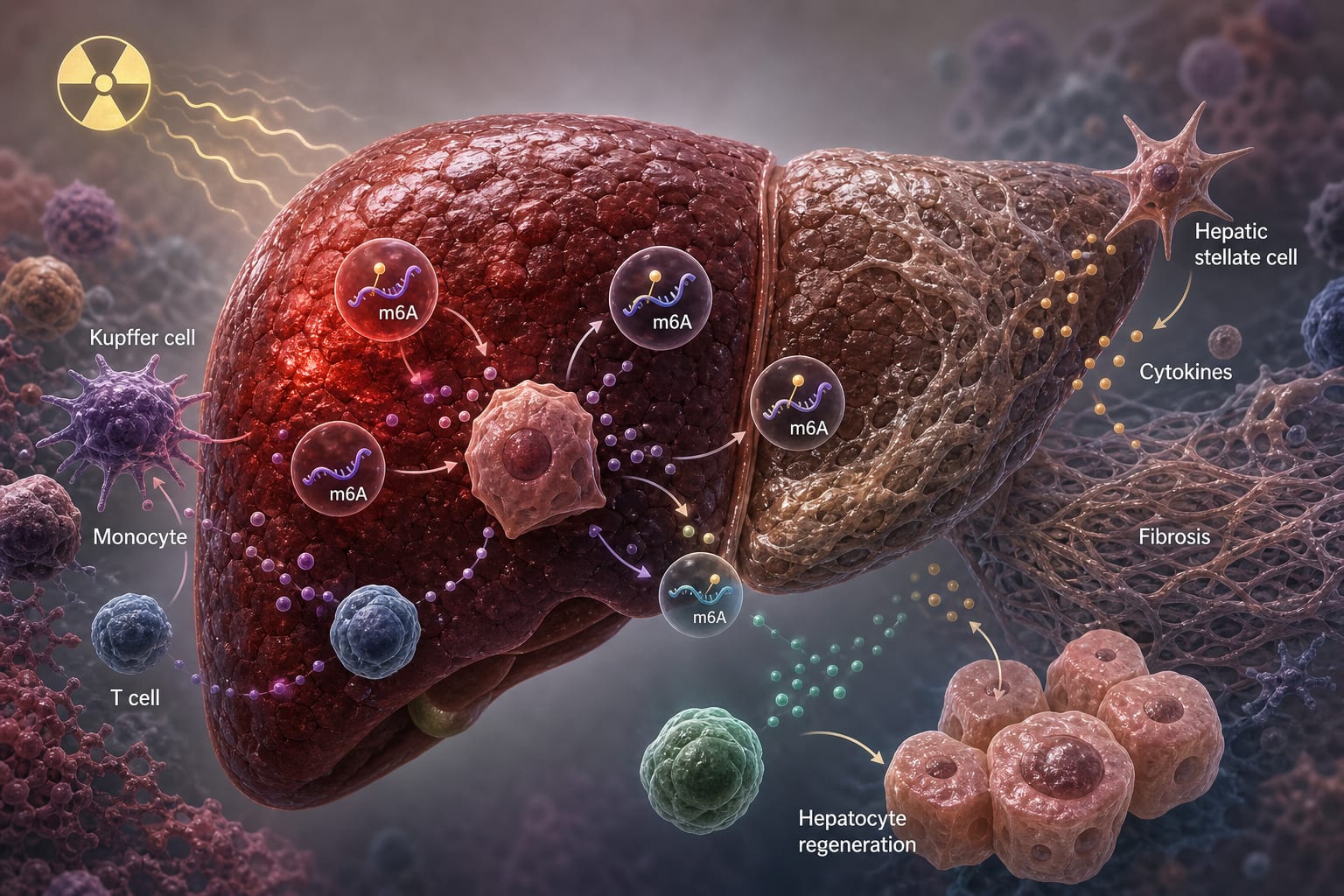
To elaborate on the roles of intercellular communication and m6A modification in the pathogenesis of radiation-induced liver injury (RILI) and to highlight the significance of understanding their interplay in RILI progression.
Approach:
Review of Mechanisms: The review discusses the interplay between intercellular communication, including cytokine signaling and immune cell interactions, and m6A RNA modifications in RILI.
Summary of Therapeutic Strategies: It highlights recent progress in targeted interventions, including pharmacological and molecular strategies, against these pathways to support the development of novel therapeutic strategies.
Key Findings:
RILI is a significant complication of radiotherapy, with an incidence ranging from 6% to 66%.
Ionizing radiation alters the m6A modification landscape of hepatic RNA, disrupting hepatocyte homeostasis and intercellular communication.
Cytokine release and immune cell crosstalk are critical in the progression of RILI from acute inflammation to chronic fibrosis, influenced by m6A modifications.
Current treatment options for RILI are limited, necessitating further investigation into molecular mechanisms and druggable targets.
Interpretation:
The review provides a theoretical basis for understanding the molecular mechanisms of RILI and exploring new treatment modalities.
Limitations:
No systematic review has previously focused on m6A modification-dependent mechanisms in RILI.
Current pharmacological therapies for RILI are not specifically targeted and have limited clinical applicability, highlighting the need for targeted approaches.
Conclusion:
Understanding the interplay between intercellular communication and m6A modifications is essential for developing innovative therapeutic targets for RILI.