How Widespread GLP-1 Advertising May Shape Body Image
-
By
-
Anna Zucker
-
October 19, 2026
Objective:
The article examines the objective, findings, and clinical context described in How Widespread GLP-1 Advertising May Shape Body Image.
Approach:
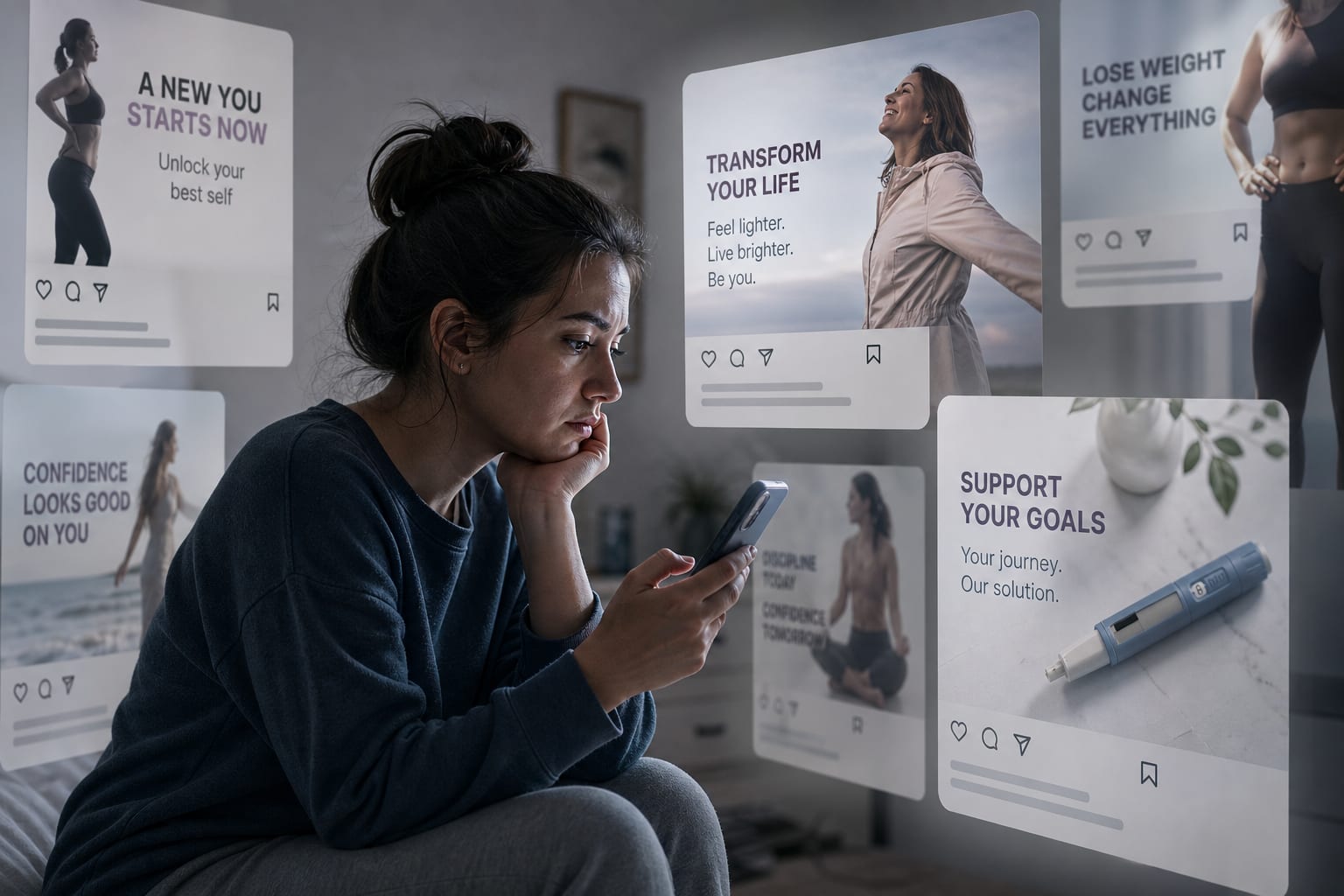
- Advertising content: A 2025 BMC Public Health study examined 90 Facebook and Instagram advertisements for FDA-approved GLP-1 medications posted from February 2023 to February 2024.
- Psychological effects: A 2026 article in Body Image discussed body image during GLP-1 treatment. NEDA survey responses and interviews with clinicians and individuals provided additional reported experiences.
Key Findings:
- The advertisements studied promoted emotional benefits such as confidence and becoming a “new you,” in addition to health, safety, access, and affordability.
- The 2025 study authors said linking weight loss with these benefits may reinforce beauty ideals and contribute to body dissatisfaction, particularly among vulnerable populations.
- The 2026 article cautioned that weight loss does not reliably produce a healthier relationship with one’s body; dissatisfaction may persist or appear as increased monitoring and anxiety about weight regain.
- GLP-1 advertising was not a response option in NEDA’s survey of 2,670 people, but clinicians raised it in open-ended responses and described links between unavoidable advertising and increased disordered-eating behaviors among clients.
- The article reports that evidence on the psychological effects of GLP-1 advertising remains limited, and that advertising exposure is difficult to separate from broader discussion of these drugs.
Interpretation:
The article presents concerns from researchers, clinicians, and individuals that transformation-focused and persistent advertising may encourage body comparison or pressure to consider medication. It also notes that GLP-1 medications can be helpful for some people and carry risks and side effects.
Limitations:
- Research on the effects of repeated GLP-1 advertising exposure on body image and disordered-eating outcomes remains limited.
- The NEDA survey did not include GLP-1 advertising as a specific response option.
- The article notes that advertising’s effects are difficult to isolate because GLP-1 messaging appears across social media, television, podcasts, and personal networks.
Conclusion:
The article describes calls for enhanced telehealth screening and more stringent advertising standards, while avoiding stigma toward people who may benefit from treatment.
Based on findings from:
GLP-1 Ads Are Everywhere. What Are They Doing to Our Body Image?
Anna Zucker. Journal Of Medical Internet Research, 2026.
https://www.jmir.org/2026/1/e113477
This content is an AI-generated, fully rewritten summary based on a published scholarly article. It does not reproduce the original text and is not a substitute for the original publication. Readers are encouraged to consult the source for full context, data, and methodology.