A systematic review of internet addiction in hospitalized adolescents: proposing a hospital-adapted moderated dual mediation model of emotional dysregulation and social compensation - Summary - MDSpire
Advertisement
A systematic review of internet addiction in hospitalized adolescents: proposing a hospital-adapted moderated dual mediation model of emotional dysregulation and social compensation
To analyze the mechanisms of internet addiction among hospitalized adolescents, emphasizing the unique psychosocial stressors they face, particularly focusing on emotional dysregulation and social compensation.
Key Findings:
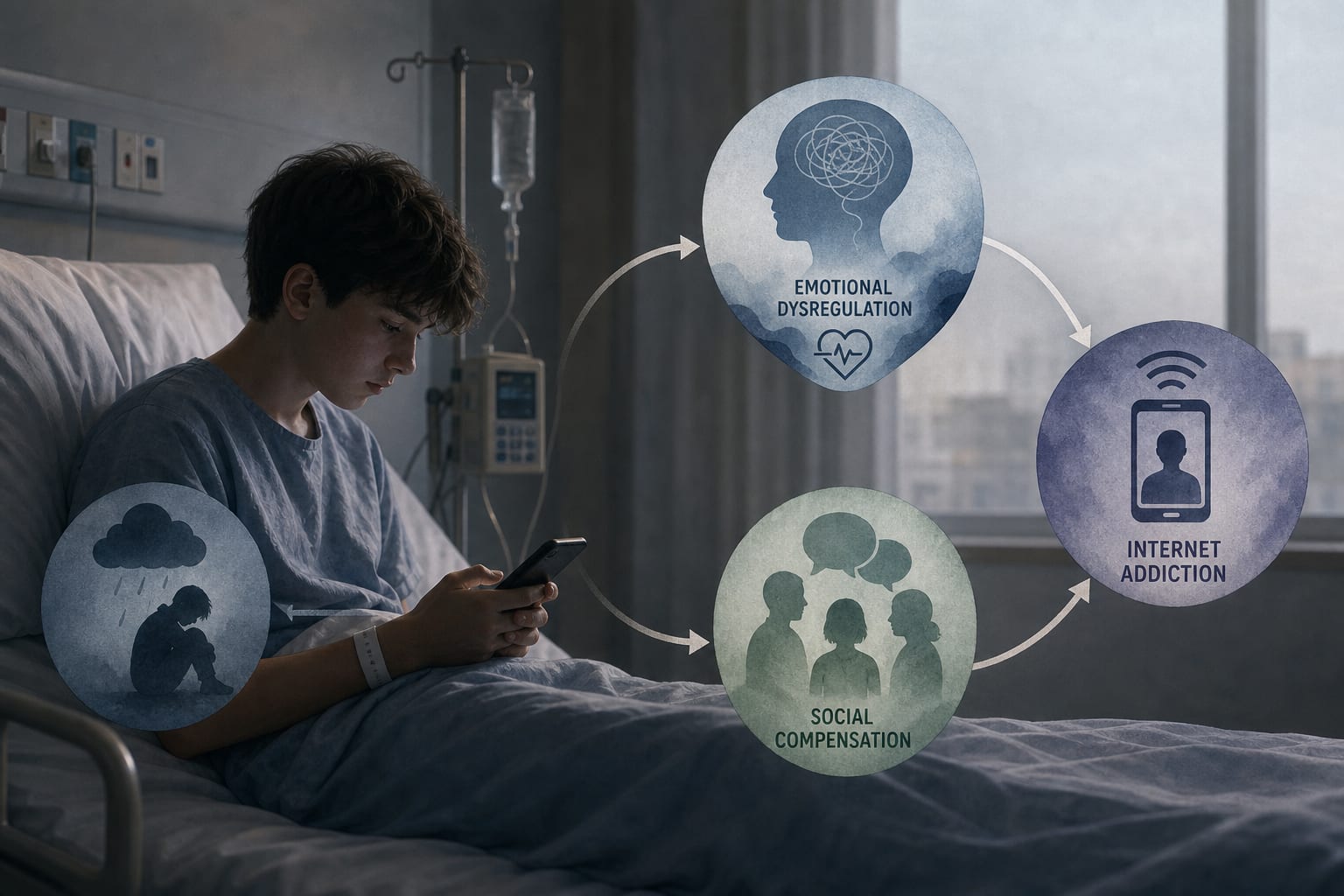
Medical stressors prime emotional dysregulation in hospitalized adolescents, lowering emotional tolerance thresholds and reinforcing online escape behaviors, which can hinder recovery.
Social deprivation in inpatient settings triggers social compensation, while restrictions on device use lead to 'compensatory frustration' that paradoxically accelerates addiction progression.
Emotional dysregulation and social compensation create a self-reinforcing loop, intensified by longer hospital stays and greater disease severity, necessitating targeted interventions.
Interpretation:
The proposed Hospital-Adapted Moderated Dual Mediation Model enhances the I-PACE framework by incorporating inpatient-specific moderators, providing a theoretical foundation for targeted mental health interventions that address the unique challenges faced by hospitalized adolescents.
Limitations:
Significant methodological heterogeneity in included studies limits the generalizability of findings.
Existing models inadequately address the unique context of hospitalized adolescents, which may lead to ineffective interventions.
Conclusion:
Understanding the interplay of emotional dysregulation and social compensation is crucial for developing effective interventions tailored to the unique needs of hospitalized adolescents, ultimately aiming to mitigate internet addiction.
Longitudinal cohort data linked bullying and persistently unsupportive state gender-identity policies with worsening psychotic-like experiences among gender-diverse youths.