To highlight recent advances in lung cancer early detection and diagnosis, emphasizing the need to address significant clinical and scientific gaps in lung cancer diagnostic excellence.
Approach:
Screening: Discusses the impact of lung cancer screening with low-dose computed tomography on reducing lung cancer-specific mortality, as demonstrated by the National Lung Screening Trial.
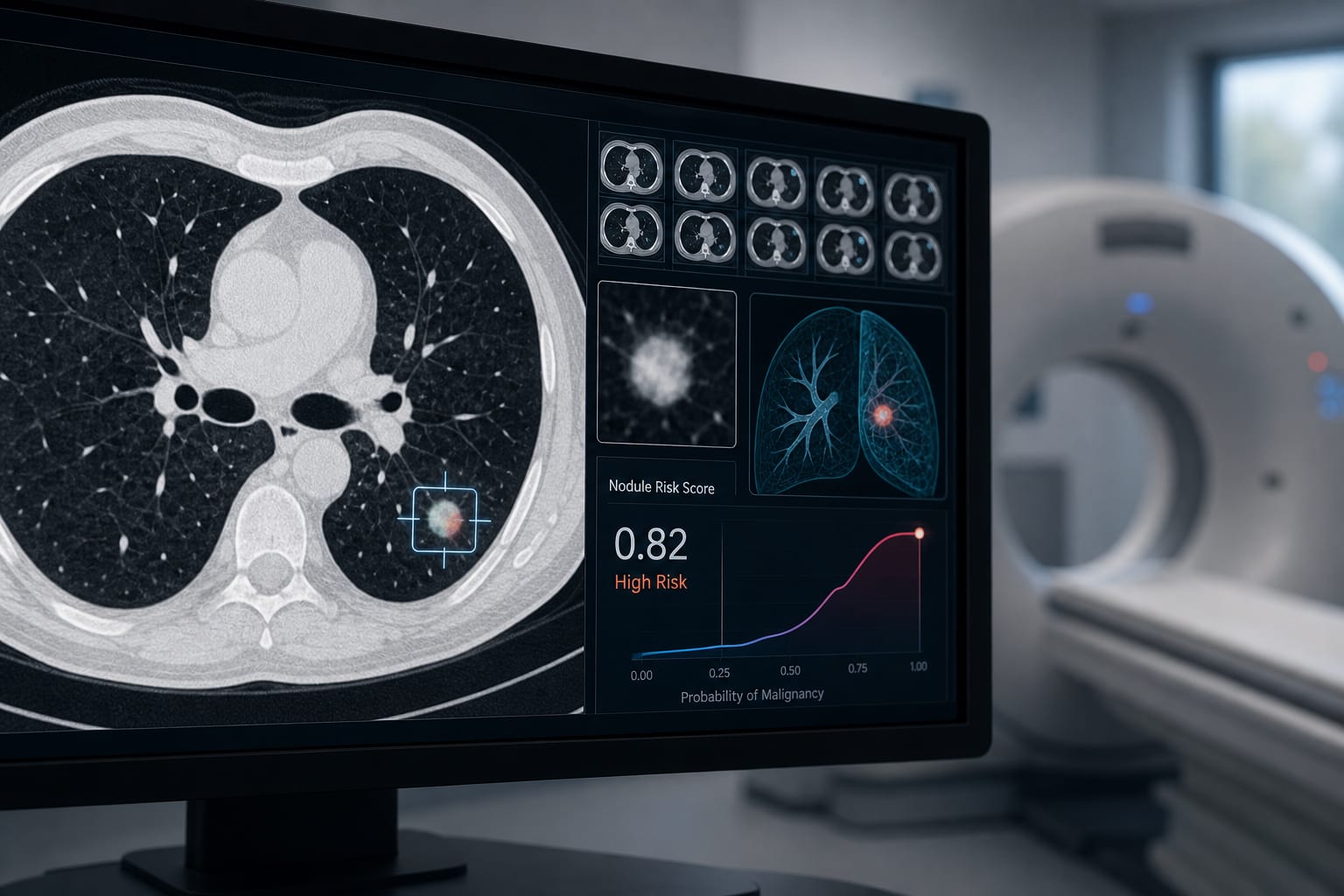
Pulmonary Nodule Risk Assessment: Explores the importance of cancer risk assessment for managing pulmonary nodules detected on imaging, including machine learning approaches for early detection.
Lung Biopsy Innovations: Reviews recent advances in lung biopsy procedures, particularly in transthoracic needle biopsy, highlighting innovations that improve diagnostic accuracy.
Adjunctive Diagnostic Modalities: Covers various diagnostic approaches and technologies, including machine learning models and imaging techniques, to improve lung cancer diagnosis.
Key Findings:
Lung cancer screening can reduce mortality but faces implementation challenges due to health system resources and stigma.
Machine learning and predictive models show promise in assessing pulmonary nodule cancer risk, as evidenced by recent studies.
Innovations in biopsy techniques may improve diagnostic accuracy and reduce complications, particularly in transthoracic needle biopsy.
Diverse studies contribute to understanding lung cancer diagnosis and management, highlighting the need for standardized approaches.
Interpretation:
The editorial emphasizes the need for enhanced diagnostic strategies and collaborative efforts to improve early lung cancer detection based on recent findings.
Limitations:
Real-world implementation of screening differs from clinical trials due to factors such as health system resources and patient awareness.
Further studies are needed to explore effective clinical implementation of lung cancer screening, as highlighted by various research contributions.
Conclusion:
The editorial aims to inspire continued collaboration in improving thoracic oncology clinical care and research, reflecting the findings discussed.