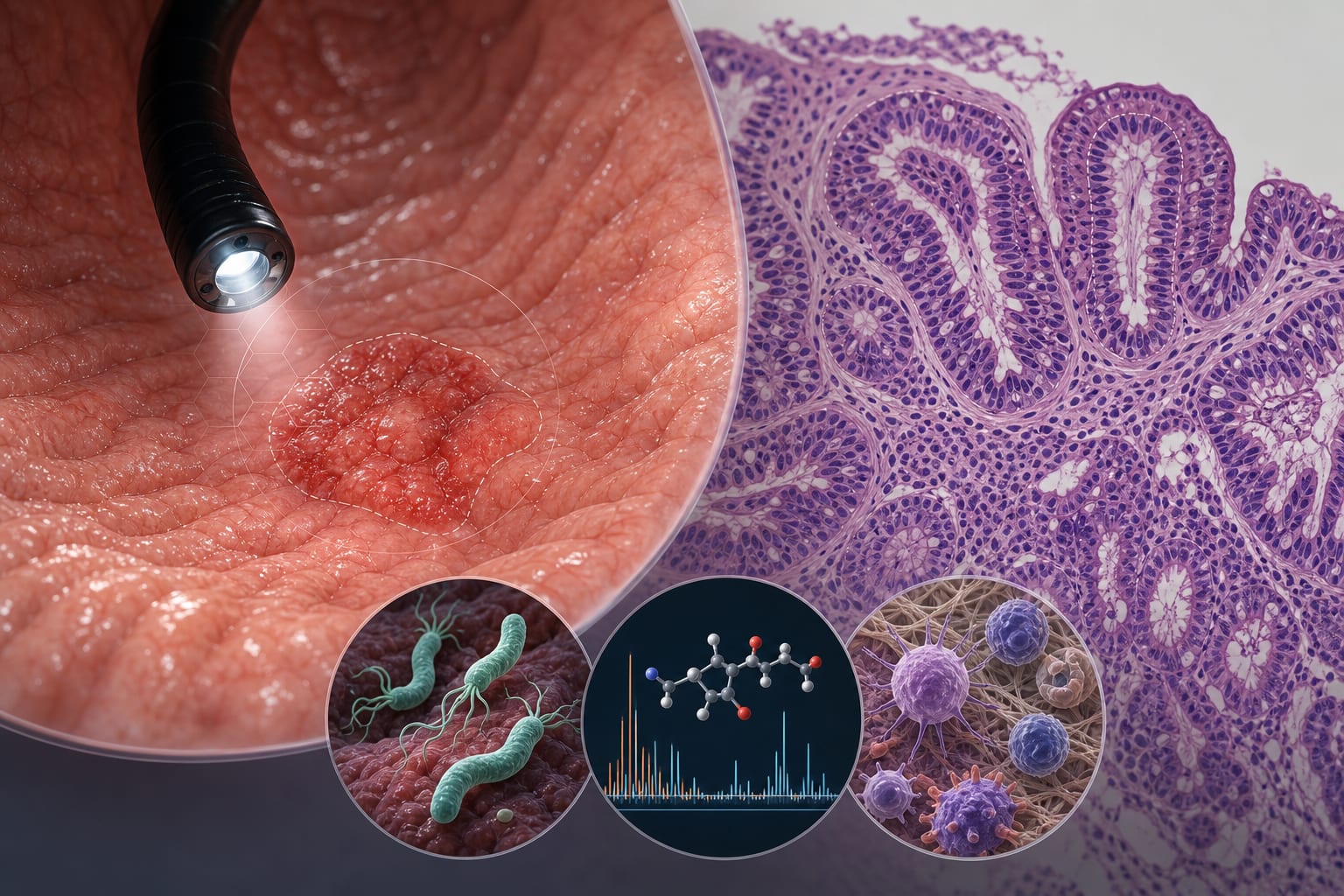
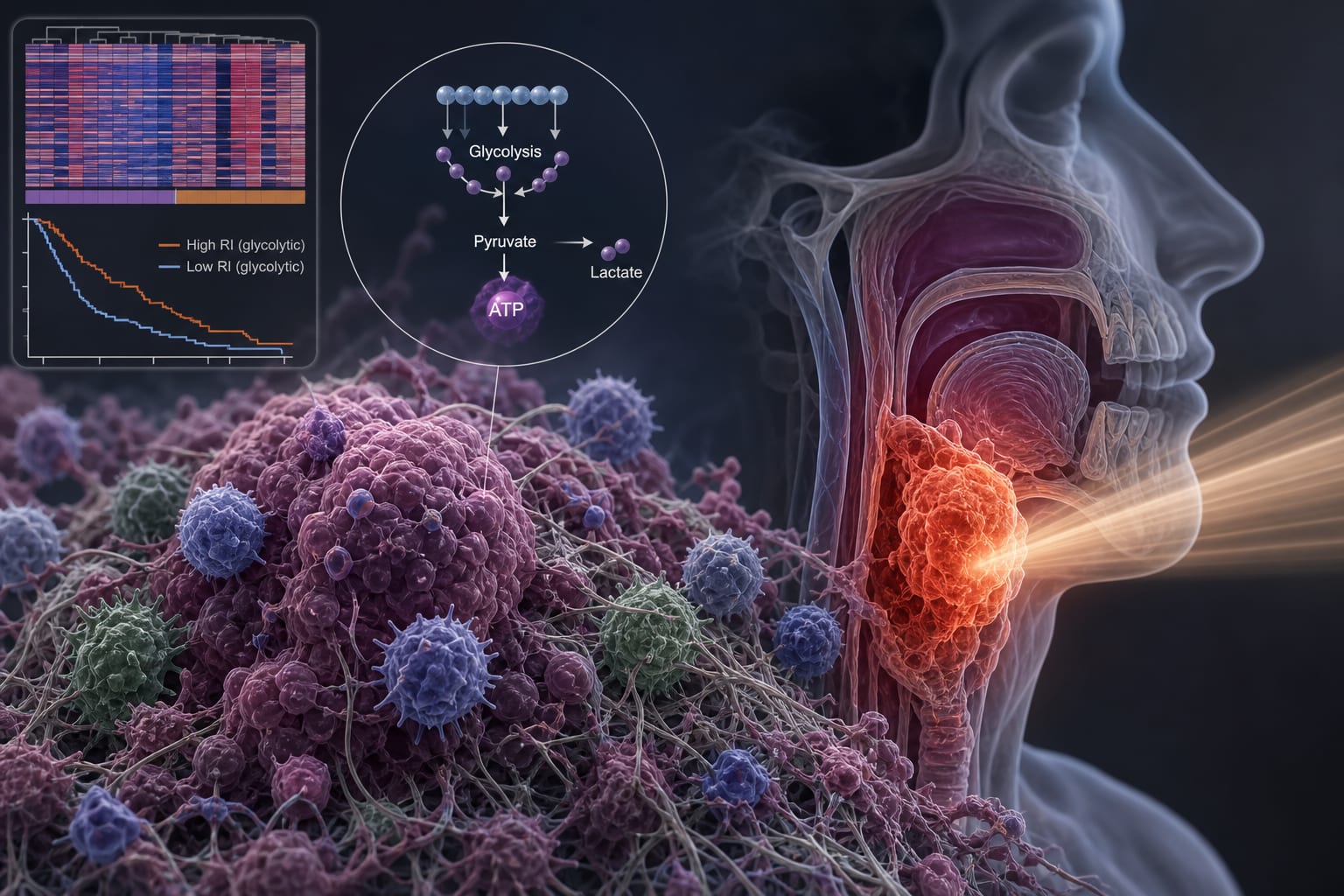
To synthesize evidence from endoscopic, histopathological, microenvironmental, microbial, metabolic, and integrative medicine domains to propose a lesion–field–host framework for interpreting early gastric neoplasia.
Approach:
Evidence Acquisition: Reviewed key evidence from endoscopic imaging studies, gastric premalignant lesion guidelines, Helicobacter pylori prevention literature, pathology-continuum studies, and other relevant research.
Evidence Synthesis: The proposed framework comprises three interrelated layers: the lesion layer, which captures visible and microscopic features of superficial neoplastic disease; the field layer, which captures background mucosal risk factors; and the host-response layer, which includes inflammatory, immune, metabolic, and nutritional variables.
Key Findings:
The lesion layer includes features of superficial neoplastic disease.
The field layer captures background mucosal risk factors.
The host-response layer includes inflammatory, immune, metabolic, and nutritional variables.
Interpretation:
Future progress in early gastric neoplasia will depend on integrating optical, histological, field-mucosal, and host-response phenotypes rather than relying on isolated biomarkers.
Limitations:
Current frameworks are predominantly lesion-centered and do not fully account for the injured mucosal field and host-response context.
Conclusion:
The proposed framework may support more rational surveillance, prevention, and integrative risk stratification.