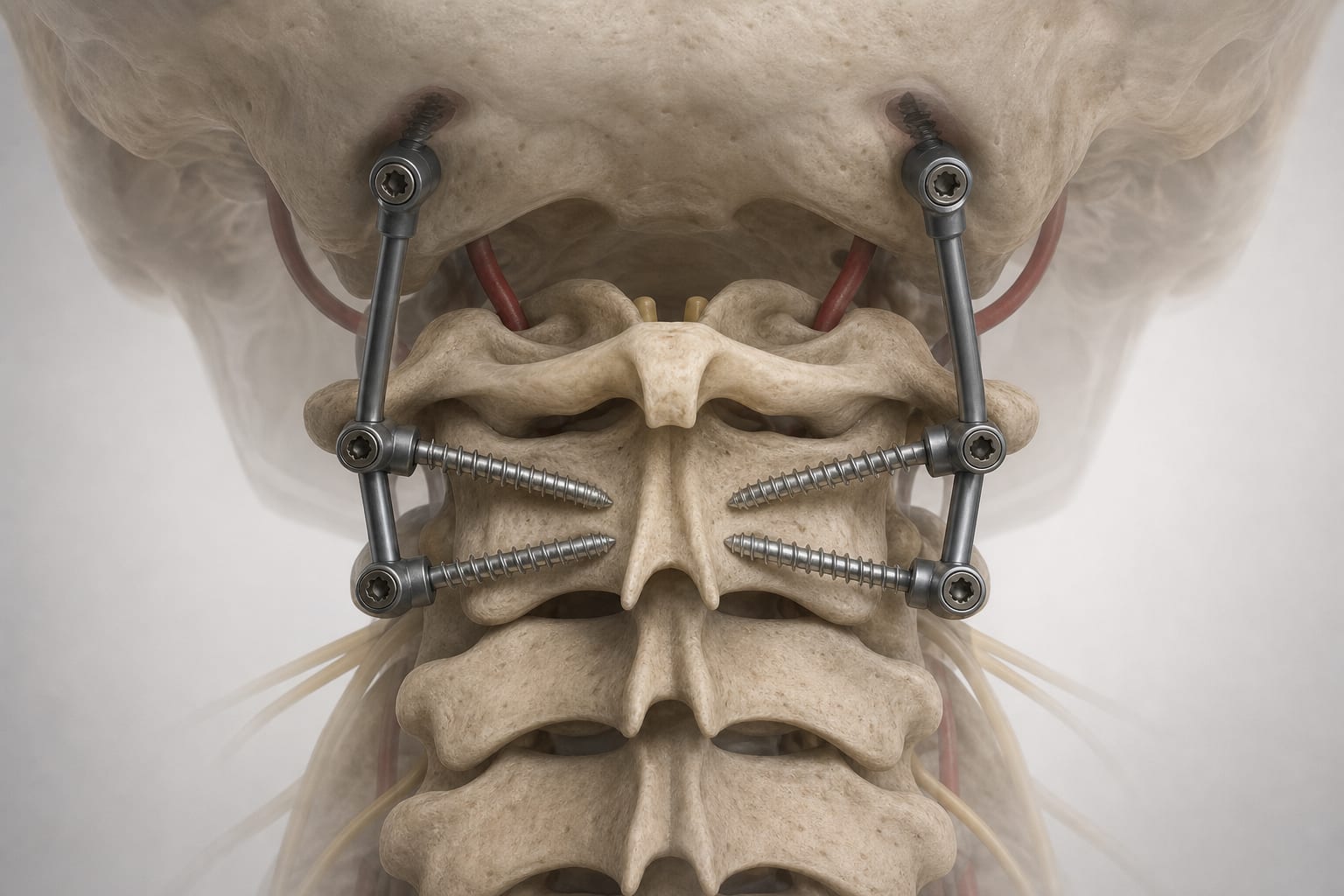
To introduce a new laminar screw-screw fixation technique for treating atlantoaxial dislocation, particularly in patients with anatomical variations in the atlas and axis.
Approach:
Key Findings:
The C2 laminar screw fixation technique minimizes the risk of vertebral artery injury.
This method allows for direct visualization of screw placement during surgery.
The technique addresses challenges in aligning screw heads across segments, improving overall surgical outcomes.
Interpretation:
The C2 laminar screw fixation technique is a viable alternative for patients with anatomical variations that complicate traditional fixation methods.
Limitations:
The article does not detail the procedure for placing atlas lateral mass screws, which may limit understanding of the technique.
Challenges in rod connection due to misalignment of screw heads may still exist, potentially complicating the surgical process.
Conclusion:
The C2 laminar screw fixation technique enhances stability and minimizes risks associated with traditional methods, offering a promising alternative for patients with anatomical variations.