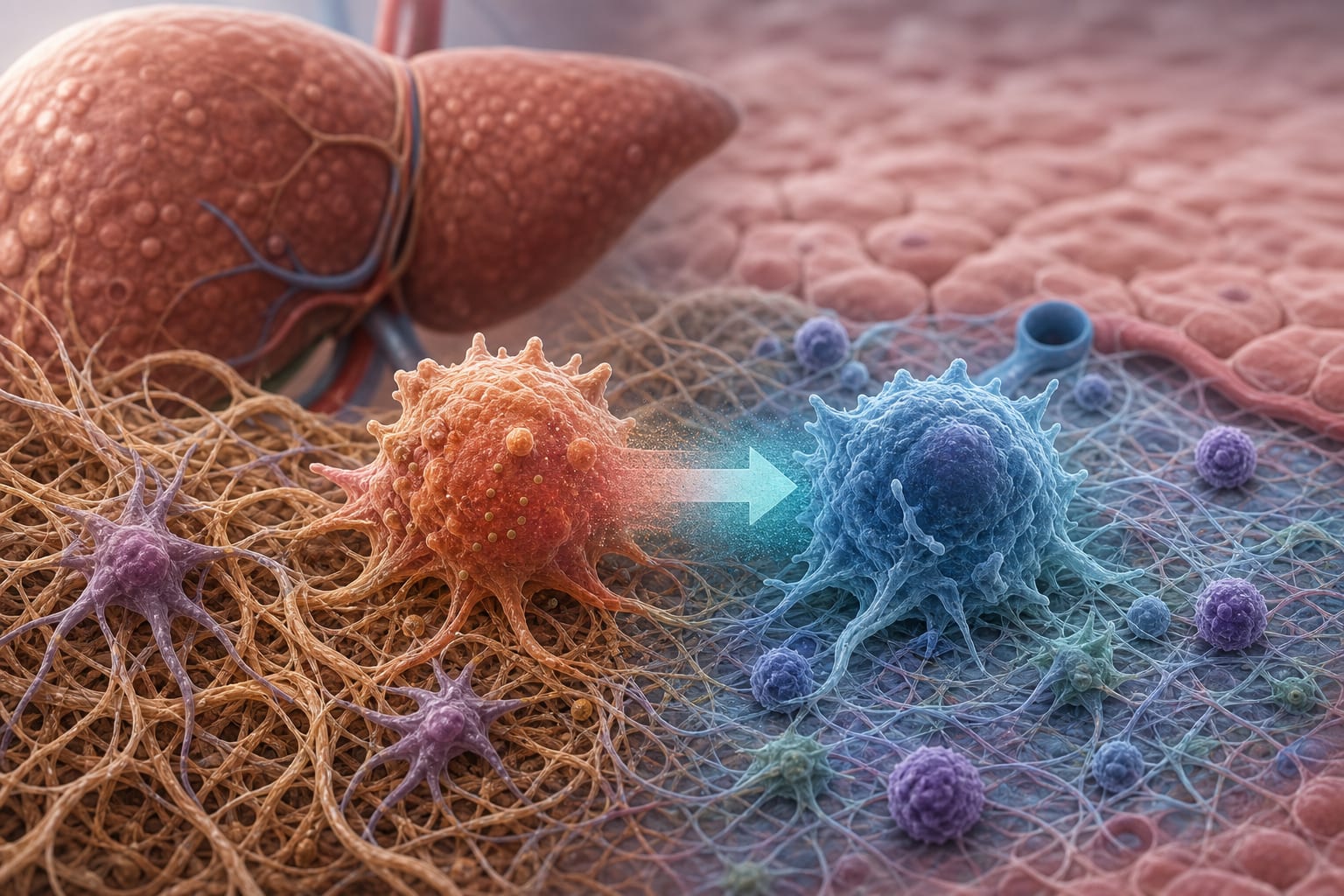
To propose macrophage reprogramming as a therapeutic framework for liver fibrosis and to explore various intervention strategies, including nanotechnology-based delivery systems.
Key Findings:
Liver fibrosis is a dynamic and potentially reversible process influenced by macrophage activity.
Macrophages exhibit significant heterogeneity and plasticity, challenging the traditional M1/M2 classification.
Restorative macrophages play a crucial role in fibrosis resolution through ECM degradation and myofibroblast inactivation.
Effective antifibrotic strategies require coordinated modulation of macrophages alongside other hepatic cell populations, emphasizing key signaling pathways and metabolic states.
Interpretation:
The findings underscore the importance of macrophage modulation in liver fibrosis therapy, suggesting that targeting macrophage pathways could enhance fibrosis resolution through coordinated approaches.
Limitations:
The complexity of macrophage responses varies significantly across different liver injury models.
Current strategies may not fully address the heterogeneity of macrophage populations in various chronic liver diseases.
Conclusion:
Durable fibrosis regression is unlikely through single-target interventions; a multifaceted approach targeting macrophages and other hepatic cells is essential for effective therapy.