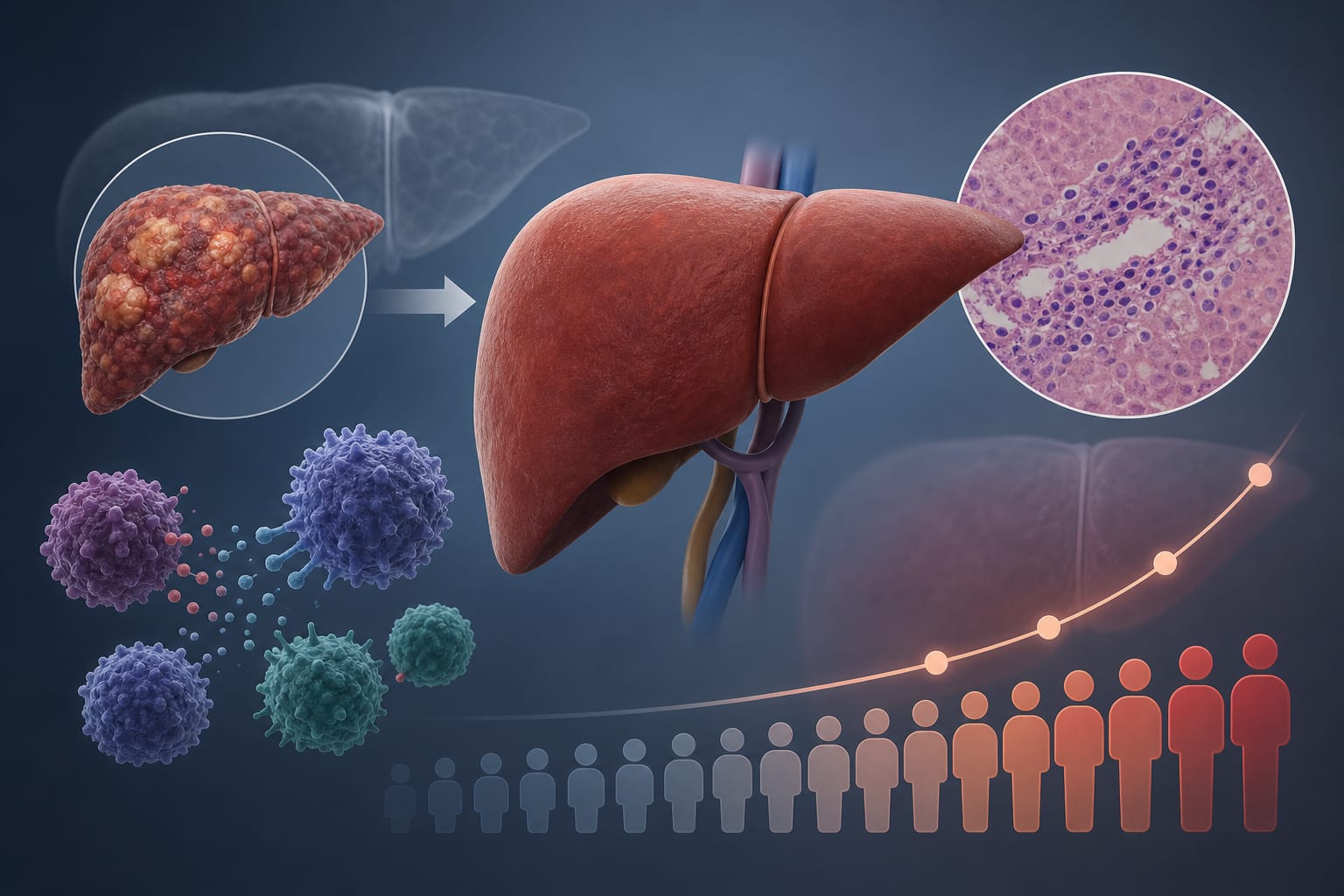
To study the associations between patient and transplant center neighborhood segregation, specifically focusing on racial and ethnic disparities, and access to live donor liver transplant (LDLT).
Key Findings:
Racial and ethnic disparities in access to LDLT persist, particularly affecting Black and Hispanic populations, highlighting the need for targeted health policy interventions.
Structural racism and neighborhood segregation adversely impact access to health care resources, necessitating systemic changes.
Higher segregation in patient and transplant center neighborhoods is associated with lower access to LDLT, indicating a critical area for intervention.
Interpretation:
The study highlights the need to address structural racism and neighborhood segregation to improve access to LDLT for marginalized populations.
Limitations:
Exclusion of candidates from centers that did not perform at least one LDLT annually may limit generalizability.
Limited analysis on racial and ethnic groups other than Black, Hispanic, and White due to statistical power constraints, which may overlook other disparities.
Conclusion:
Addressing neighborhood segregation may be crucial for improving access to LDLT among marginalized populations, and specific interventions should be developed to target these disparities.
by Alexandra T. Strauss, Gayathri Menon, Yiting Li, Valerie L. Thompson, Vedant Jain, Jane J. Long, Byoungjun Kim, Mario P. DeMarco, Babak J. Orandi, Dorry L. Segev, Mara A. McAdams-DeMarco
At the ASCO annual meeting, Dana-Farber’s Brian Wolpin, MD, MPH, presented positive results from the RASolute 302 trial showing a substantial prolongation of survival for patients with previously treated metastatic pancreatic cancer, regardless of RAS mutation status, taking daraxonrasib, an investigational oral RAS(ON) multi-selective inhibitor, compared with chemotherapy.