Multi-omics integration and in vitro validation identify IL4R, IMPA2, and PRR4 as key therapeutic targets in chronic rhinosinusitis with nasal polyps - Summary - MDSpire
Conexiant’s news site is now MDSpire News. Learn more
Advertisement
Integration of Multi-Omics Data and In Vitro Analysis Reveals IL4R, IMPA2, and PRR4 as Significant Therapeutic Targets in Chronic Rhinosinusitis with Nasal Polyps
To screen key molecular markers and potential therapeutic targets in chronic rhinosinusitis with nasal polyps (CRSwNP) through multi-omics data integration, aiming to enhance understanding and treatment options.
Approach:
Key Findings:
Identified 4460 differentially expressed genes and 732 hub genes.
Machine learning highlighted IL4R and IMPA2 as upregulated, and PRR4 as downregulated in CRSwNP.
Drug prediction yielded 26 potential drugs, with strong binding confirmed for raloxifene, luteolin, and metronidazole.
Knockdown of IL4R or IMPA2 and overexpression of PRR4 reduced LPS-induced cellular injury.
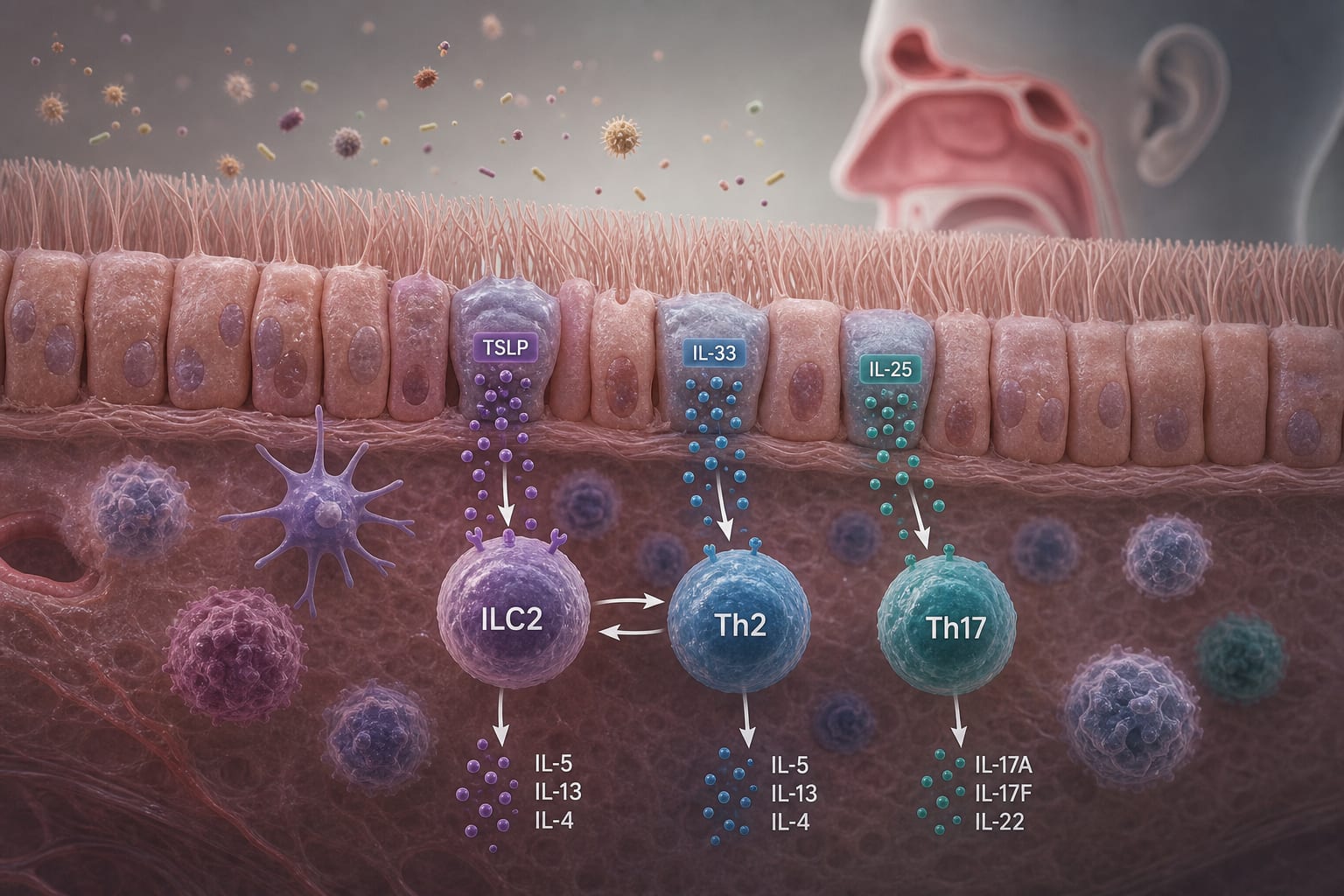
Immune analysis revealed increased monocytes, M2 macrophages, and neutrophils, with decreased memory CD4 T cells in CRSwNP.
Interpretation:
The study confirmed the protective effects of targeting IL4R, IMPA2, and PRR4 against CRSwNP-related inflammation and epithelial dysfunction.
Limitations:
The study primarily relies on in vitro validation, which may not fully replicate in vivo conditions and could limit the applicability of findings.
Further clinical validation is necessary to confirm the therapeutic potential of identified targets.
Conclusion:
The multi-omics approach identified key genes in CRSwNP pathogenesis and validated their modulation as protective against inflammatory injury, suggesting new molecular targets for diagnosis and treatment, with implications for personalized therapeutic strategies.
The 2025 US Department of Veterans Affairs and US Department of Defense asthma guideline introduces 21 evidence-based recommendations for primary care, redefining stepwise treatment, comorbidity management, and reliever strategy.