Evaluating Co-Designed vs Researcher-Driven Personalized Feedback Formats in a Brief Digital Alcohol Use Intervention: Mixed Methods Study - Summary - MDSpire
Advertisement
Evaluating Co-Designed vs Researcher-Driven Personalized Feedback Formats in a Brief Digital Alcohol Use Intervention: Mixed Methods Study
To compare the efficacy of co-designed personalized feedback against researcher-led personalized feedback in a digital intervention aimed at reducing hazardous alcohol use, addressing a significant research gap.
Key Findings:
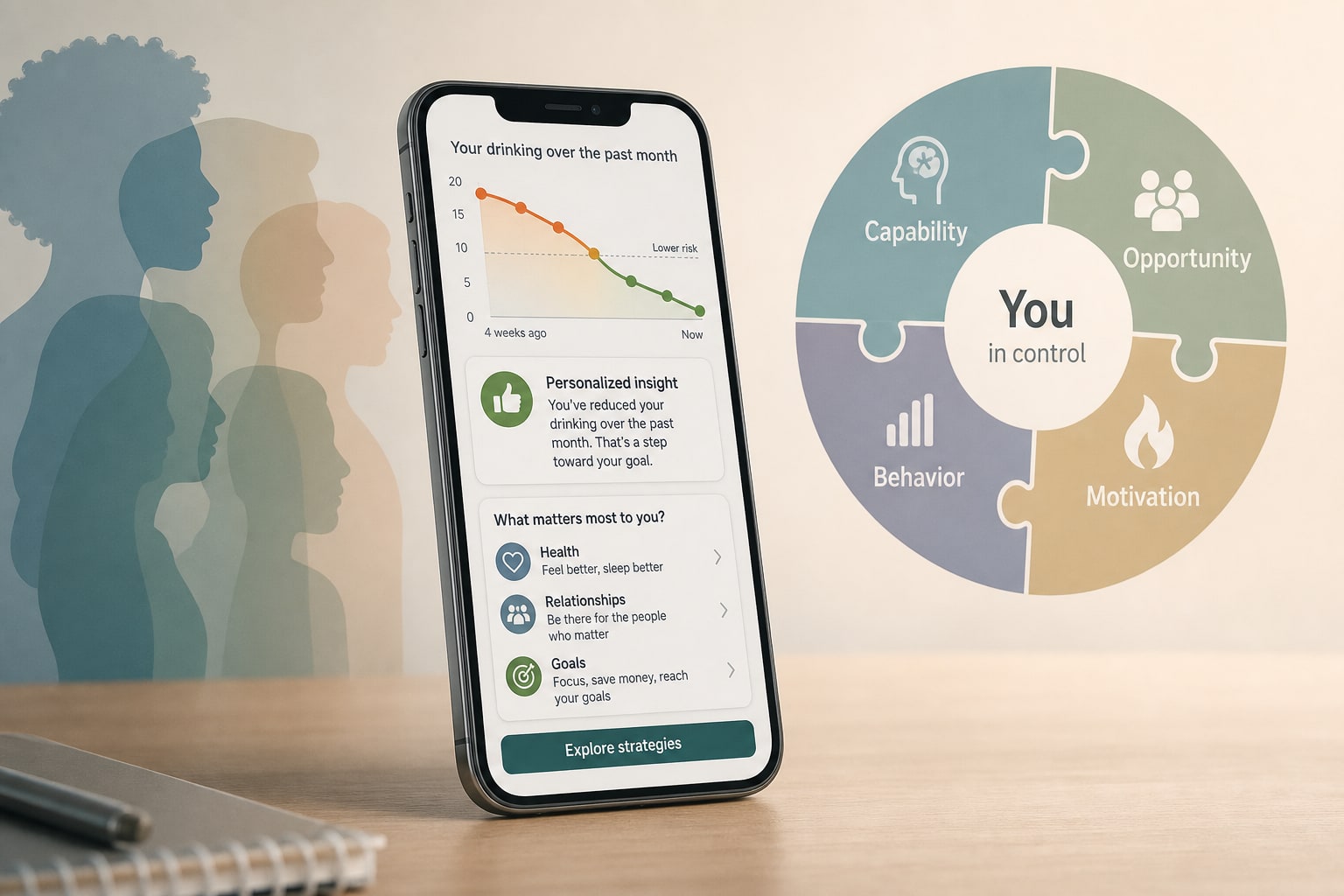
Participants receiving co-designed feedback were hypothesized to score higher on the COM-B survey compared to those receiving researcher-designed feedback, indicating a potential for greater behavioral change.
It was expected that co-designed feedback would be rated as more appealing than researcher-designed feedback, suggesting a preference for user-driven interventions.
The study aimed to address the research gap regarding the relative efficacy of co-designed health interventions, which has been underexplored in existing literature.
Interpretation:
The study seeks to provide insights into the effectiveness of co-designed interventions in comparison to traditional researcher-led approaches, particularly in the context of alcohol misuse, with potential implications for future intervention designs.
Limitations:
The study is exploratory and may not yield definitive conclusions regarding the superiority of co-designed interventions, and potential biases in stakeholder input may affect results.
The agnostic stance on whether co-designed feedback will lead to significantly greater reductions in alcohol intake compared to researcher-designed feedback may limit the interpretability of results.
Conclusion:
The study aims to improve an existing intervention while addressing the gap in research on co-designed versus researcher-led interventions for alcohol use, contributing valuable insights to the field.