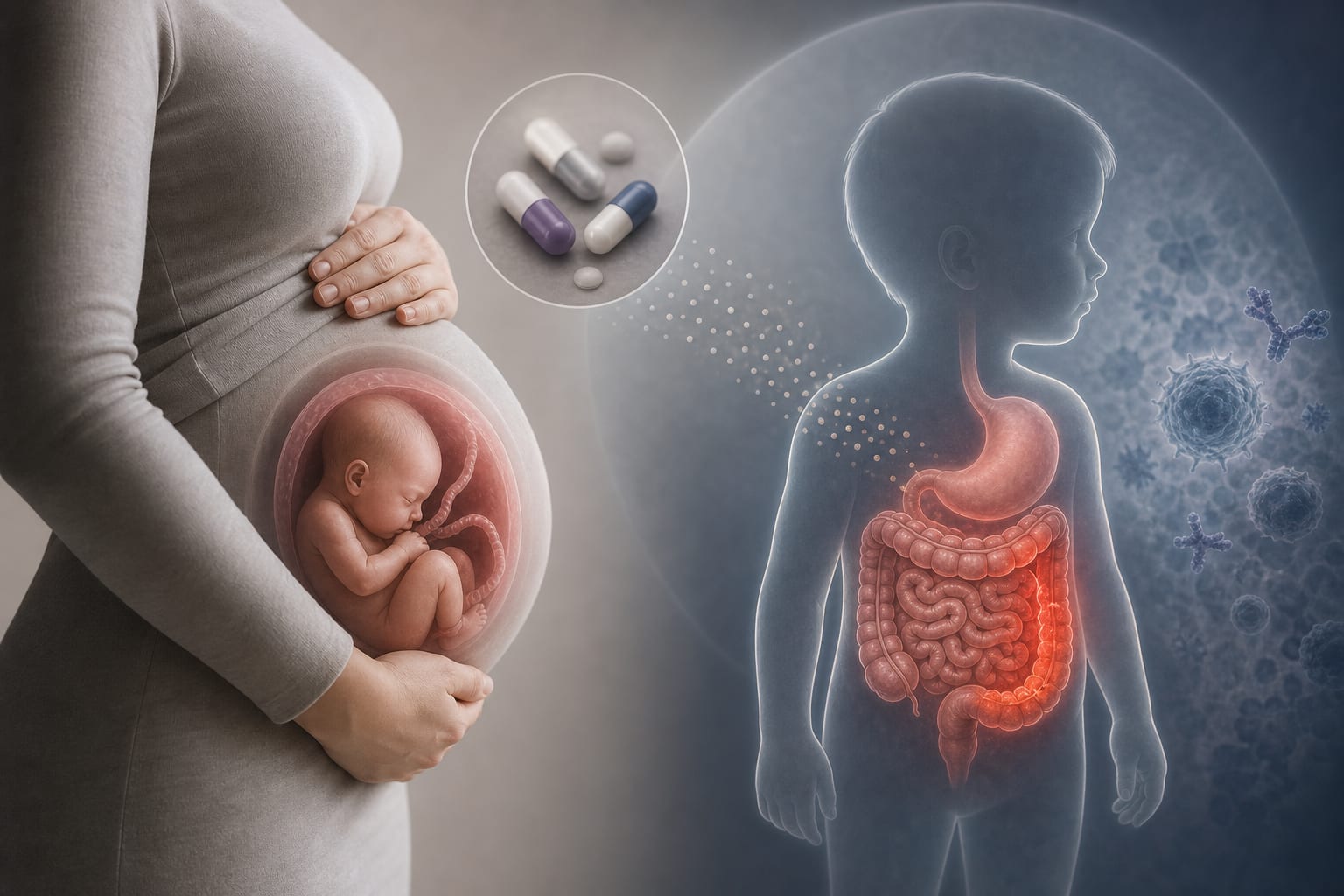
To examine the association between exposure to acid-suppressive medications during pregnancy and the incident risk of pediatric-onset inflammatory bowel disease (IBD).
Approach:
Study Design: A nationwide, population-based birth cohort study in South Korea, including nearly 3 million mother-child pairs born from January 1, 2009, to December 31, 2023.
Data Collection: Utilized data from the National Health Insurance Service (NHIS) covering demographic, diagnostic, procedural, and medication records.
Cohort Selection: Excluded individuals with specific health conditions and those without recorded exposure to acid-suppressive medications during pregnancy.
Outcome Definition: Primary outcome defined as the diagnosis of any IBD (ulcerative colitis or Crohn disease) identified via ICD-10 codes.
Statistical Analysis: Used propensity score matching to minimize confounding between exposed and unexposed groups.
Key Findings:
Prenatal exposure to acid-suppressive medications may alter gut microbial composition.
Interpretation:
Limitations:
The study relies on administrative data, which may have limitations in accuracy.
Potential confounding factors may still exist despite propensity score matching.
Conclusion:
Further research is needed to clarify the relationship between prenatal acid-suppressive medication use and pediatric IBD risk.
by Jiyeon Oh, Jaeyu Park, Hyunjee Kim, Hyesu Jo, Kyeongmin Lee, Yeona Jo, Seohyun Hong, Sooji Lee, Selin Woo, Yerin Hwang, Jinseok Lee, Tae Hyeong Kim, Hayeon Lee