Electroacupuncture attenuates synovitis in knee osteoarthritis and is associated with modulation of the protein S-TAM (Axl/MerTK)-Rac1 signaling axis - Summary - MDSpire
Advertisement
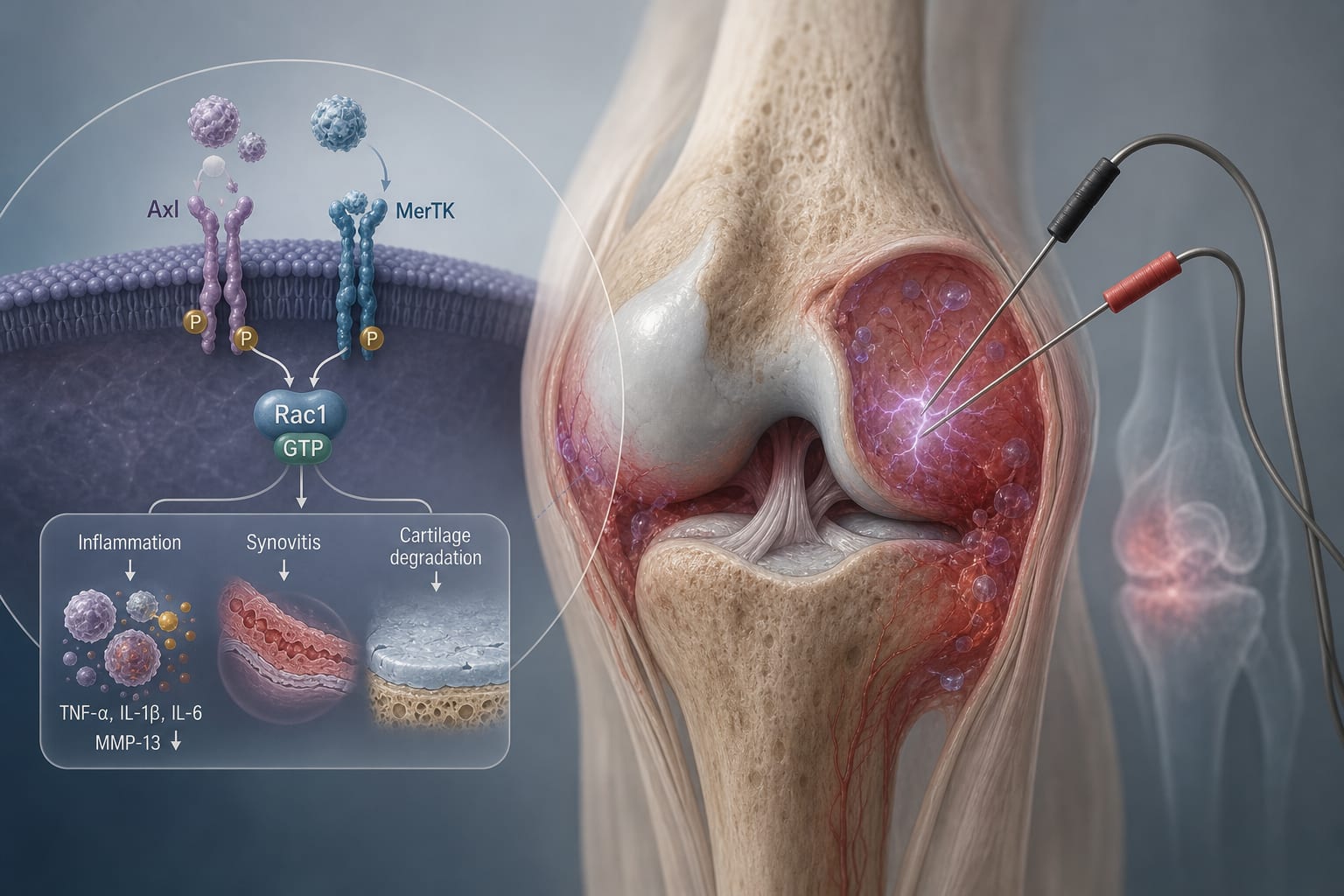
Electroacupuncture attenuates synovitis in knee osteoarthritis and is associated with modulation of the protein S-TAM (Axl/MerTK)-Rac1 signaling axis
To investigate the protective effects of electroacupuncture (EA) on synovitis and cartilage integrity in a rat model of knee osteoarthritis (KOA) induced by anterior cruciate ligament transection (ACLT).
Approach:
Study Design: Male Sprague-Dawley rats were assigned to Control, KOA, and KOA-EA groups. The KOA-EA group received EA treatment for 12 weeks.
Assessment Methods: Histopathology, synovitis scoring, cytokine levels, and expression of specific genes and proteins were measured using various techniques including ELISA, qRT-PCR, and Western blot.
Key Findings:
EA significantly reduced cartilage damage and synovial inflammation (P < 0.01).
EA decreased MMP13 expression (P < 0.05) and synovial apoptosis (P < 0.001).
EA shifted cytokine profiles towards an anti-inflammatory pattern (P < 0.05).
EA restored expression of Protein S-TAM-Rac1 axis-related molecules.
Interpretation:
EA demonstrated anti-inflammatory and chondroprotective effects in KOA, linked to changes in the synovial Protein S-TAM-Rac1 signaling pathway.
Limitations:
Study conducted in a rat model, which may not fully replicate human conditions.
Long-term effects and optimal EA parameters remain to be determined.
Conclusion:
EA showed potential in alleviating synovitis and cartilage degradation in KOA.