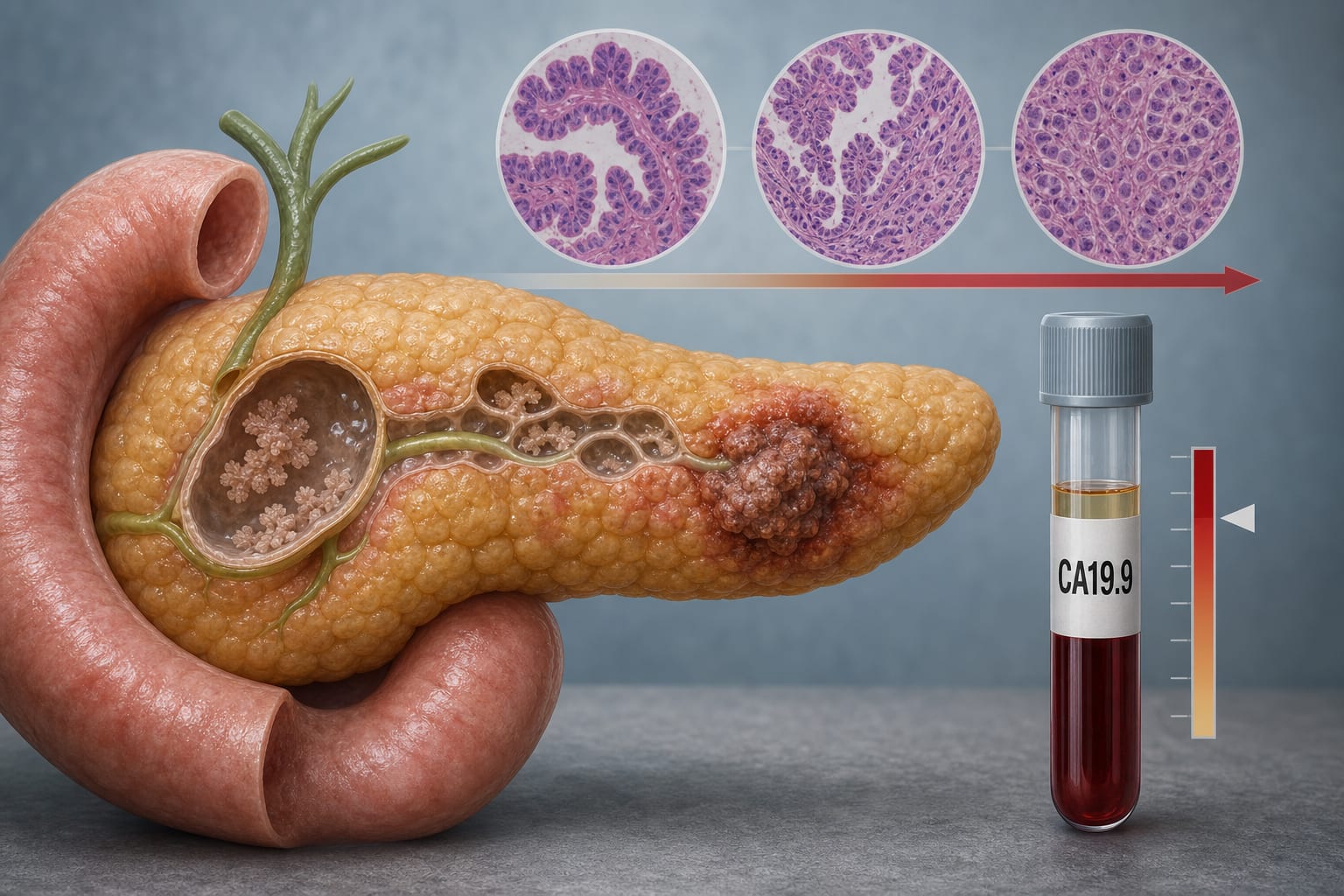
To evaluate the diagnostic performance of serum macrophage inhibitory cytokine 1 (GDF15), syncollin (SYCN), and thrombospondin-2 (TSP-2) for differentiating pancreatic ductal adenocarcinoma (PDAC) from chronic pancreatitis (CP) and healthy controls (HCs), addressing the need for new biomarkers.
Approach:
Study Design: Included 188 individuals: 78 with PDAC, 79 with CP, and 31 HCs. Diagnoses were based on clinical, imaging, histopathological, and laboratory findings.
Biomarker Measurement: Serum levels of GDF15, SYCN, and TSP-2 were quantified using ELISA.
Statistical Analysis: Performed group comparisons, correlation testing, and ROC curve analysis to assess AUC.
Key Findings:
GDF15 and SYCN levels were significantly elevated in PDAC compared to CP and HCs.
GDF15 showed the strongest discrimination for PDAC vs HCs (AUC = 0.86; sensitivity 97%, specificity 71%).
The combined GDF15 + SYCN panel increased AUC to 0.89.
For PDAC vs CP, GDF15 had moderate performance (AUC = 0.73), while SYCN and TSP-2 performed less effectively (SYCN AUC = 0.65, TSP-2 AUC = 0.52).
Interpretation:
GDF15 and SYCN are potential serum biomarkers for differentiating PDAC from CP and HCs, while TSP-2 has limited diagnostic utility.
Limitations:
The study did not assess the performance of these biomarkers in asymptomatic individuals.
The sample size may limit the generalizability of the findings, particularly in diverse populations.
Conclusion:
GDF15 and SYCN warrant further investigation as biomarkers for PDAC diagnosis.