Comparison of the effects of different traditional Chinese exercises on improving the motor function of stroke survivors: a network meta-analysis and systematic review - Summary - MDSpire
Advertisement
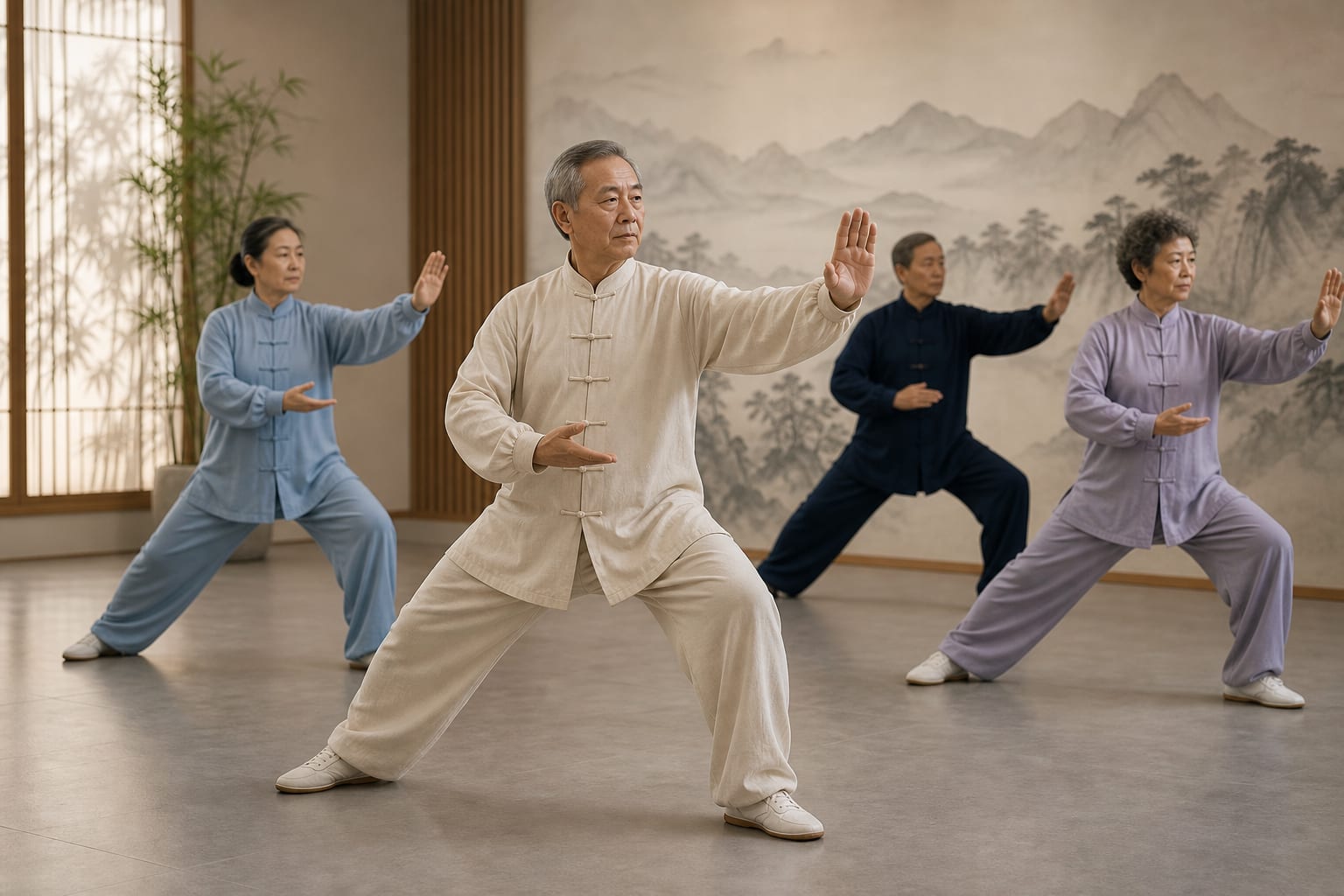
Comparison of the effects of different traditional Chinese exercises on improving the motor function of stroke survivors: a network meta-analysis and systematic review
To compare the relative effectiveness of different traditional Chinese exercise modalities with standard care for improving post-stroke motor outcomes.
Approach:
Literature Search: Systematic search of multiple databases for RCTs evaluating traditional Chinese exercises for post-stroke motor dysfunction.
Inclusion Criteria: Adults with clinically diagnosed ischemic or hemorrhagic stroke in acute, subacute, or chronic stages.
Outcome Measures: Primary outcomes: upper- and lower-extremity motor function (FMA-UE, FMA-LE); Secondary outcomes: balance function (BBS), activities of daily living (BI).
Analysis Method: Bayesian network meta-analysis performed, with intervention rankings estimated using SUCRA.
Key Findings:
Tai Chi and Wuqinxi showed statistically significant improvements in FMA-UE scores compared to standard care.
Baduanjin, Tai Chi, and Wuqinxi improved FMA-LE scores significantly.
All four exercise modalities significantly improved BBS and BI scores.
Tai Chi ranked highest for improving FMA-UE, Wuqinxi for FMA-LE, Yijinjing for BBS, and Baduanjin for BI.
Interpretation:
The study provides evidence regarding the effectiveness of traditional Chinese exercises in enhancing motor function in stroke survivors.
Limitations:
Heterogeneity in intervention protocols and outcome measures across trials.
Lack of direct head-to-head comparisons among different exercise modalities.
Conclusion:
Traditional Chinese exercises may serve as adjunctive therapies for improving motor function in stroke survivors.
Plasma proteomic models of more than 40 cell types were associated with incident Alzheimer's disease, amyotrophic lateral sclerosis, cancer, and mortality across three large cohorts.