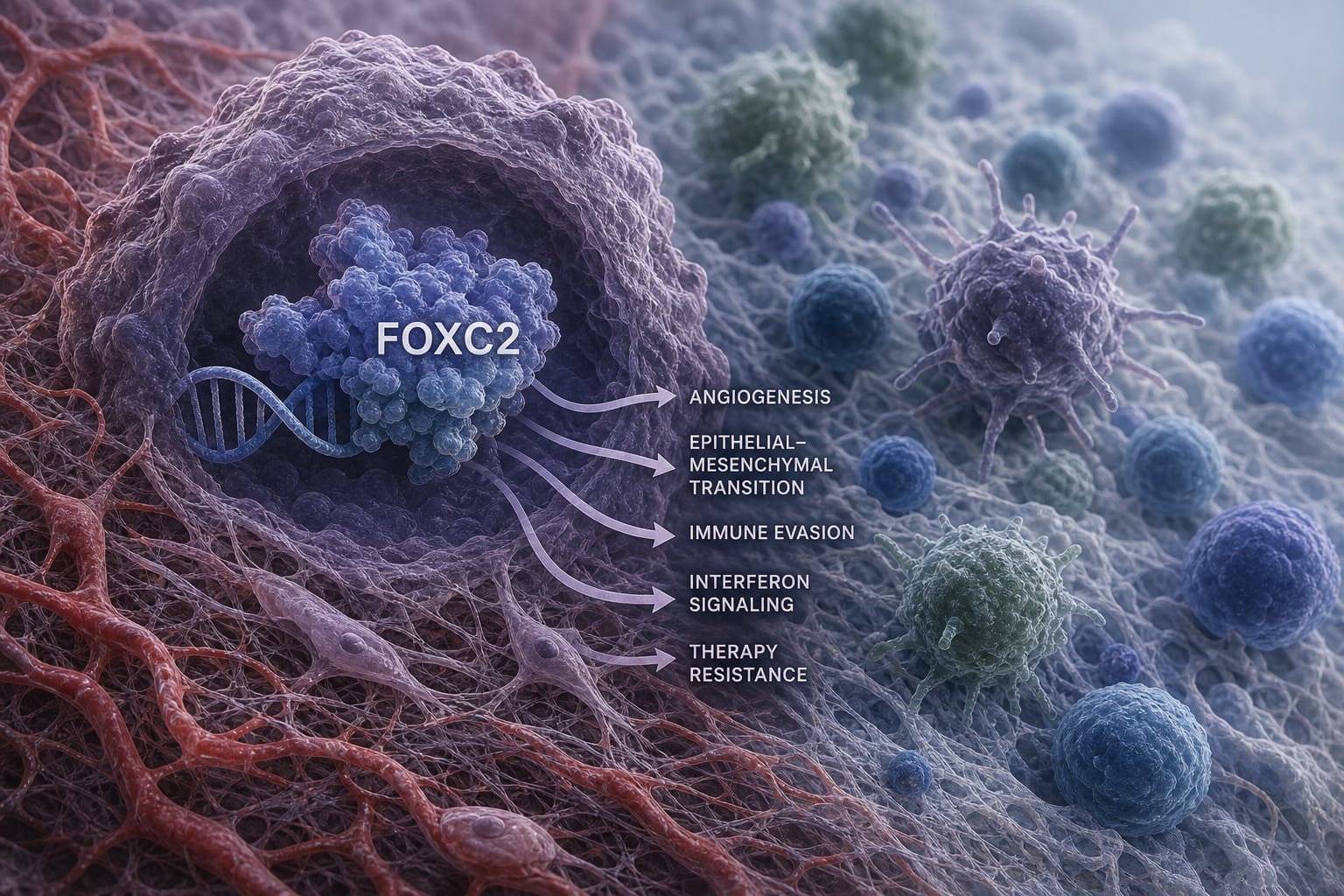
To highlight the potential value of FOXC2 as a predictive biomarker for cancer immunotherapy, particularly in relation to its role in tumor immune evasion.
Approach:
Overview of FOXC2: Discusses the role of FOXC2 in various biological processes and its dysregulation in cancer.
Impact on Cancer Progression: Examines FOXC2's involvement in tumor angiogenesis, metabolic adaptation, and the epithelial-mesenchymal transition.
Resistance to Cancer Therapies: Explores FOXC2's role in drug resistance, including chemotherapy and emerging evidence for immunotherapy.
Immunologic Consequences: Highlights findings linking FOXC2 expression to poor prognostic outcomes in melanoma patients treated with immunotherapy.
Key Findings:
FOXC2 dysregulation is linked to several hallmarks of cancer progression.
Elevated FOXC2 expression correlates with poor prognosis in melanoma patients receiving immunotherapy, particularly in relation to checkpoint inhibitors.
FOXC2 expression negatively correlates with CD8+ T cell infiltration in tumors, suggesting a role in immune evasion.
Interpretation:
FOXC2 may play a significant role in tumor immune evasion, as evidenced by its correlation with poor prognostic outcomes in melanoma patients treated with immunotherapy.
Limitations:
Current findings are based on bioinformatic analyses and require experimental validation.
The studies referenced involve relatively small patient cohorts, including 22 and 121 melanoma patients.
Conclusion:
Further research is needed to validate FOXC2's role in tumor immune evasion and its potential as a biomarker for immunotherapy.