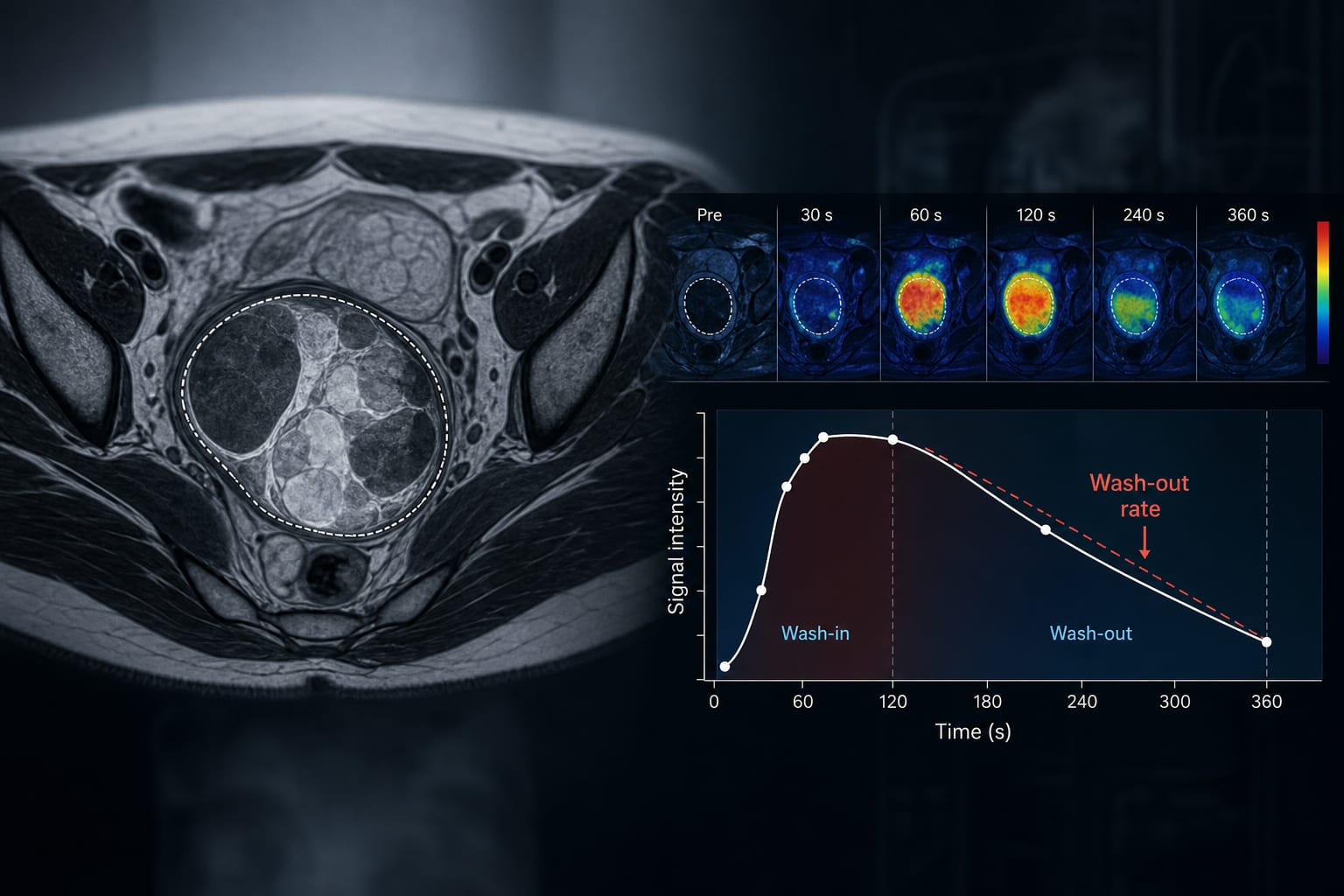
To assess the prognostic significance of tumor metabolic heterogeneity (MH) in DLBCL using 18F-FDG PET/CT and to develop a predictive model aimed at improving patient outcomes.
Key Findings:
Tumor metabolic heterogeneity assessed by 18F-FDG PET/CT is a significant prognostic factor for progression-free survival (PFS) and overall survival (OS) in DLBCL, indicating a need for improved risk stratification.
Conventional prognostic models like IPI and NCCN-IPI are insufficient for identifying high-risk patients, necessitating the integration of metabolic heterogeneity.
Interpretation:
The study suggests that incorporating tumor metabolic heterogeneity into prognostic assessments may enhance the prediction of outcomes in DLBCL patients, potentially guiding treatment decisions by identifying high-risk individuals.
Limitations:
The study is retrospective, which may introduce selection bias affecting the generalizability of the findings.
Limited generalizability due to the single-center design.
Conclusion:
Further validation of tumor metabolic heterogeneity as a prognostic indicator in DLBCL is warranted to improve patient stratification and treatment optimization, with specific focus on multi-center studies.