Jump assessment on a force plate—an approach to quantify subtle lower limb neuromuscular deficits in people with multiple sclerosis - Summary - MDSpire
Advertisement
Jump assessment on a force plate—an approach to quantify subtle lower limb neuromuscular deficits in people with multiple sclerosis
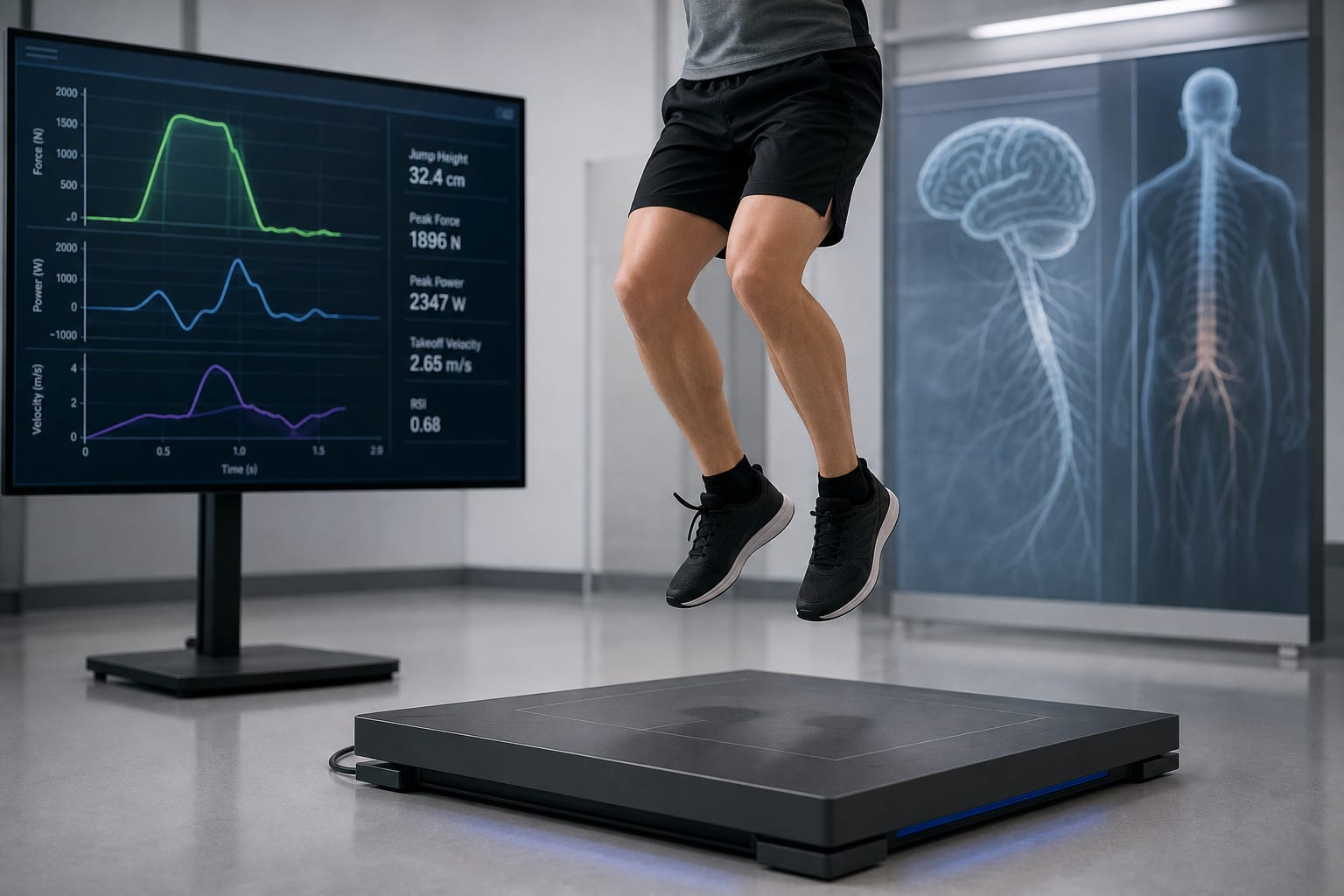
To summarize the applications and future perspectives of jump assessment in multiple sclerosis (MS) for detecting early neuromuscular deficits and guiding individualized neurorehabilitation strategies.
Key Findings:
Traditional clinical tools like the EDSS lack sensitivity for detecting subtle neuromuscular dysfunction in pwMS, highlighting the need for more effective assessment methods.
Jump assessments provide objective markers of strength, coordination, and balance, enabling early detection of motor deficits and informing rehabilitation strategies.
High-challenge tests are necessary to reveal neuromuscular deficits in pwMS with low levels of disability, suggesting a need for more comprehensive assessment approaches.
Interpretation:
Jump assessments represent a promising method for identifying early neuromuscular impairments in pwMS, which can significantly guide individualized neurorehabilitation strategies and improve patient outcomes.
Limitations:
Current knowledge on jump assessment in MS is limited, with few studies exploring its full potential.
Existing procedures may not fully capture the complexity of neuromuscular function, particularly in early-stage MS.
Conclusion:
Jump assessment could enhance long-term care and monitoring of pwMS by detecting subtle neuromuscular deficits early, ultimately improving rehabilitation outcomes.
Neurologist Rejo P. Cherian, M.D., who specializes in neuromuscular medicine, has joined Marcus Neuroscience Institute, part of Baptist Health Brain & Spine Care