A study on the correlation between APOE gene polymorphism, white matter hyperintensities, and neuropsychiatric symptom phenotypes in Alzheimer’s disease - Summary - MDSpire
Advertisement
A study on the correlation between APOE gene polymorphism, white matter hyperintensities, and neuropsychiatric symptom phenotypes in Alzheimer’s disease
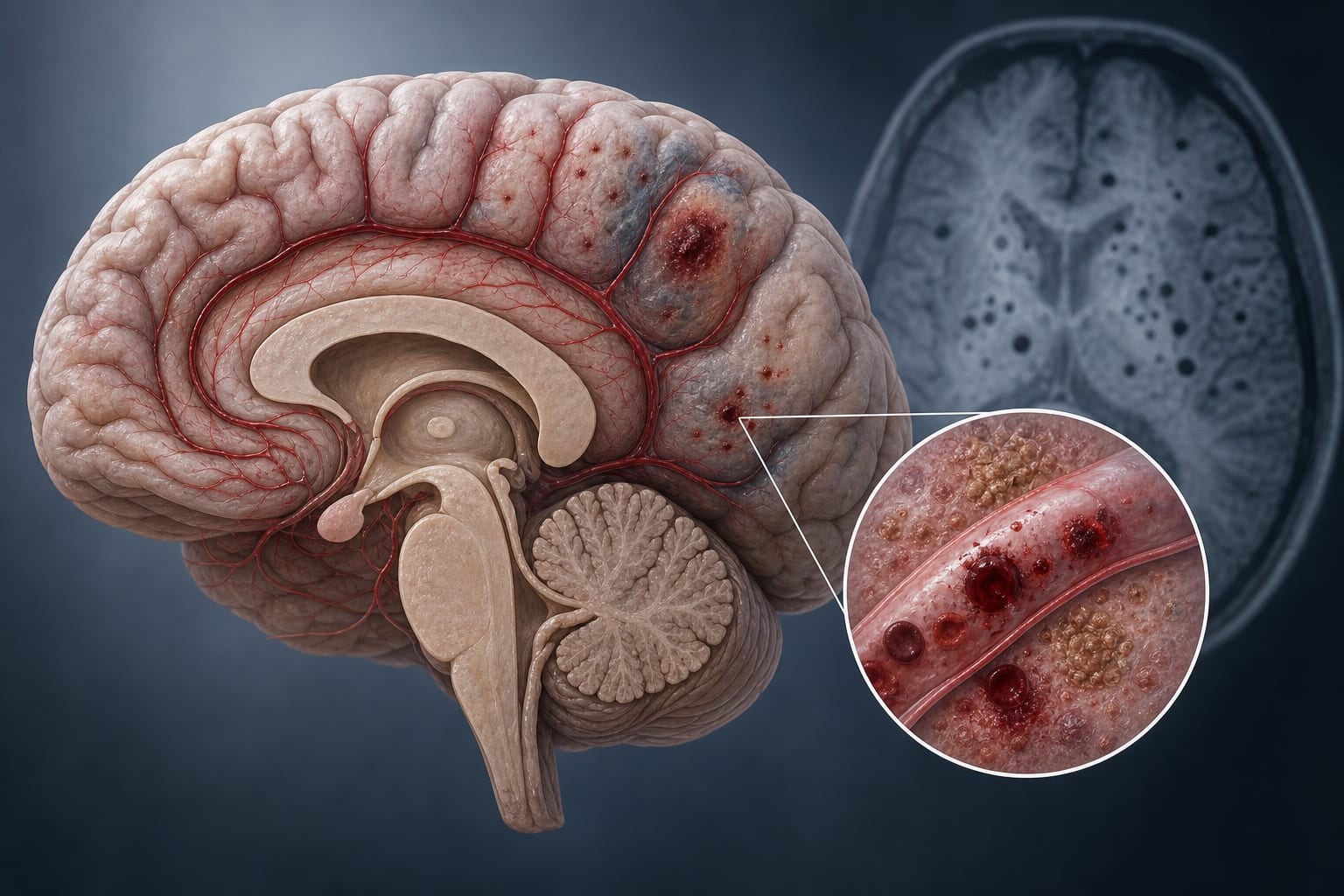
To investigate the independent and interactive effects of APOE genotypes and white matter hyperintensities (WMH) on distinct neuropsychiatric symptom phenotypes, including agitation and delusions, in Alzheimer’s disease (AD) patients.
Key Findings:
Significant cognitive and functional differences across APOE genotypes (CMMSE, p < 0.05; ADL, p < 0.05).
ϵ4 allele carriers exhibited higher agitation scores; ϵ4/ϵ4 homozygotes showed greater severity in delusions, agitation, irritability, and euphoria (all p < 0.05).
WMH did not mediate the association between APOE genotype and cognitive/NPS outcomes.
Interpretation:
APOE genotype, particularly ϵ4/ϵ4 status, is linked to more severe cognitive decline and distinct neuropsychiatric symptoms in AD, independent of WMH burden, suggesting direct neurobiological effects.
Limitations:
Study limited to a single memory clinic, which may affect generalizability.
Cross-sectional design limits causal inferences, making it difficult to establish temporal relationships.
Conclusion:
APOE genotyping serves as a valuable biomarker for AD risk and prognosis, providing insights into neuropsychiatric symptoms beyond conventional neuroimaging markers, with potential implications for tailored interventions.