Steroid-Refractory Bullous Pemphigoid Following Leuprolide Acetate in a Patient With Multiple Sclerosis
-
November 3, 2026
Objective:
To describe a case of severe bullous pemphigoid developing after leuprolide acetate administration in a patient with multiple sclerosis.
Approach:
- Case: A 52-year-old woman with untreated multiple sclerosis developed generalized pruritus and, about 1 week after a single depot leuprolide injection for uterine fibroids, a progressive blistering eruption.
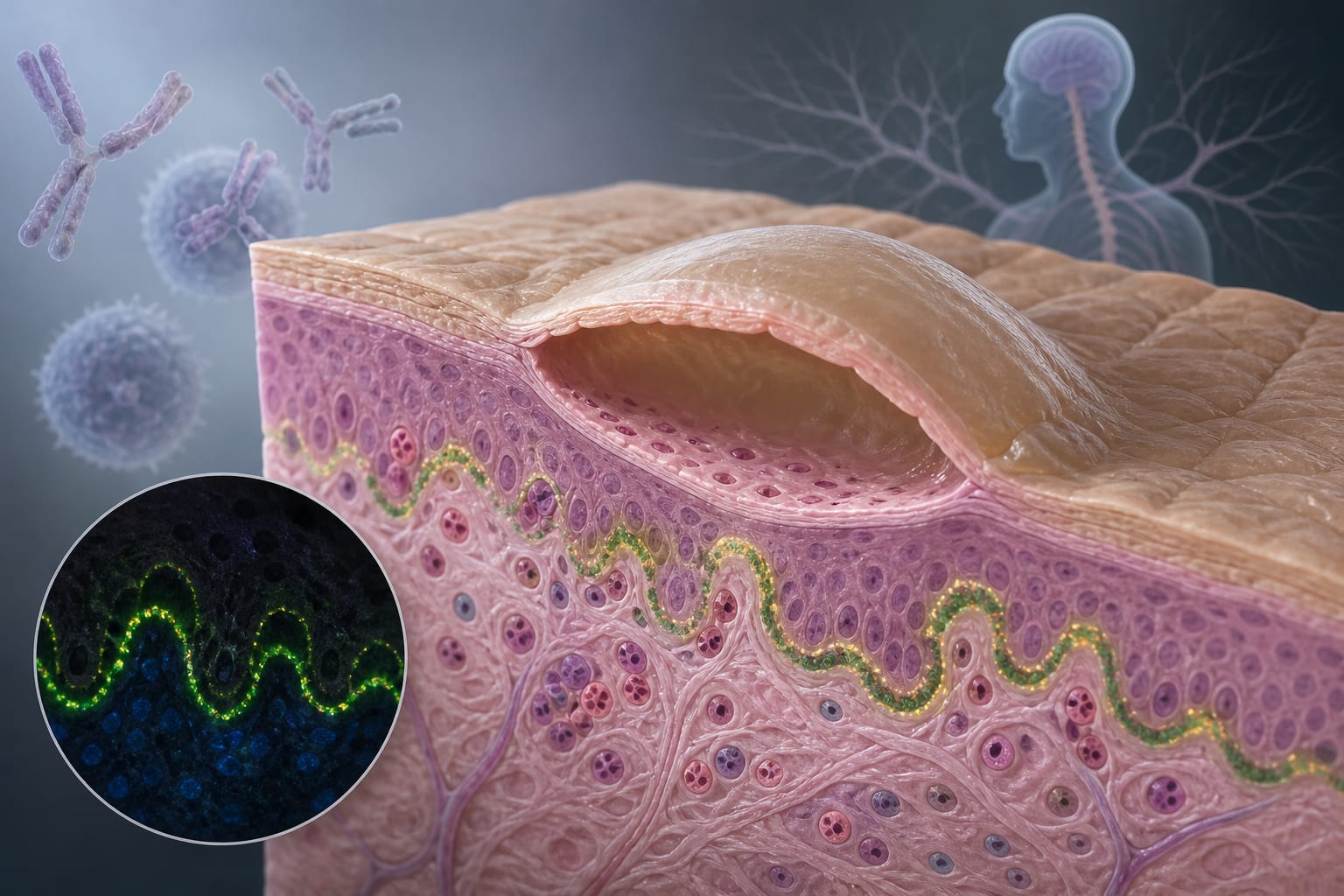
- Diagnosis: Skin biopsy confirmed bullous pemphigoid, showing eosinophilic inflammation at the dermal–epidermal junction and IgG and C3 deposition on direct immunofluorescence.
- Treatment: The disease progressed despite topical corticosteroids, prednisone escalated to 80 mg daily, and mycophenolate mofetil, which provided limited clinical benefit. Dupilumab was subsequently administered.
Key Findings:
- Over 6–7 weeks, the eruption progressed to involve more than 50% of body surface area; oral mucosal involvement was absent.
- After dupilumab treatment, new blister formation ceased and gradual clinical improvement was reported.
- The authors describe established associations between bullous pemphigoid and neurologic diseases, including multiple sclerosis, and note that reports of leuprolide-associated bullous pemphigoid are rare.
Interpretation:
The authors identify leuprolide acetate as a potential trigger of bullous pemphigoid in a patient with multiple sclerosis; this case report does not establish causation.
Limitations:
- This is a single case, so it cannot establish that leuprolide caused the disease or determine how often this reaction occurs.
- The supplied context does not include the remainder of the discussion or detailed follow-up outcomes.
Conclusion:
The authors report severe bullous pemphigoid developing about 1 week after leuprolide acetate administration in a patient with multiple sclerosis. New blister formation ceased and gradual clinical improvement was reported after dupilumab treatment.
Sources:
Based on findings from:
Steroid-Resistant Bullous Pemphigoid After Leuprolide Acetate Exposure in a Patient With Multiple Sclerosis
Annals Of Internal Medicine: Clinical Cases, 2026.
https://www.acpjournals.org/doi/10.7326/aimcc.2026.0518
This content is an AI-generated, fully rewritten summary based on a published scholarly article. It does not reproduce the original text and is not a substitute for the original publication. Readers are encouraged to consult the source for full context, data, and methodology.